Jericoacoara, Brazil – Kitesurfing (finally!) & sand dunes North of Fortaleza

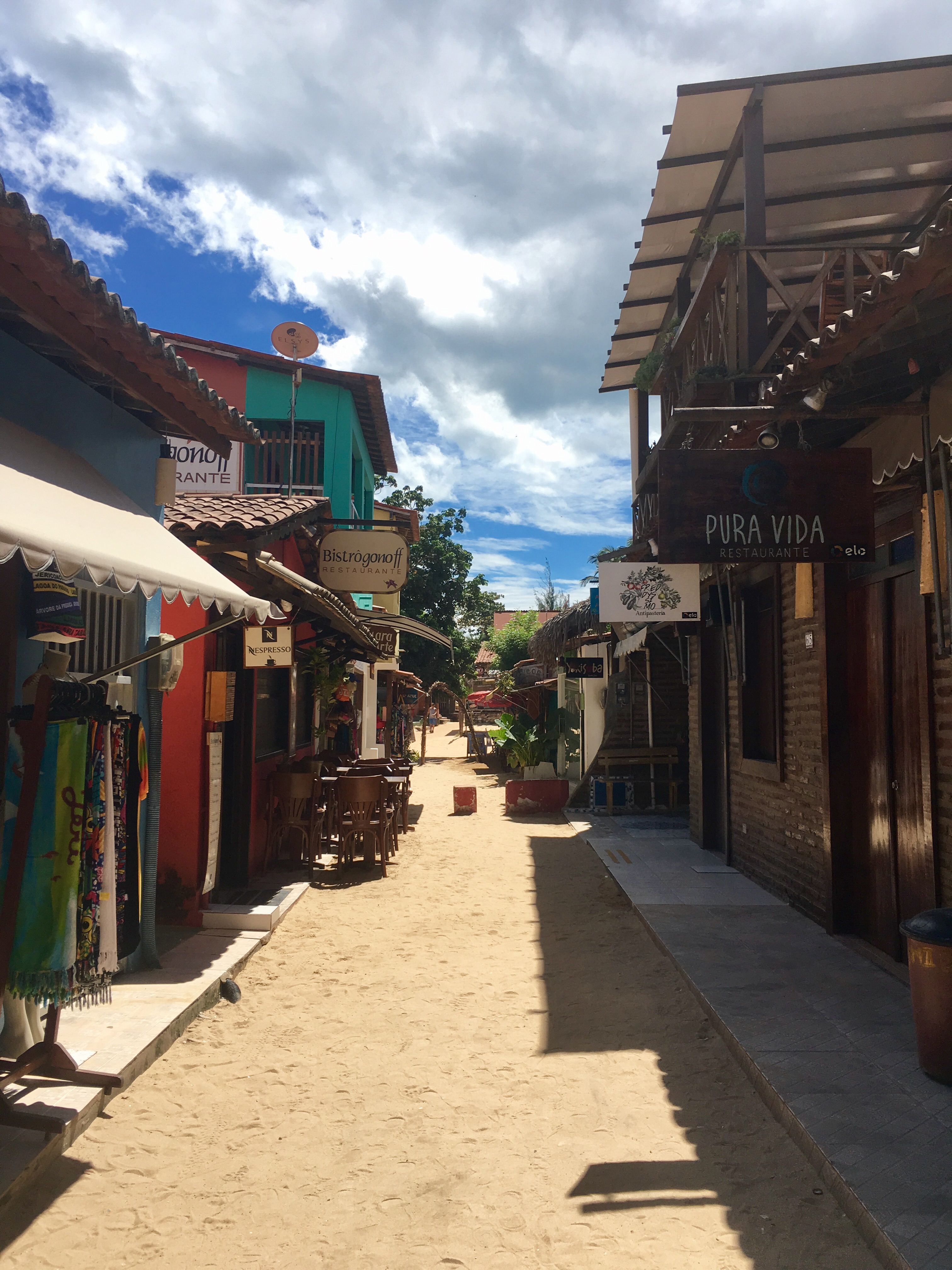
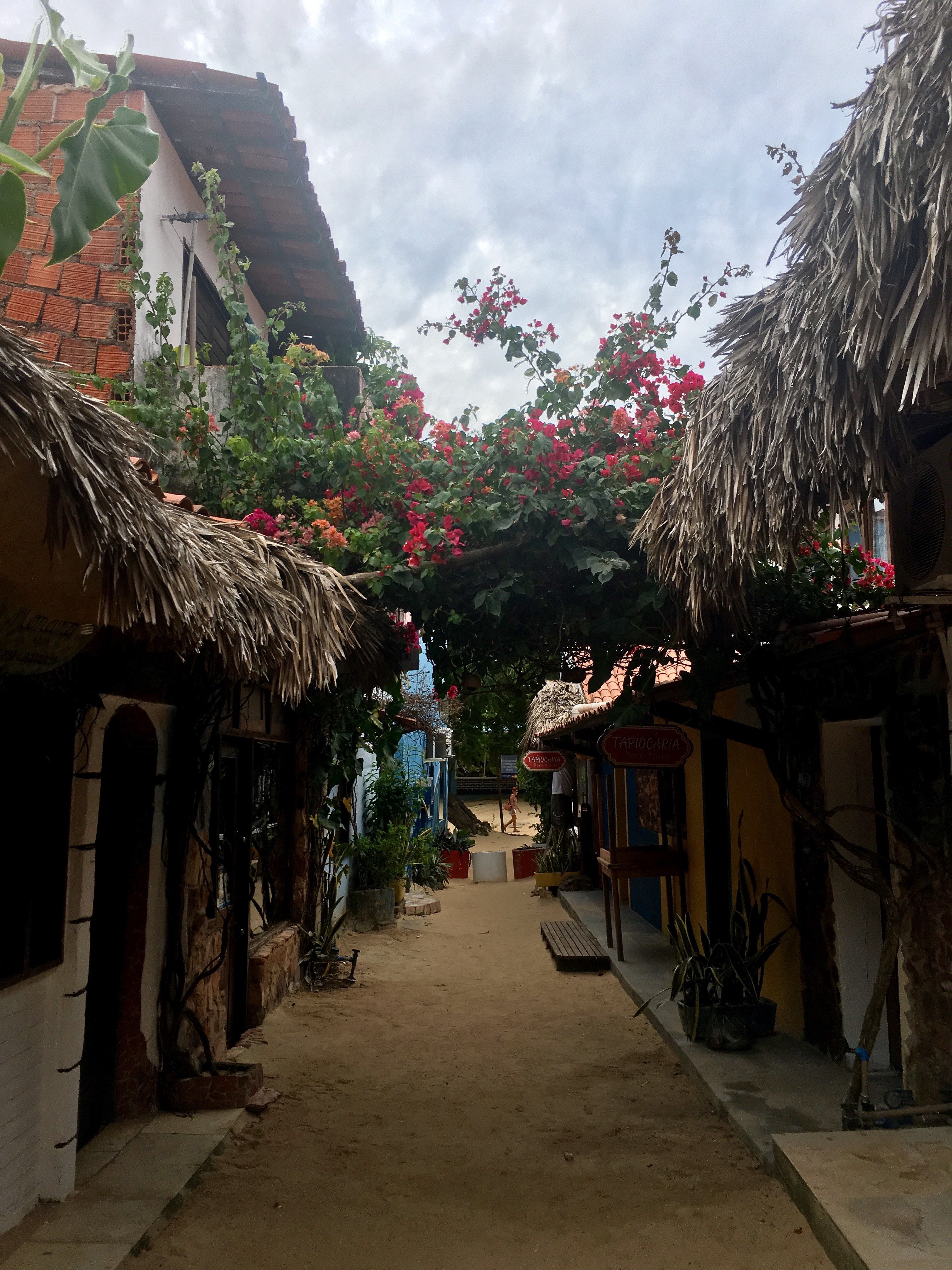
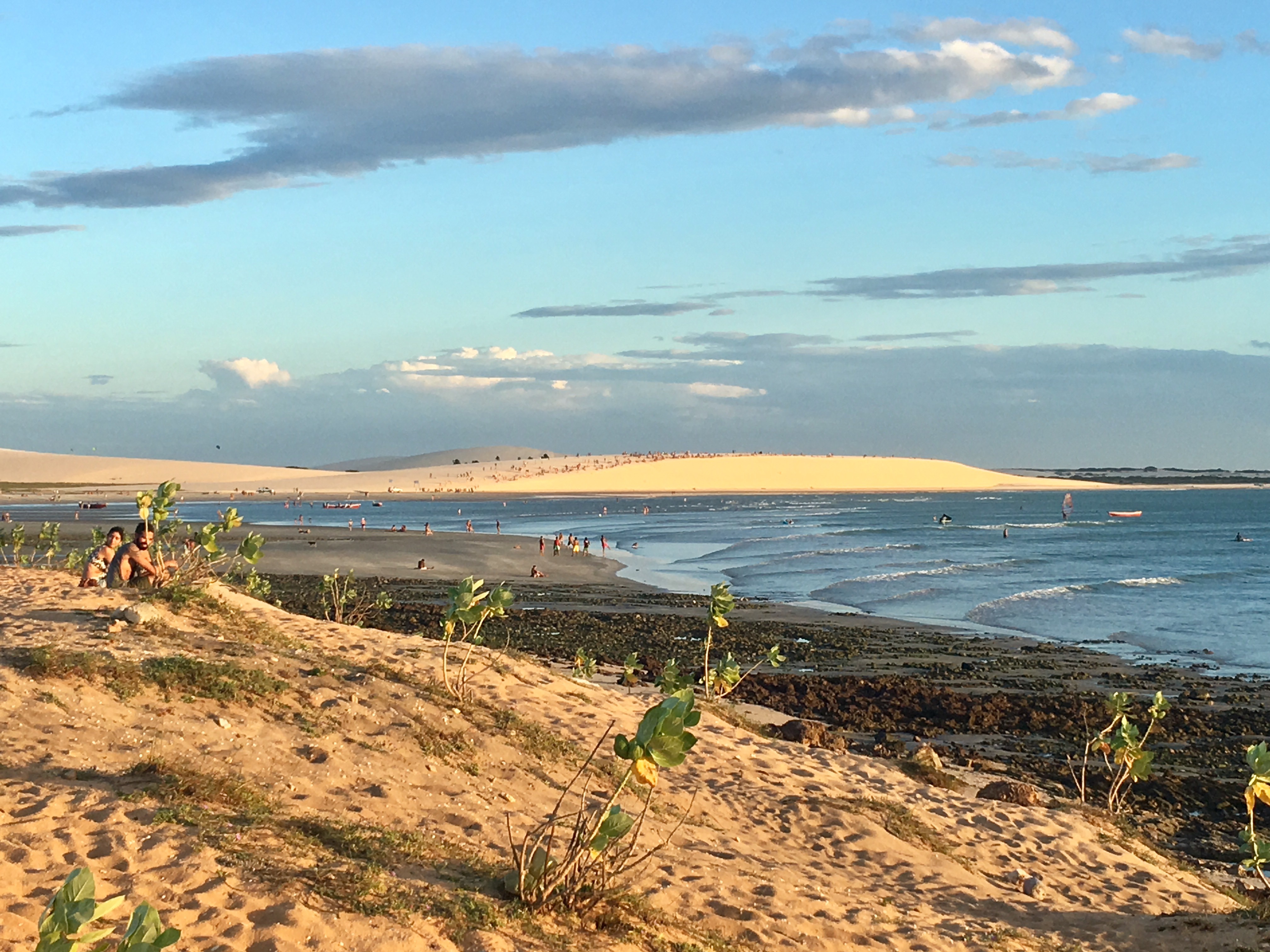
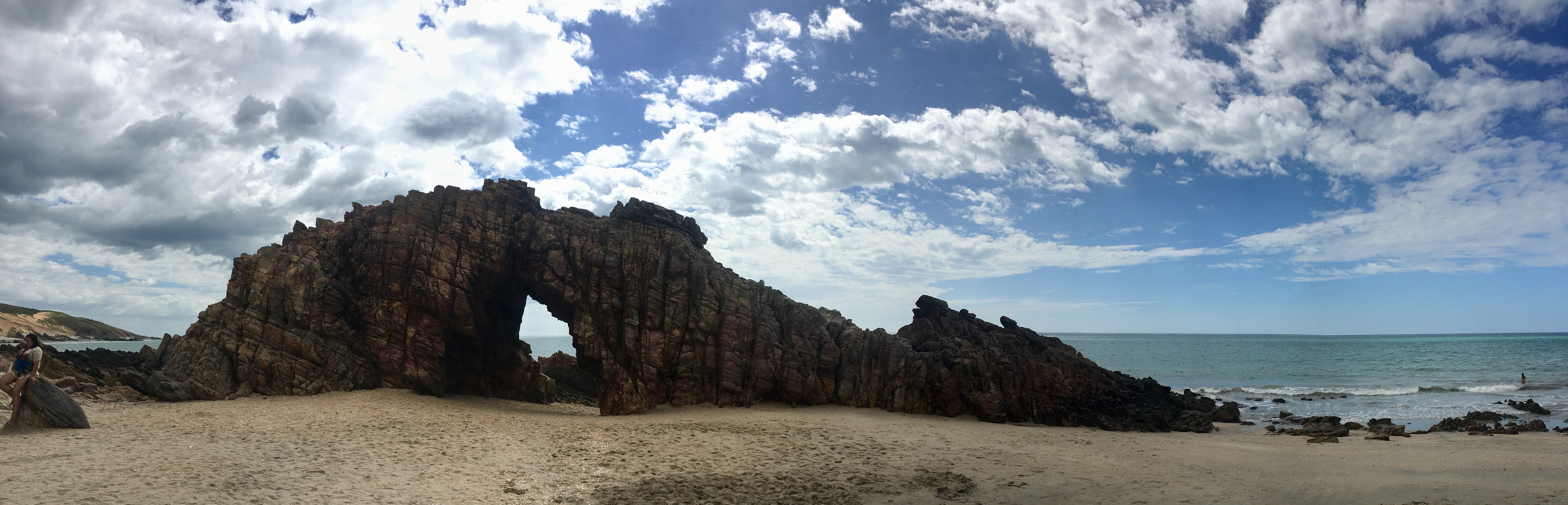
Oh Jeri. A 5hr drive North of Fortaleza by transfer van followed by a short wait at a roadside restaurant & then a 1hr drive in a 4×4 over & across sand dunes brings you to the paradise of Jericoacoara, Brazil.  It’s nestled in a national park on the Atlantic Ocean featuring massive sand dunes. The town itself is tiny, has restrictions on vehicles & oh yeah, features sand roads, sidewalks, shop floors, etc. The entire town is sand from the dunes to the beaches to the town streets so there’s literally no reason to ever wear shoes – unless you can’t take the heat. You can take buggy rides, go hiking, laze around at the beaches, paddleboard or kitesurf as the area is blessed by lots of wind. I’ve been talking & daydreaming about kitesurfing for some time now so since I was spending a week+ in Jeri, I decided to sign up for a lesson to see how I liked it.  Just to get a taste.

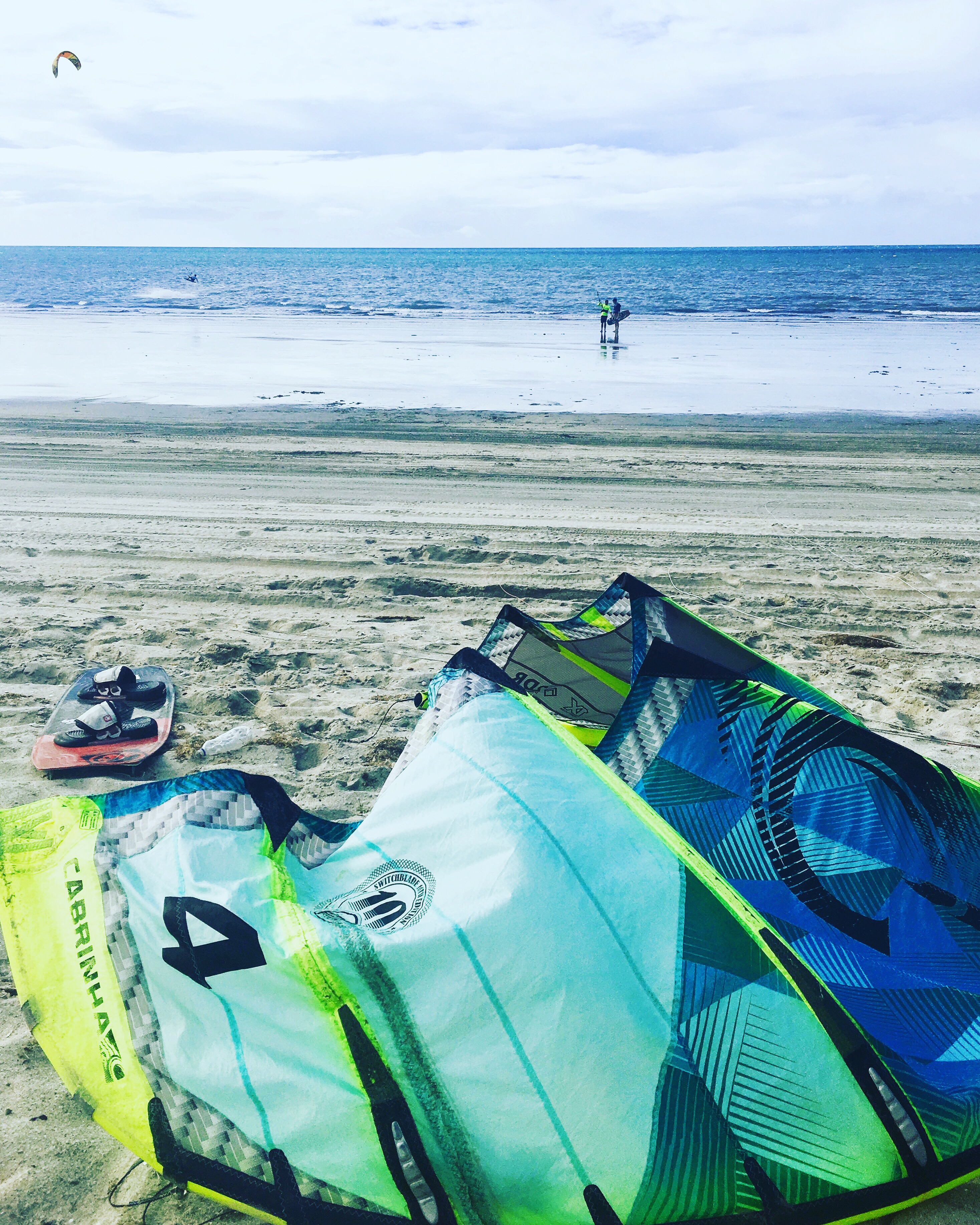
My instructor was Andre from Sao Paulo, living in Jeri for awhile now. I knew it was meant to be when he gave me a life jacket which was more of a vest that you pull down overhead & it was made of a black material with this odd white plastic plating on the front. I got it on, looked down & suddenly exclaimed aloud, more to myself than anyone, “Omigod, I feel like I look like a storm-trooper right now” not expecting Andre to recognize the reference & after a momentary look of surprise / amazement passed his face, he started humming the Imperial Death March, I immediately joined in & we devolved into our first fit of laughter. We didn’t stop laughing for the entire 3hr lesson primarily bc it’s a pretty difficult adventure sport & rather than get frustrated as that’s no fun at all, I just laughed at myself. A lot. He was a wonderful teacher, had outstanding tips & was very observant in correcting form & technique, but controlling the kite is damn difficult to learn, especially when you’re doing board retrieval skills & controlling the kite with one hand while using your other arm as a rudder to direct you in the water, chest down, as you’re getting swamped by waves & trying your best not to swallow half the sea. So it’s hard. “Andre, you forgot tip #3: when you’re face down in the water getting dragged by the kite, RELEASE!”. And he collapsed with laughter (bc theoretically it should be obvious to release the kite but I hesitated a bit too long thinking I could manage the situation). So long story even longer, according to Andre, I did fairly well controlling the kite so I graduated to a bigger kite with lines twice as long (i.e. way more power) bc “while the other kite would get me up, THIS one will really let me RIP IT & fly”. Because, you know, RIPPING IT is exactly what I want to do. I just giggled & agreed & we were on our way. I took 4 lessons in all. By lesson 2, I had moved to the board & I actually managed to get up. For maybe like 2-3 seconds. But I felt very accomplished. I figured that was the hard part. I was wrong. The hard part is staying up. Because there’s a lot going on. You have to control the kite with the left hand (while the wind is howling & really trying to take it & you with it) while you put your board on with the right hand, then get in proper position with abs & legs flexed in a position that reminded me a bit of getting a pap smear (but I kept that to myself), make sure the board is out of the water & pointing the correct direction, & then start doing figure-8s with the kite & let it lift you… all the while, you’re getting slammed by waves. So that gets you up. Then, you need to continue controlling the kite, while you get your body & body weight into proper positioning as well as the board. So it’s a lot to think about until it becomes instinctual & that means there’s a lot to go wrong. And when one of those things go wrong, you crash in epic fashion, the board is left behind as you try to control the kite which is dragging you quickly across the water. Once you get your senses, have control of the kite & spit up swallowed sea water, you must then locate your board which by now is 100 ft away. This is when you have to use the board retrieval skills you learned by using the kite to tack back & forth in the water until you can reach the damn board. Which is a lot fucking harder than it sounds bc you have to time the wind & the current & the kite & you inevitably miss it bc you’re new at this so it takes fucking forever. And then you do it again & again for 3hrs. Needless to say, I was exhausted & beat down, bruised, scraped over rocks, etc. after each lesson. And yet I was still laughing my ass off & having a helluva time. So I intend to continue pursuing it as this is one sport that will take a lot of practice.

So my pursuit of kitesurfing dominated my afternoons in Jeri. My mornings were spent hiking, exploring the dunes, paddleboarding & lazing about on the beaches. Nights were spent gorging myself on meals as I expended a lot of energy followed by caipirinhas on the beach while listening to live music. I don’t have a ton of photos of Jeri despite loving it so. Each morning I’d head out the door with only my swimming suit, rash guard & shorts, leaving behind everything else including my phone. It felt real good & a bit like home.
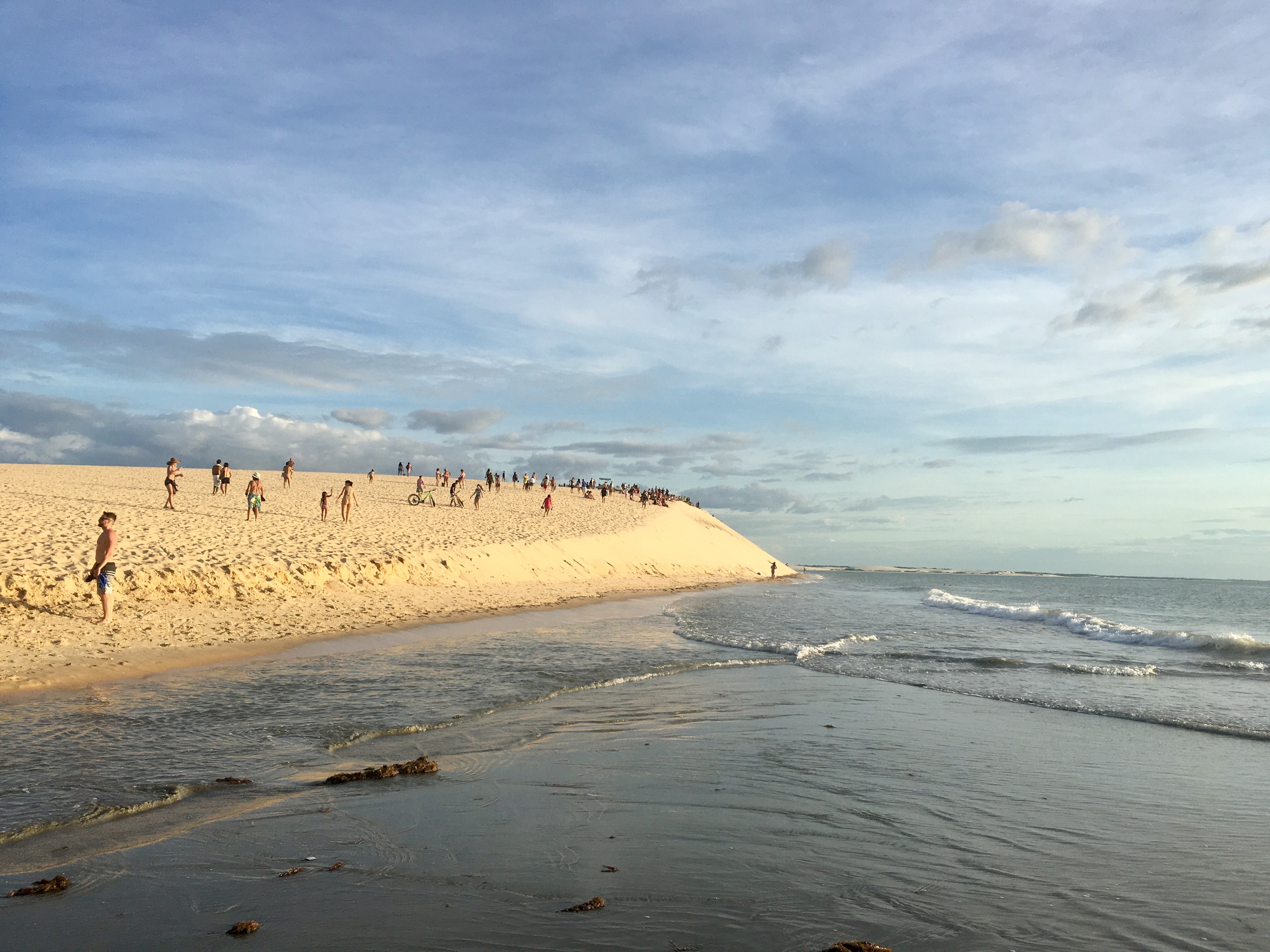
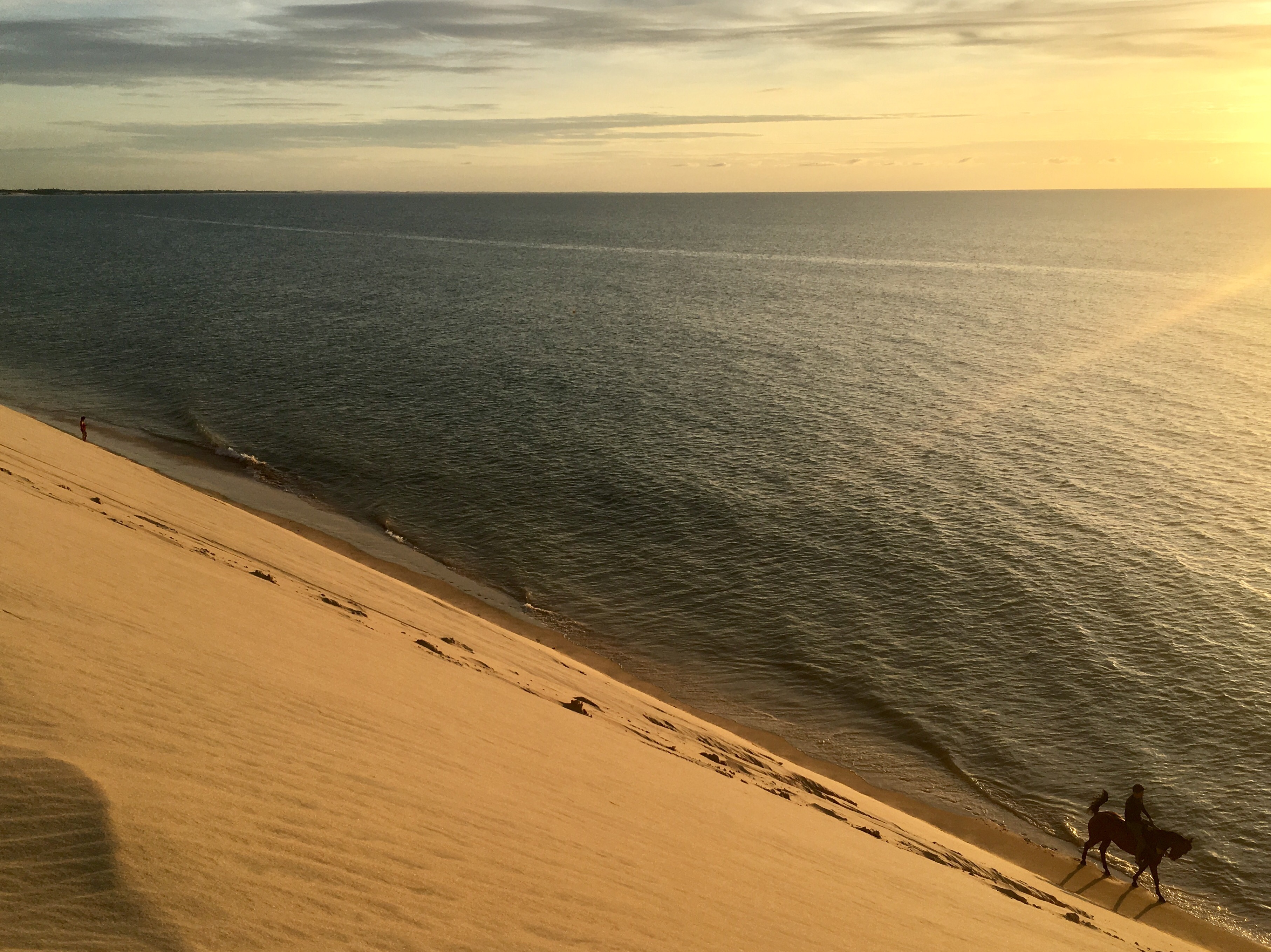
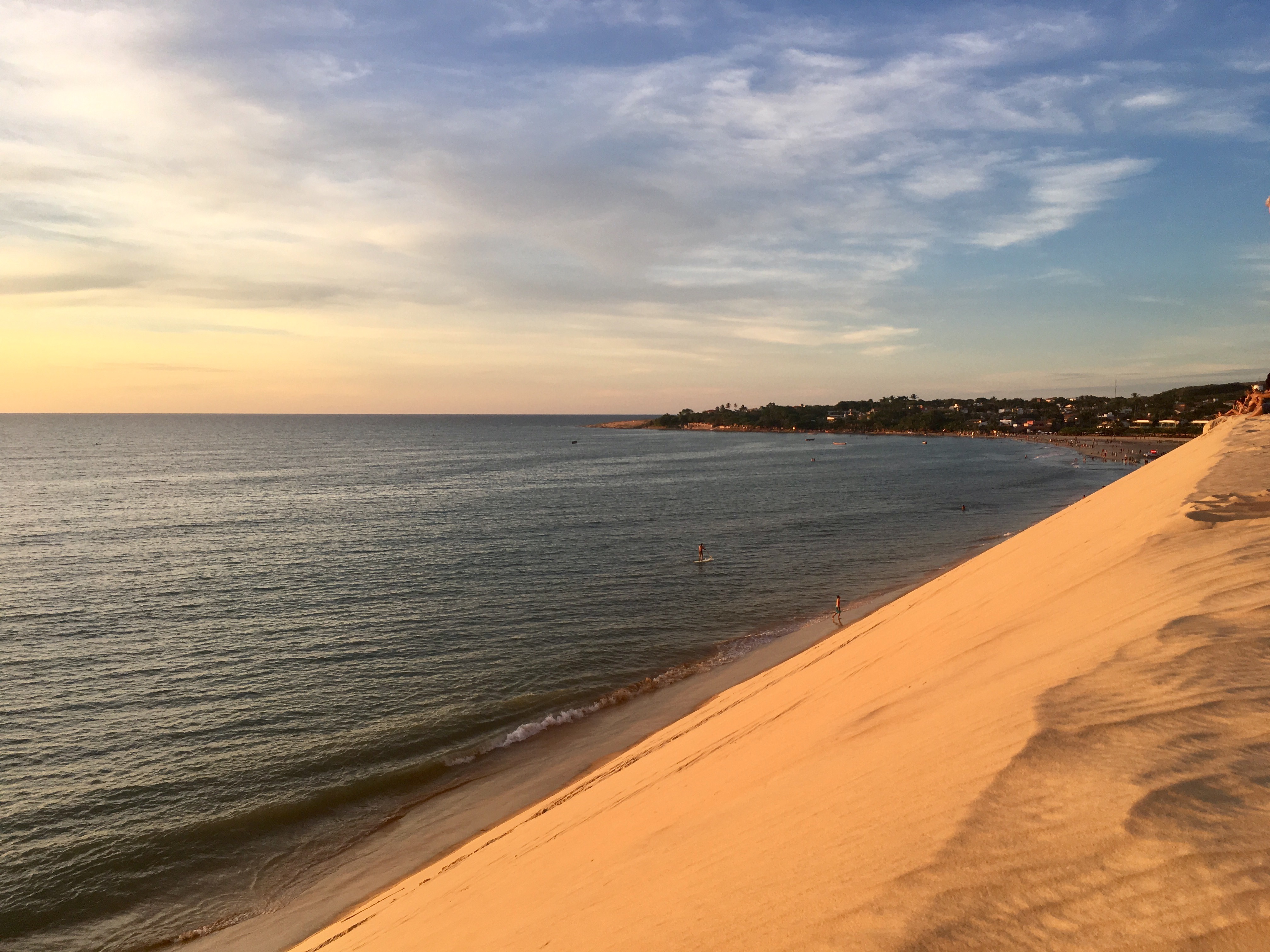
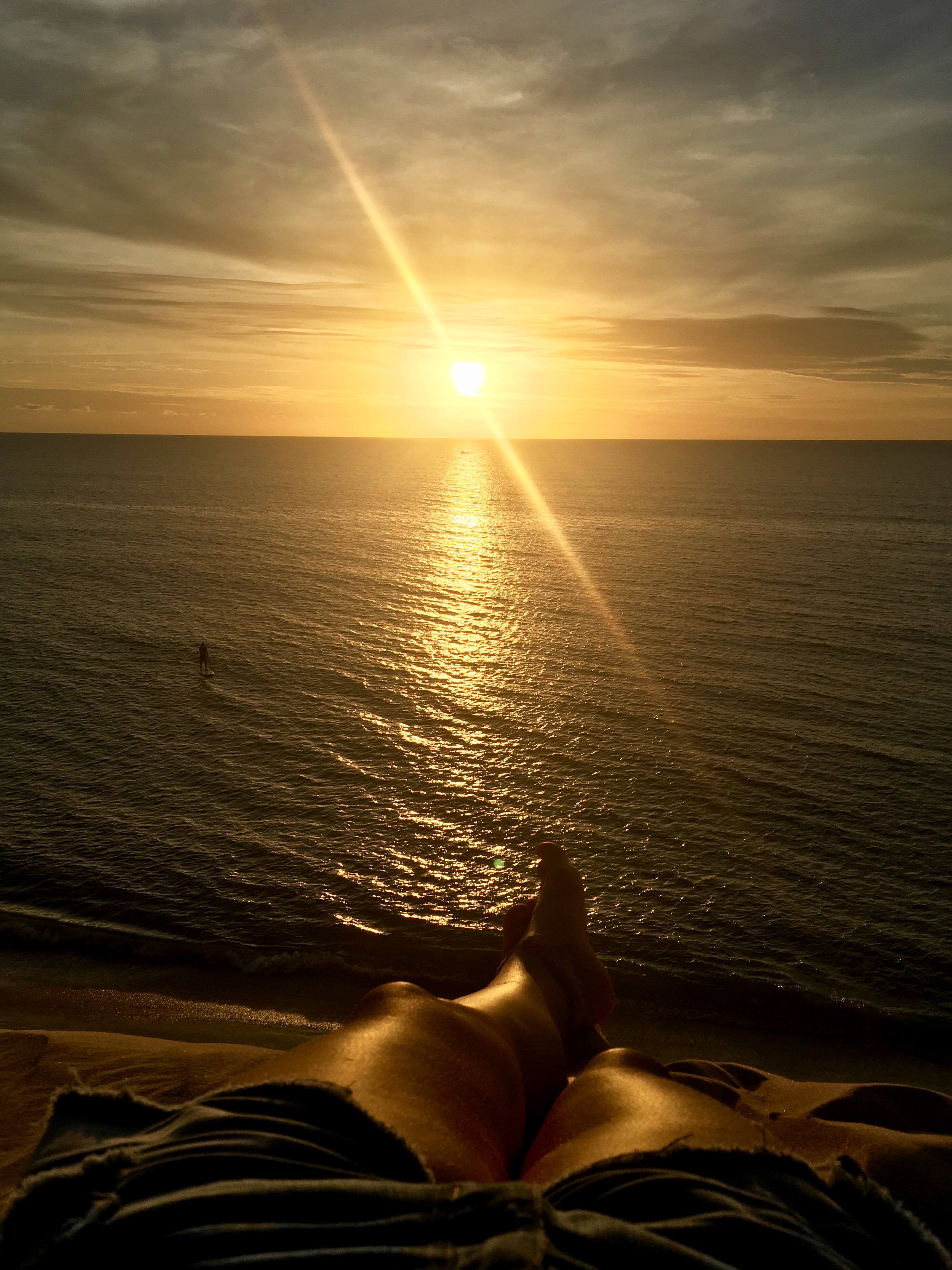
Duna do por do sol – large dune adjacent to main Jeri beach where everyone watches sunset


The town


Caipirinha drink carts line the beach from early evening on


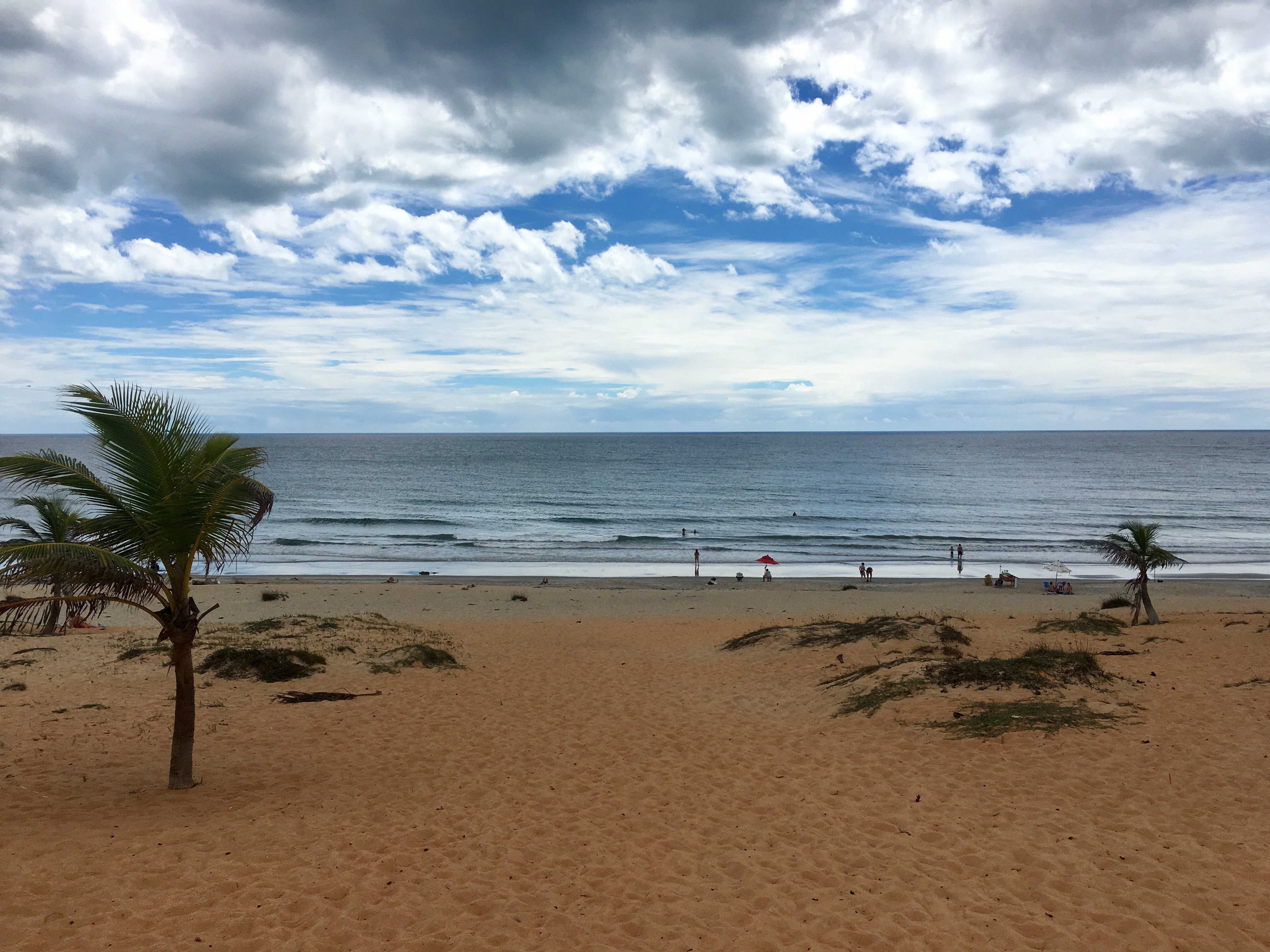
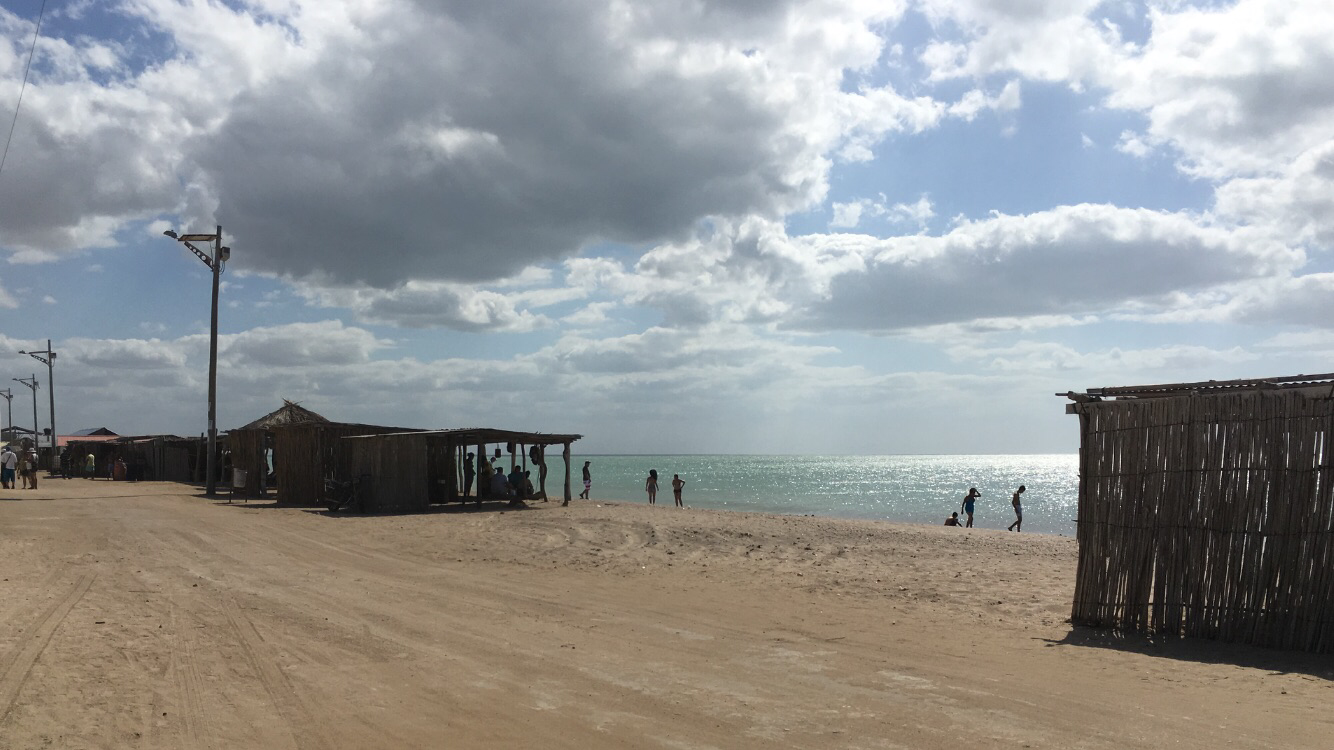
Malhada beach or the “local beach” bc there are no restaurants or services so only locals go. Clearly this was my fave.


Driving to our kiting spot

Alta Guajira’s Cabo de la Vela… visit only if you really love kiting (or as an overnight before Punta Gallinas)

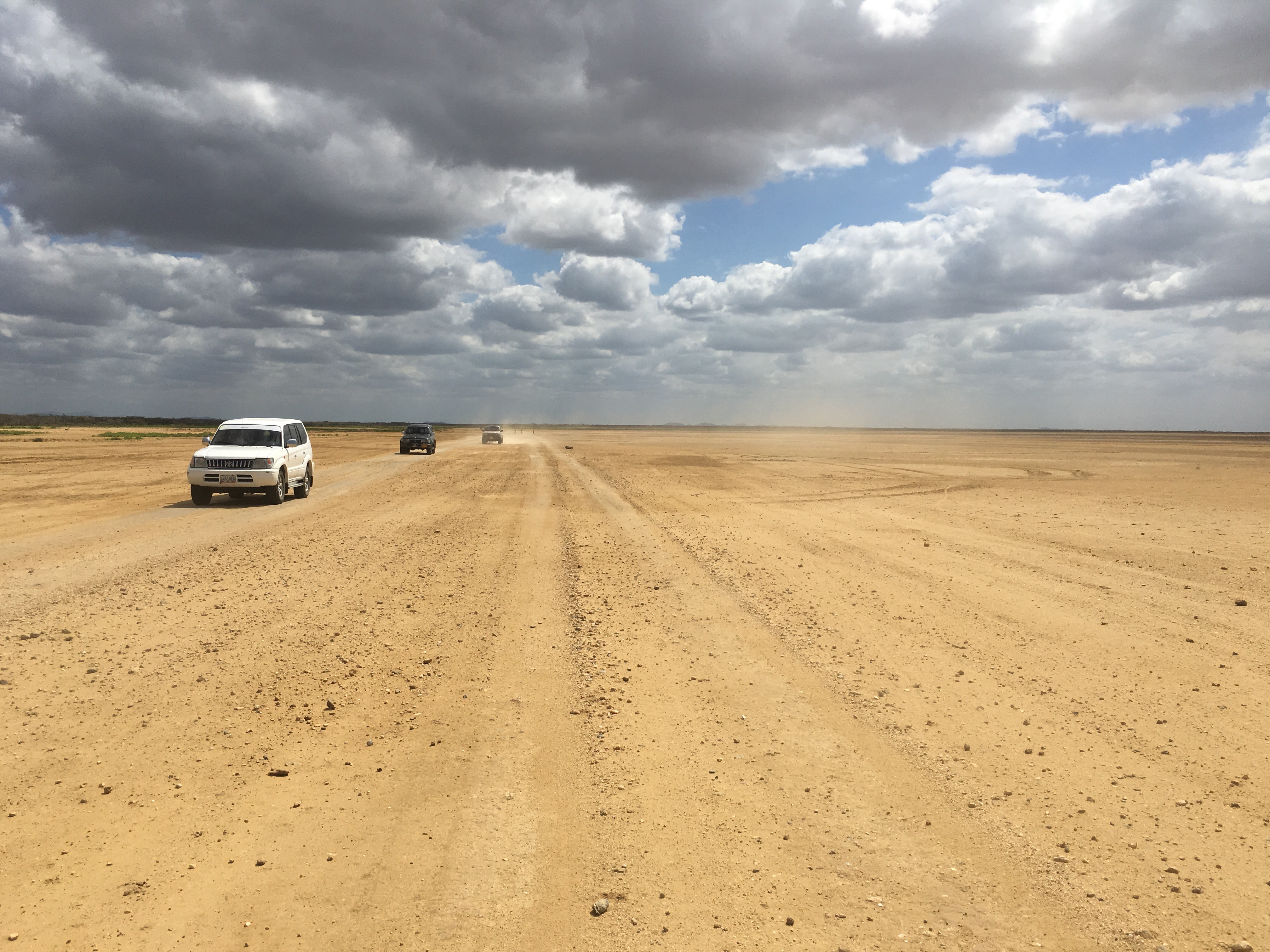
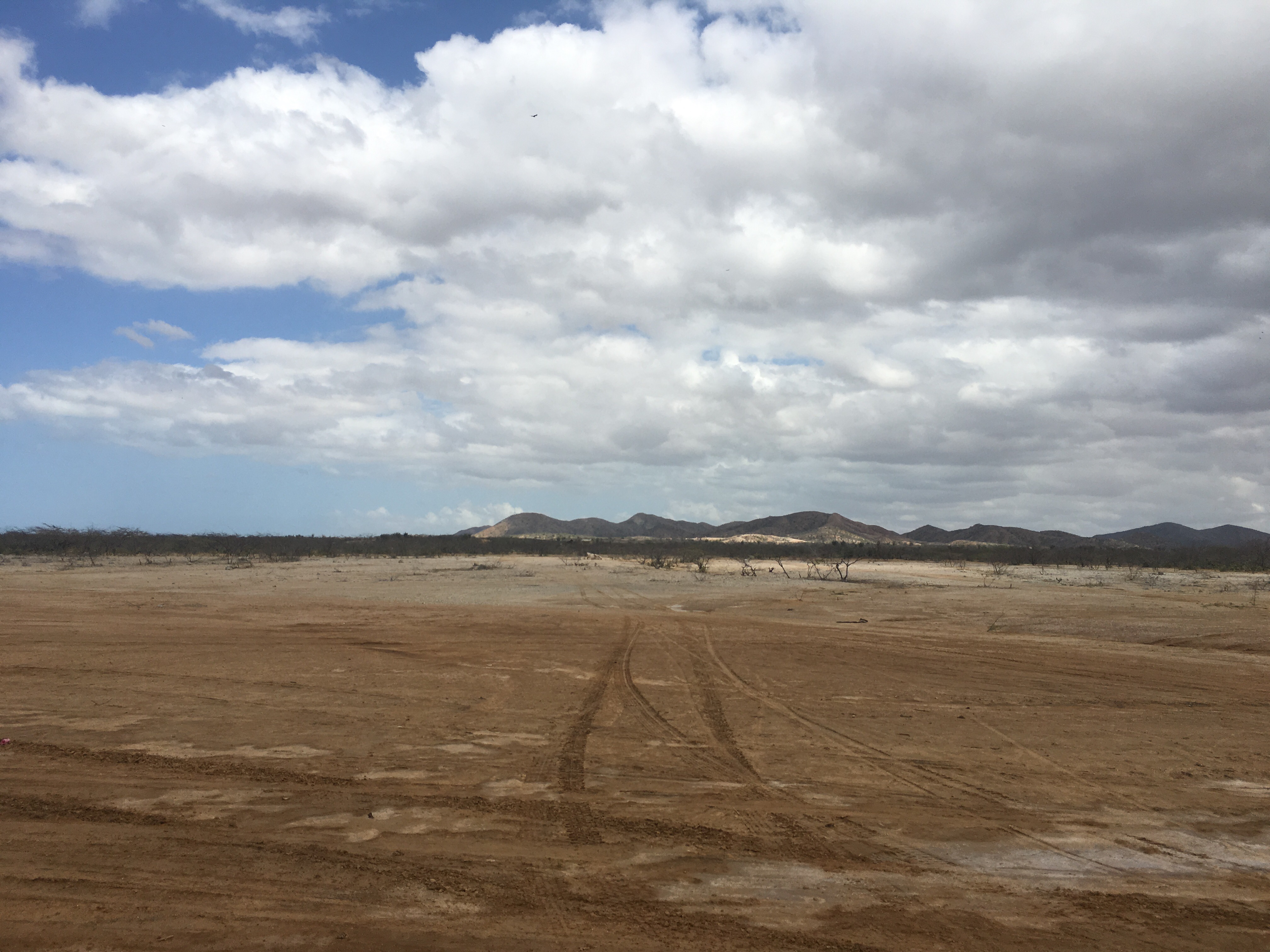
Palomino was in the low region of La Guajira. The high region or alta Guajira is like nothing I’ve ever seen before. Riohacha is the launching point (i.e. not a destination in & of itself) for the alta & its highlights include Cabo de la Vela, population 1500, & Punta Gallinas, far smaller. The region is home to the Wayuu tribe & bc they live in the desert, they can’t grow anything so while they sell their beautifully handmade chinchorros (large hammocks) & bags, they have also welcomed tourism. They invite you into their homes to stay. You sleep in chinchorros outside under a wooden roof for protection from the unusual storm & typical winds but in full view of the starry sky featuring more stars than I’ve ever seen in my life x 10. It’s hot during the day & cold at night thanks to the desert climate. It’s a brutal environment that scares away most tourists. So of course I wanted to visit. 
In the recent past, few tourists ventured as far as Riohacha. Now most tourists who head further NE to Cabo de la Vela & further to Punta Gallinas do so courtesy of 3-day organized tours from Santa Marta in fancy SUVs for a lot of money, much of which does not make it into the hands of the Wayuu. I decided to do it on my own on the cheap & devoted 6 nights, although I wasn’t sure I’d need them all (or could stand them all). For the first time ever, & leveraging my Chicago-honed taxi hailing skills, I flagged down a bus heading E on the main road near the Palomino center, told the driver I was headed to Riohacha & he waved me aboard. 1.5hrs later I made it to Riohacha & pulled out the trusty LP to guide me the rest of the way. Hailed a taxi to run a few errands including cash as Riohacha is the last place I’d see an ATM for a week & everything operates solely on cash up N. Taxi then dropped me at a corner w colectivos looking to fill rides to Uribia. It took about 2 mins to find one w a spot for me, negotiated price & we were off, arriving 1.5hrs later. My colectivo driver seemed most concerned with helping me find the next transport heading to Cabo de la Vela & thankfully his other local riders didn’t seem to mind. 
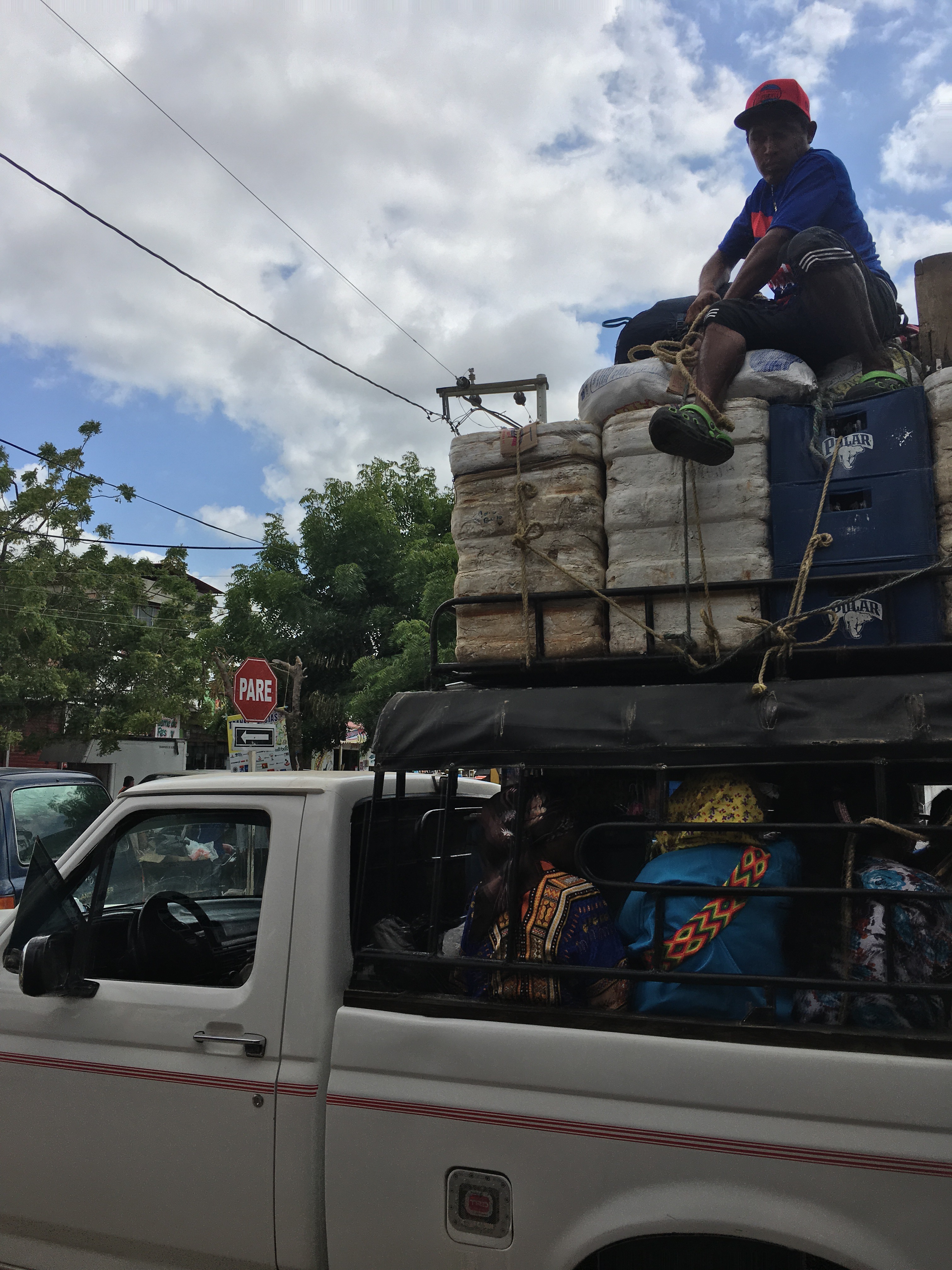
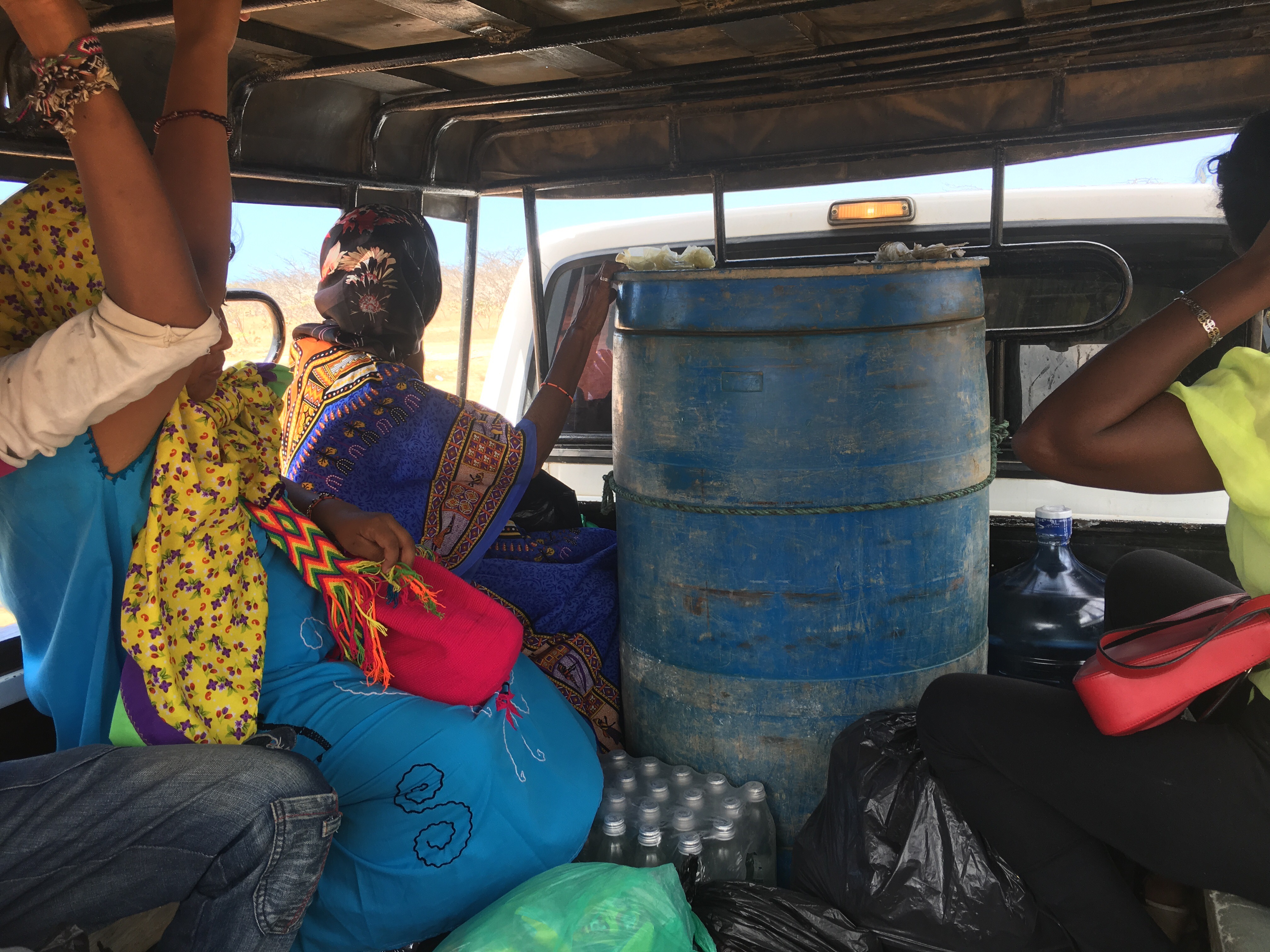
Now this was the fun part. I was loaded onto a 4WD (bc that’s the only kinda vehicle that can make it any further) & “enjoyed” a bone crushing, teeth chattering 2.5+hr journey to Cabo de la Vela. The truck was like those you see in movies. A big cab w a metal frame in the bed containing wooden bench seats along the side & thankfully metal safety guards to keep you from bouncing out. Then on top? It’s piled high w anything & everything the driver is bringing back to Cabo de la Vela on behalf of various business owners along his route. This includes massive styrofoam containers filled w ice & refrigerated items (bc there’s no refridgerators & barely electricity in Cabo de la Vela), gasoline (a LOT of gasoline including a massive drum that traveled w us in the rear – I chose not to consider what would happen in the event of an accident – bc there’s no gas stations beyond Uribia), various food items & a massive amount of beer (noted). Perched atop everything was my backpack secured w rope. The driver’s 3 sons served as the packers who piled things perfectly in a mound atop the frame & rode atop it until each delivery stop where, in a jenga-like game, they had to carefully remove the intended package without everything else toppling over. It was really quite fascinating. All the while, I’m crammed in the back as the only tourist accompanied by 11 Wayuu women & 5 children on laps w more packages, fruits & veggies, eggs & the massive gasoline drum in between us. It was a trip. We must’ve looked amazingly ridiculous bc all of those rich DBs who paid USD$1k for a 3-day trip were racing up in their fancy SUVs as we neared Cabo de la Vela just to get photos of the circus on wheels & the gringo along for the ride. 
The driver kindly dropped me right at my hostel located a 10min walk outside of town right on the water bc of course, it was on his delivery route. The hostel was recommended by the coffee finca owner & is owned by a couple who’ve been in the area for years & operate a kite surfing school. So my plan in Cabo de la Vela was to finally learn how to kite. I was sure it probably wouldn’t go well but I was down for a challenge & always some laughs. Unfortunately, the owners left last minute due to a family emergency & left the place to some overwhelmed volunteer backpackers & the remaining kiting instructor was far too busy &/or did not excel at time management. He was unable to accommodate all of the kiters on his own so after repeated promises that kept falling through, I decided to call short my time in Cabo de la Vela & head N to Punta Gallinas via a supposed even more harrowing trip. You see, while Cabo de la Vela is a lovely place & the hostel was located right on the water, there is really nothing going on in that town unless you are very into kite surfing. The desert heat leaves you constantly seeking shade & while waiting & hoping for my lessons to begin, I wandered the town, watched other kiters (but that just made me envious), made friends w some local Wayuu kids & of course bought some Wayuu bags.
After the rustic nature of the accommodations in Cabo de la Vela – showers by bucket, toilets as you can imagine (SE Asia prepared me well), no / minimum electricity, few resto options so cooking on your own in a rustic kitchen, occasional mice & cockroaches – given the fact Punta Gallinas is far more remote, I wasn’t quite sure what to expect, but I was down for it & excited. 

The ride from Uribia to Cabo de la Vela w my backpack at the top of the heap.

Being chased down by the lazy well-off gringos in their SUVs. They’re missing out on half the fun. You appreciate it more if you work for it.

Video of the drive:

https://youtu.be/fxskFbcpiGk

Tracks to nowhere
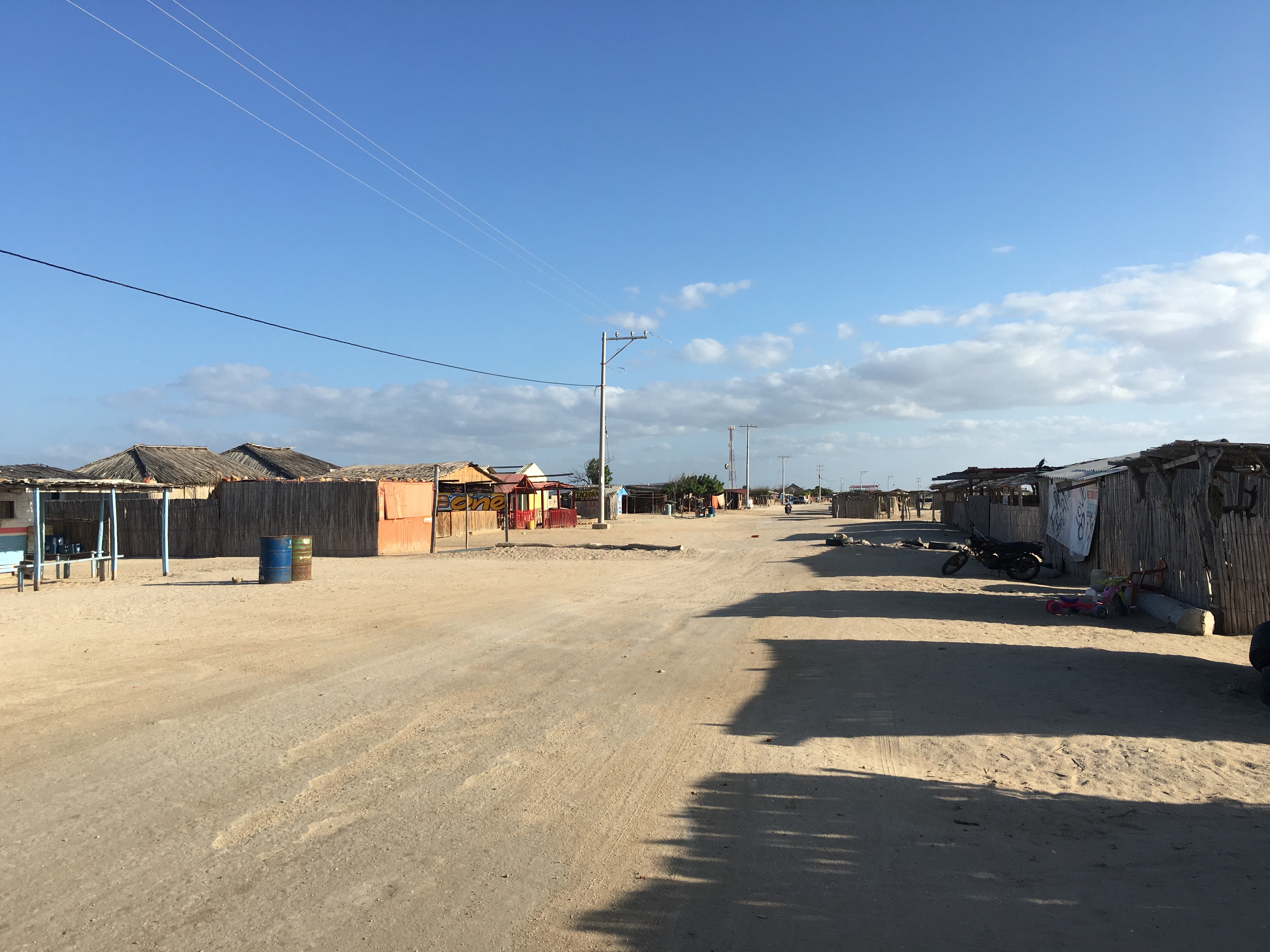
Cabo de la Vela’s main strip

The hostel
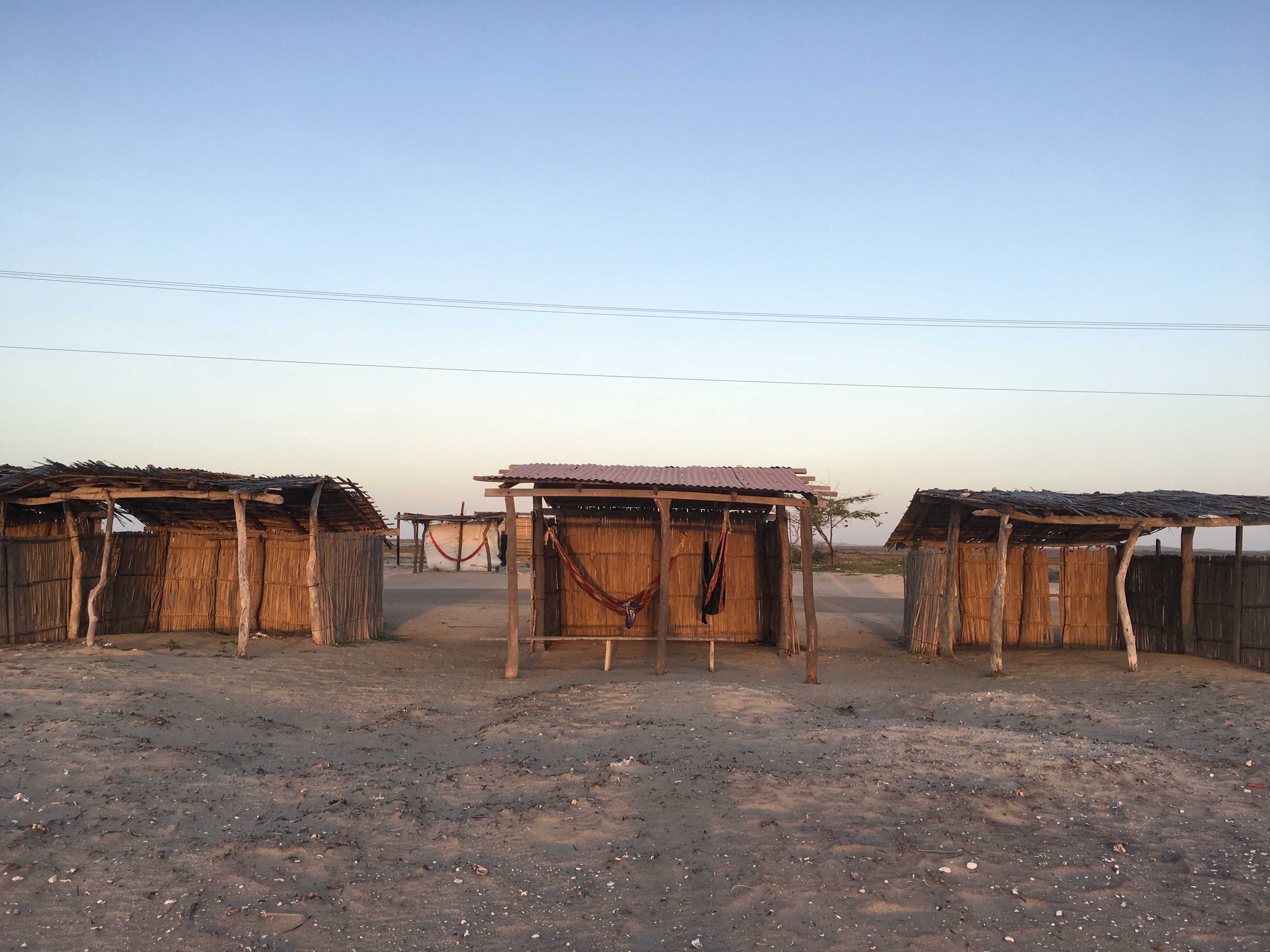
Sleeping conditions
View of town from my hostel. If you’re going to do remote, you might as well go all in. My headlamp was critical on this trip.
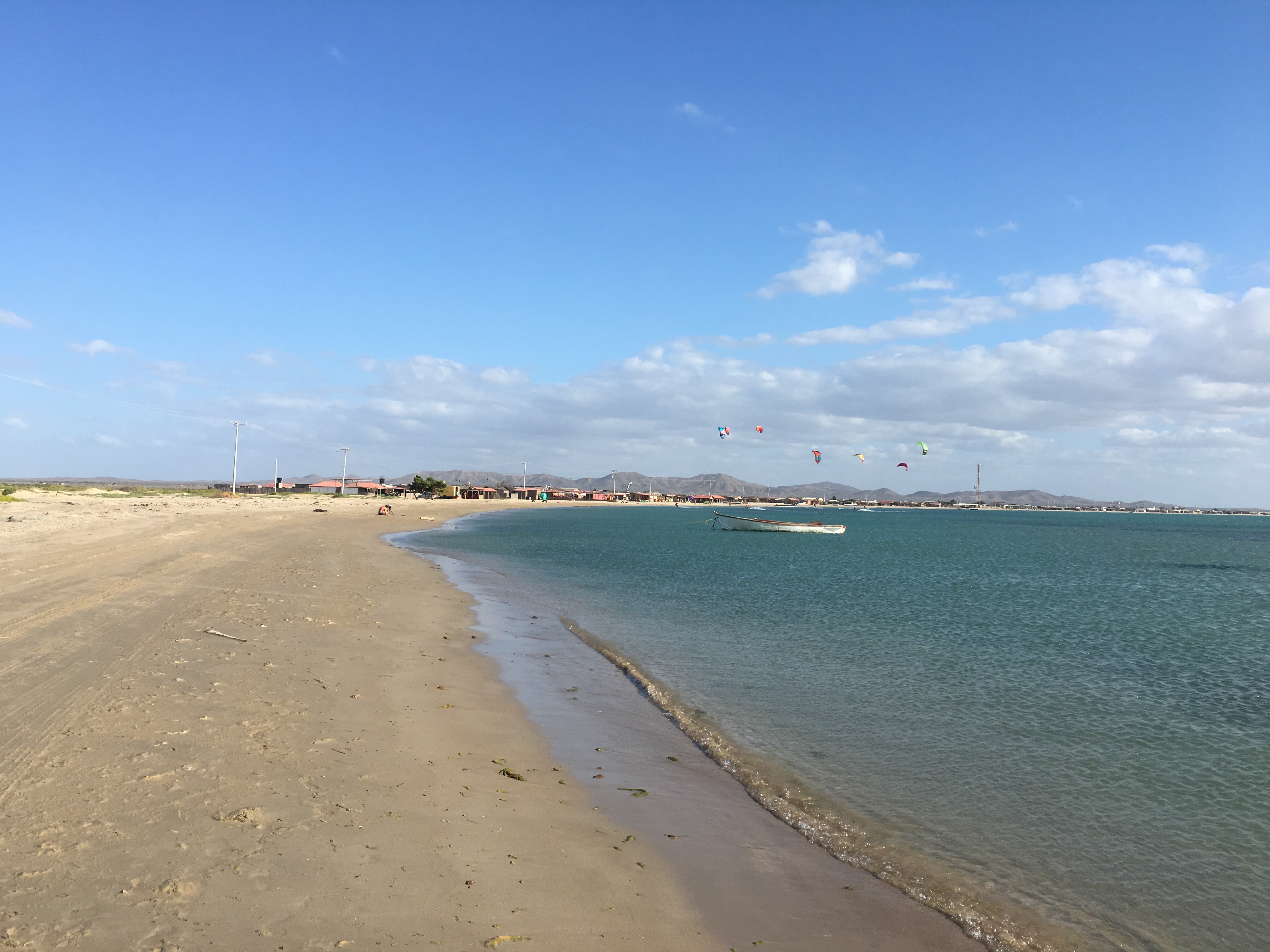
View from other side of town, towards my hostel
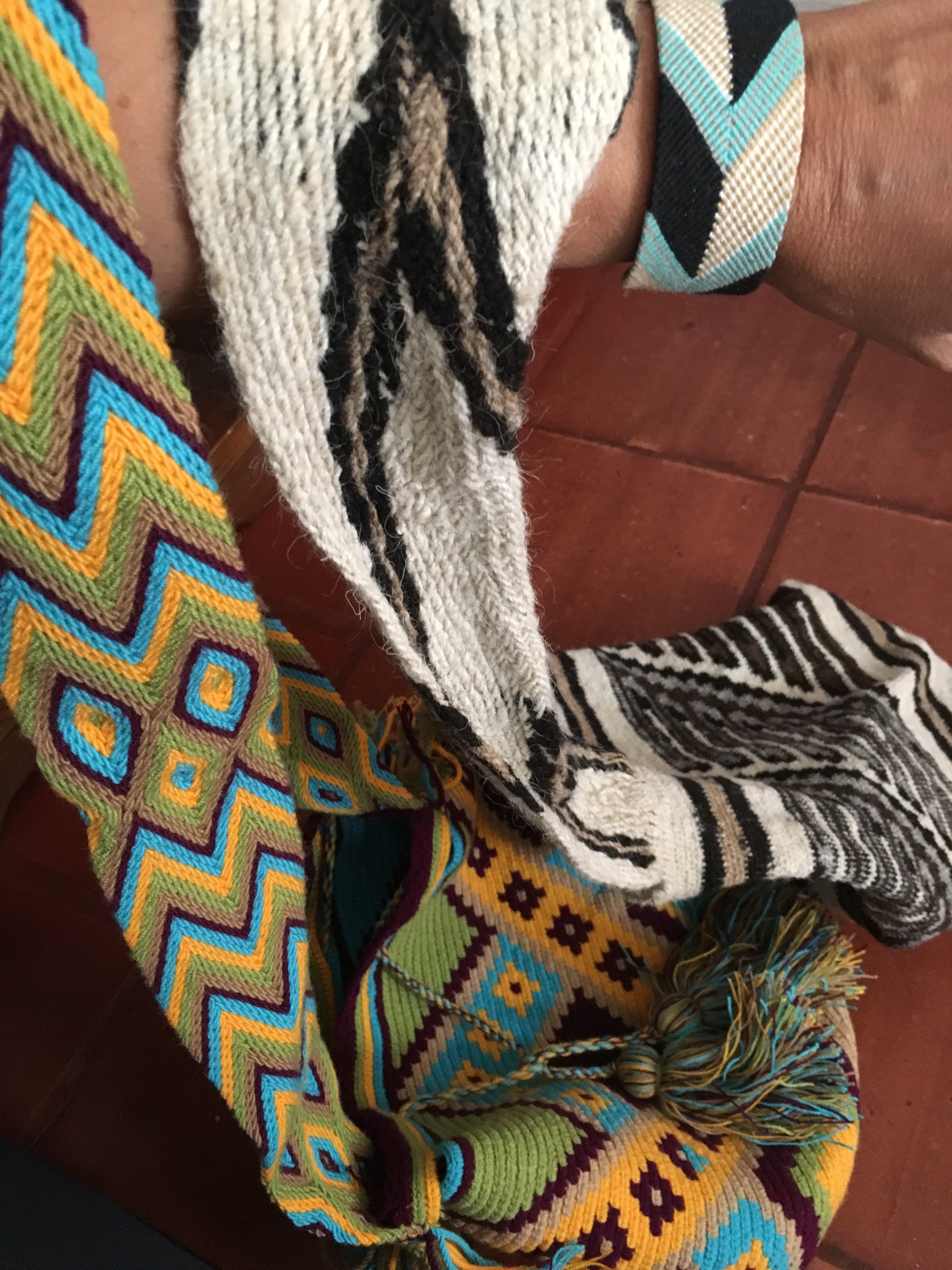
The 2 Wayuu bags, or mochilas, I bought in Cabo de la Vela as well as a bracelet made by a fun 13yo boy. I made him tell me about school & what he was learning & we talked for 30mins before I’d buy a bracelet. Then we made up our own secret handshake he was always so excited to show off the countless times we’d run into each other. The bags are so interesting. Each pattern has a special meaning. Upon a girl’s first menstrual cycle, she’s locked away w her mom & grandma for 6mos to 1yr as they teach her how to be a Wayuu woman which includes learning how to crochet these bag & the meaning behind the patterns. Don’t ask me what my patterns mean. All I know is the white one is about 2x cost of the multi-colored one due to the quality of the materials. I think they’re gorgeous. I’d have bought 20 if I could to bring them home for everyone. But they weren’t super cheap. Many Colombians carry them – all Wayuu do – both men & women.