
I just finished “Cambodia’s Curse: The Modern History of a Troubled Land” by Joel Brinkley, a Stanford journalism prof, former NY Times reporter/editor & Pulitzer Prize winning journalist for his work during fall of Khmer Rouge. It investigates the country & its people & how history has impacted the modern day state. You know, some light reading during my travels. Haha. I’m not going to lie, it’s a frustrating read at times & one that I had to periodically put down bc I was pretty disgusted w some of its revelations. But I kept coming back as it’s a fascinating read into the Cambodia culture & the current still-sickening state of its political environment. Even while visiting the country, I was unaware of some of the more recent history & this book really puts some things I saw into perspective. I would consider myself a relatively informed person & yet living in our shielded US-centric society, I was blissfully unaware of the sad state of affairs still plaguing today’s Cambodia. A few of you previously commented you wish you had learned more about it so I thought I’d recommend the read.
Tag: Cambodia
Doing it like the locals do
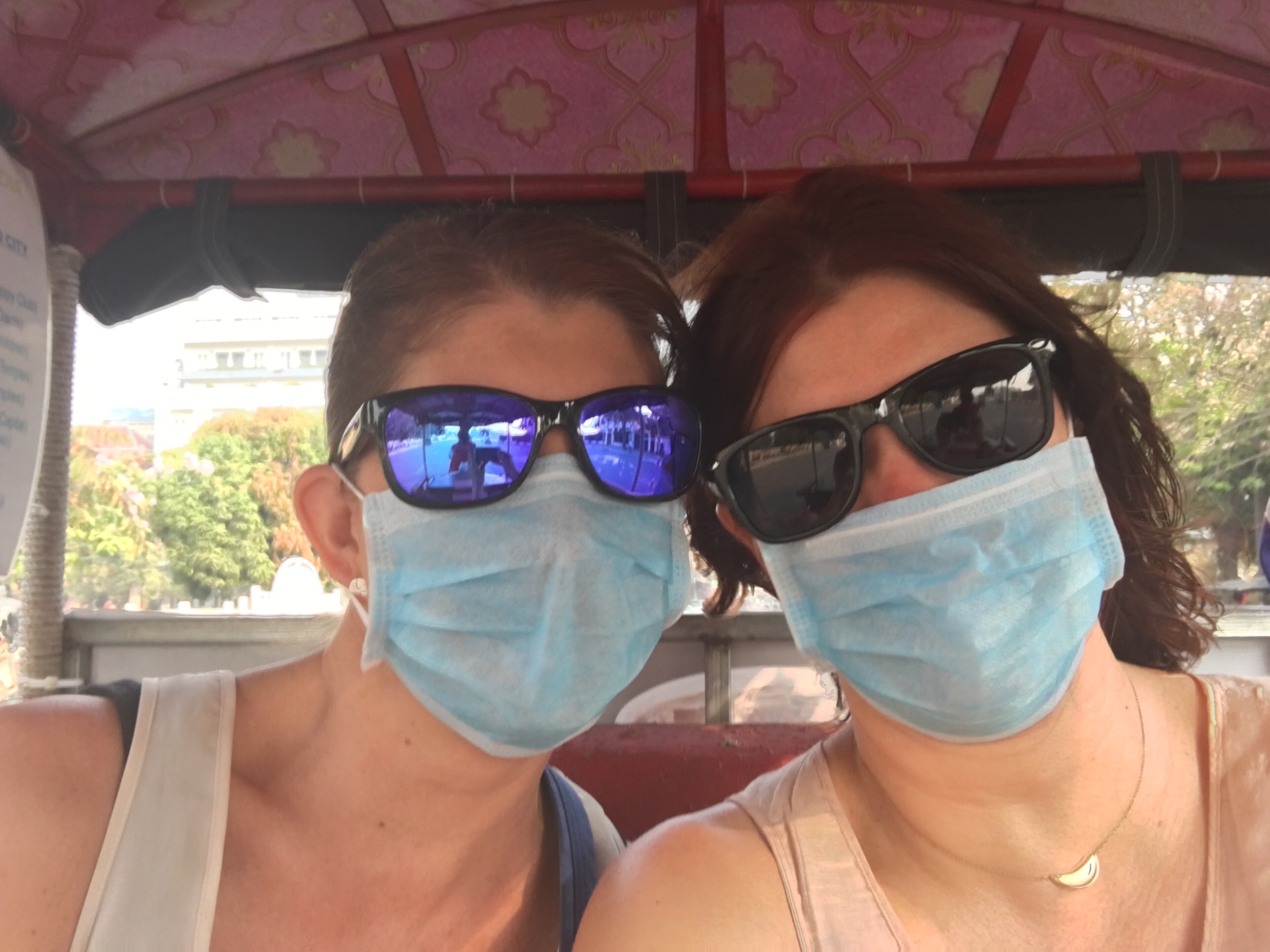
The masks. Asians wear them a lot for a variety of reasons including vehicle exhaust, dust from gravel roads, illness & likely even pollution (Bangkok). People take it to extremes so we couldn’t help but make derisive comments. That is, until our Phnom Penh tuk tuk driver, Mr Vann, insisted we wear masks bc the killing fields are out of the city & past several gravel roads. We now have an appreciation for them (in certain cases only) & were of course now making fun of those dummies who weren’t wearing them & hacking away in the dust storms.
A sobering day in Phnom Penh
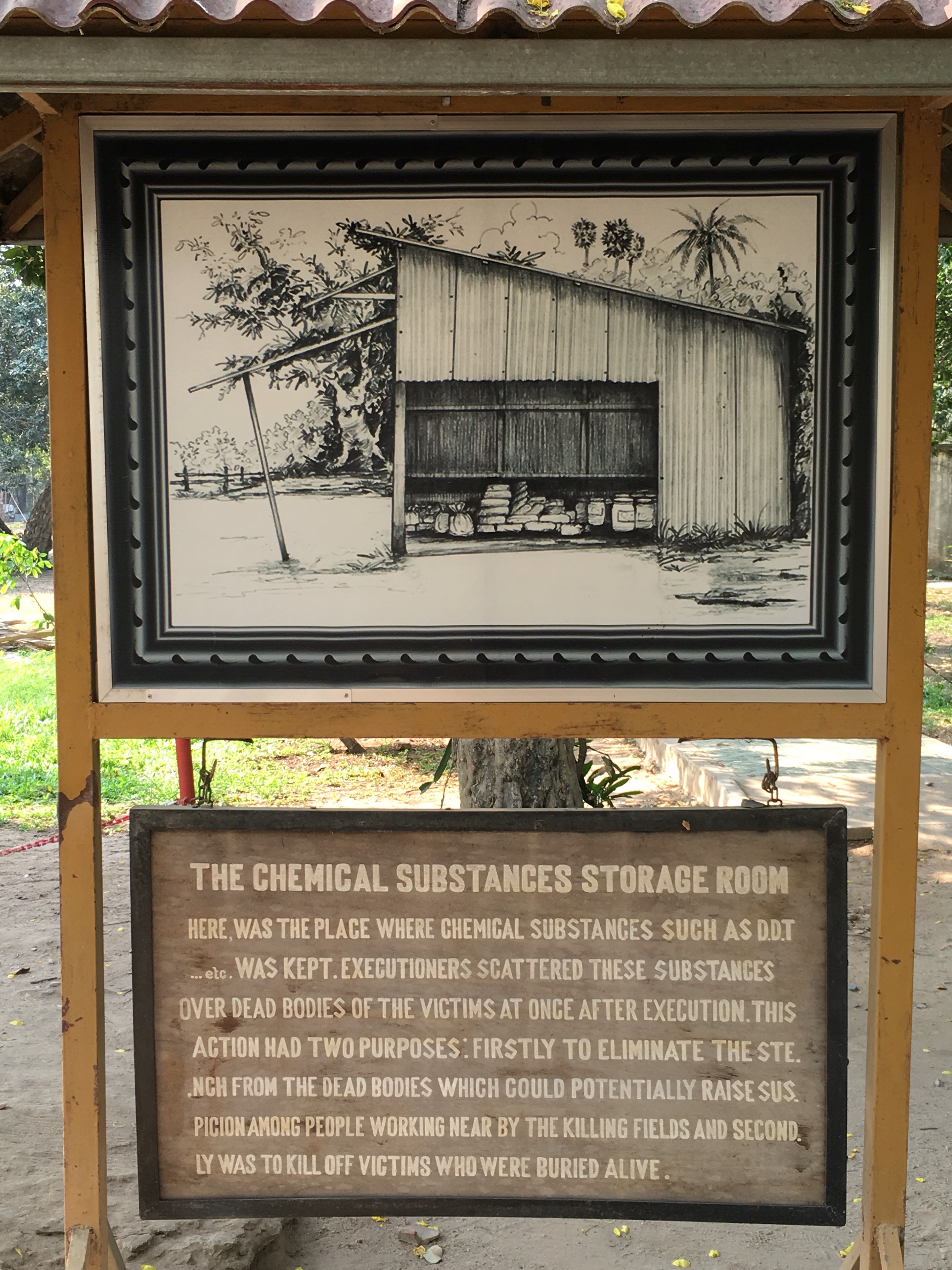
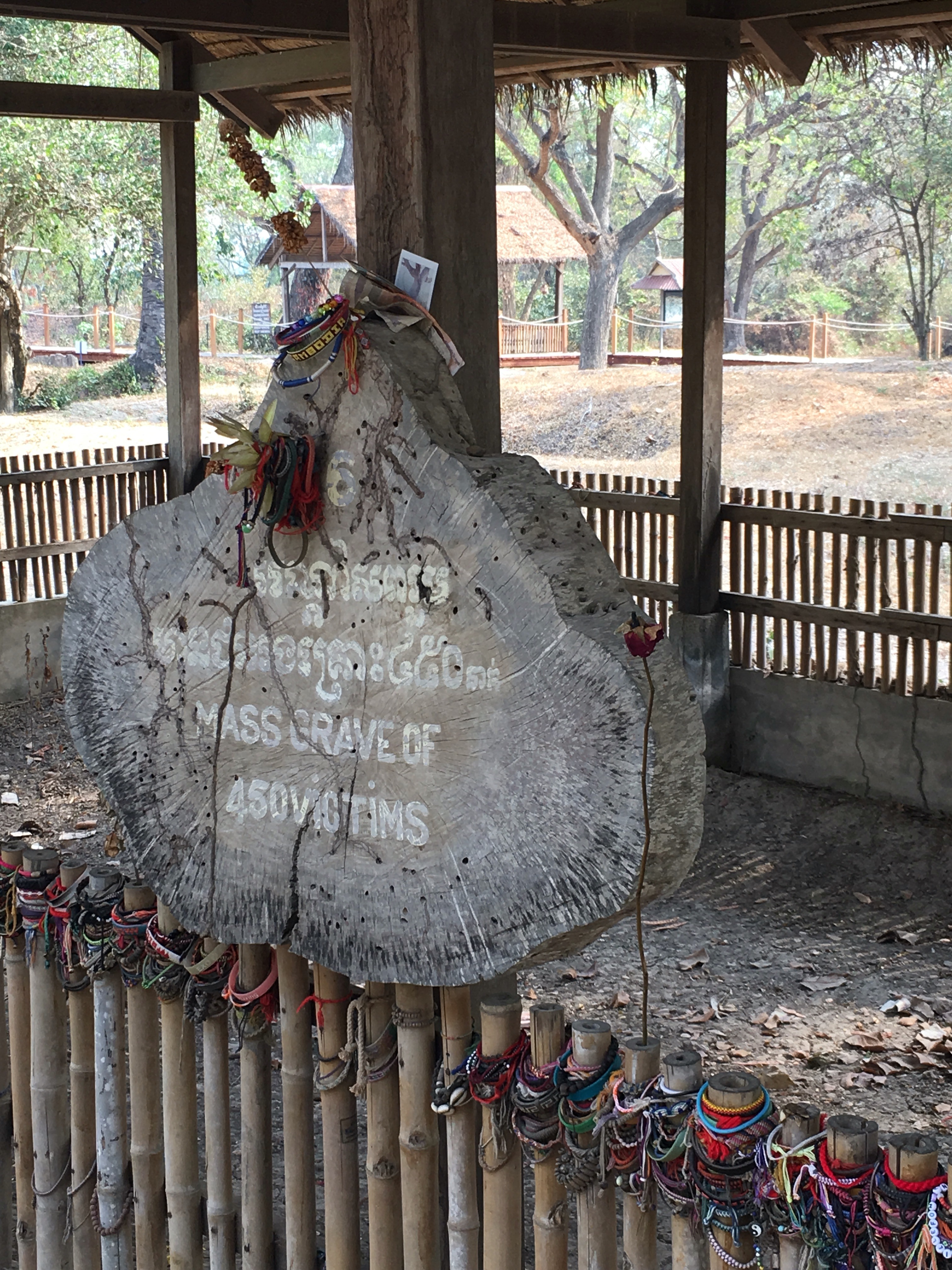
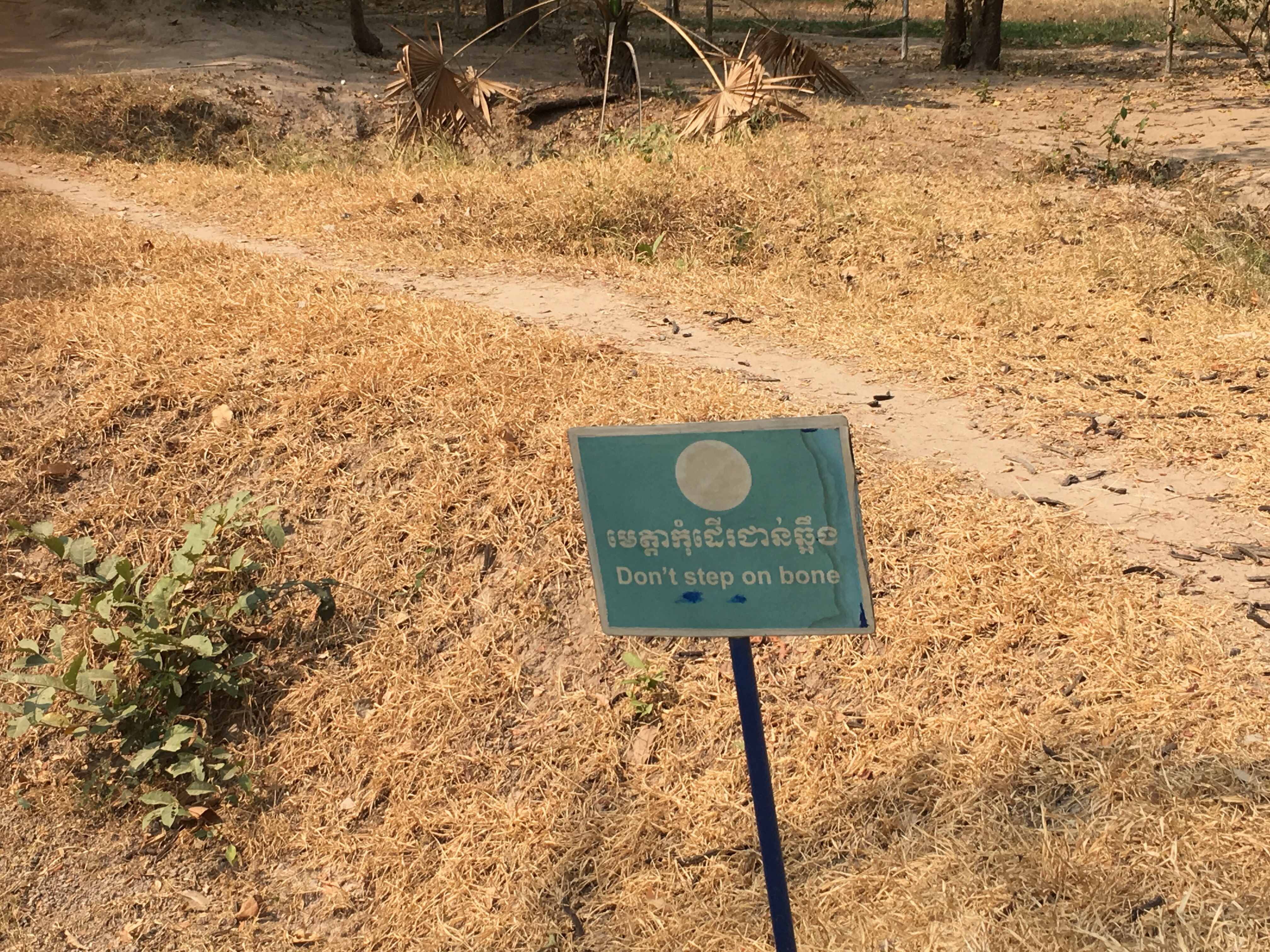
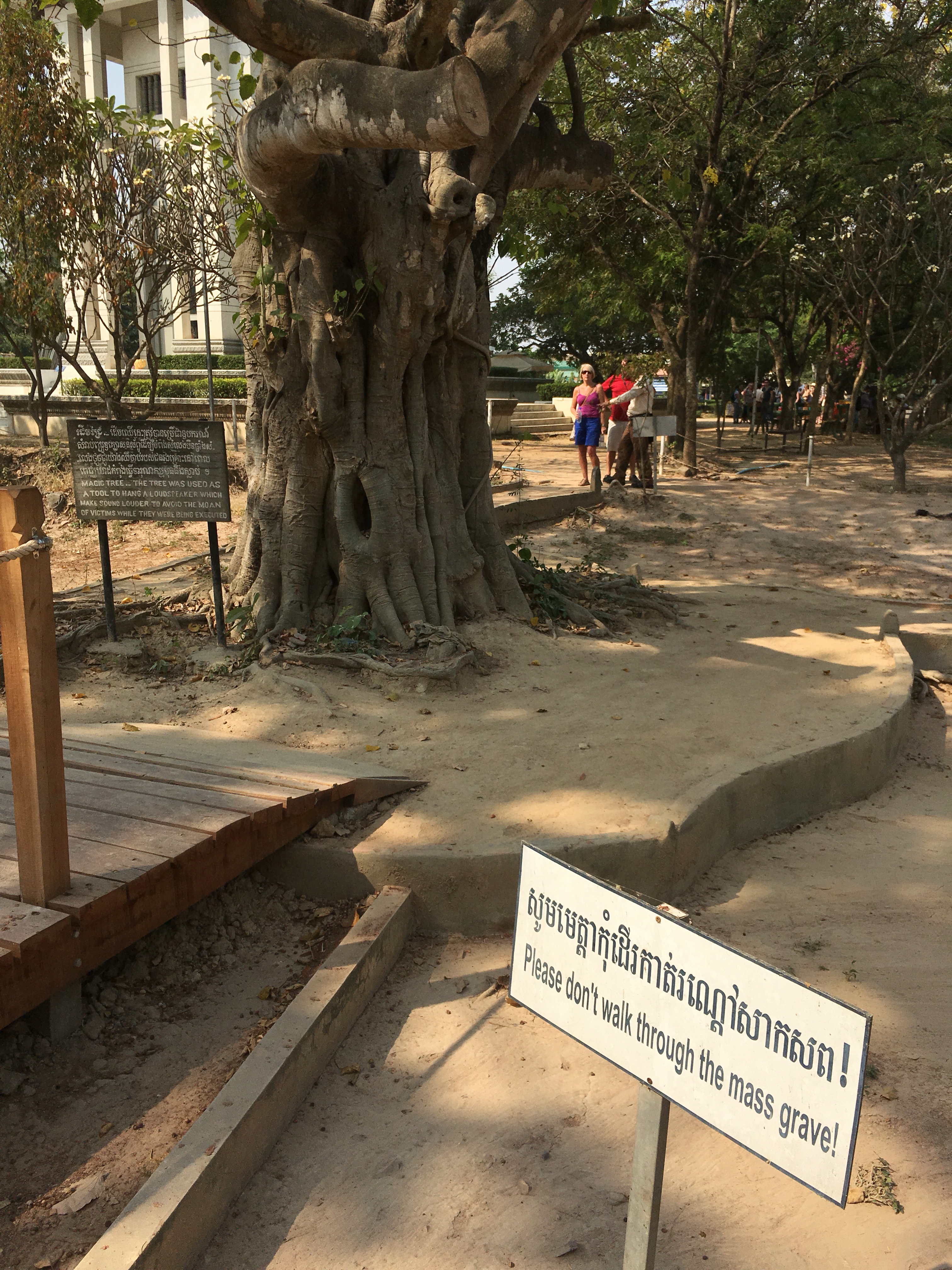
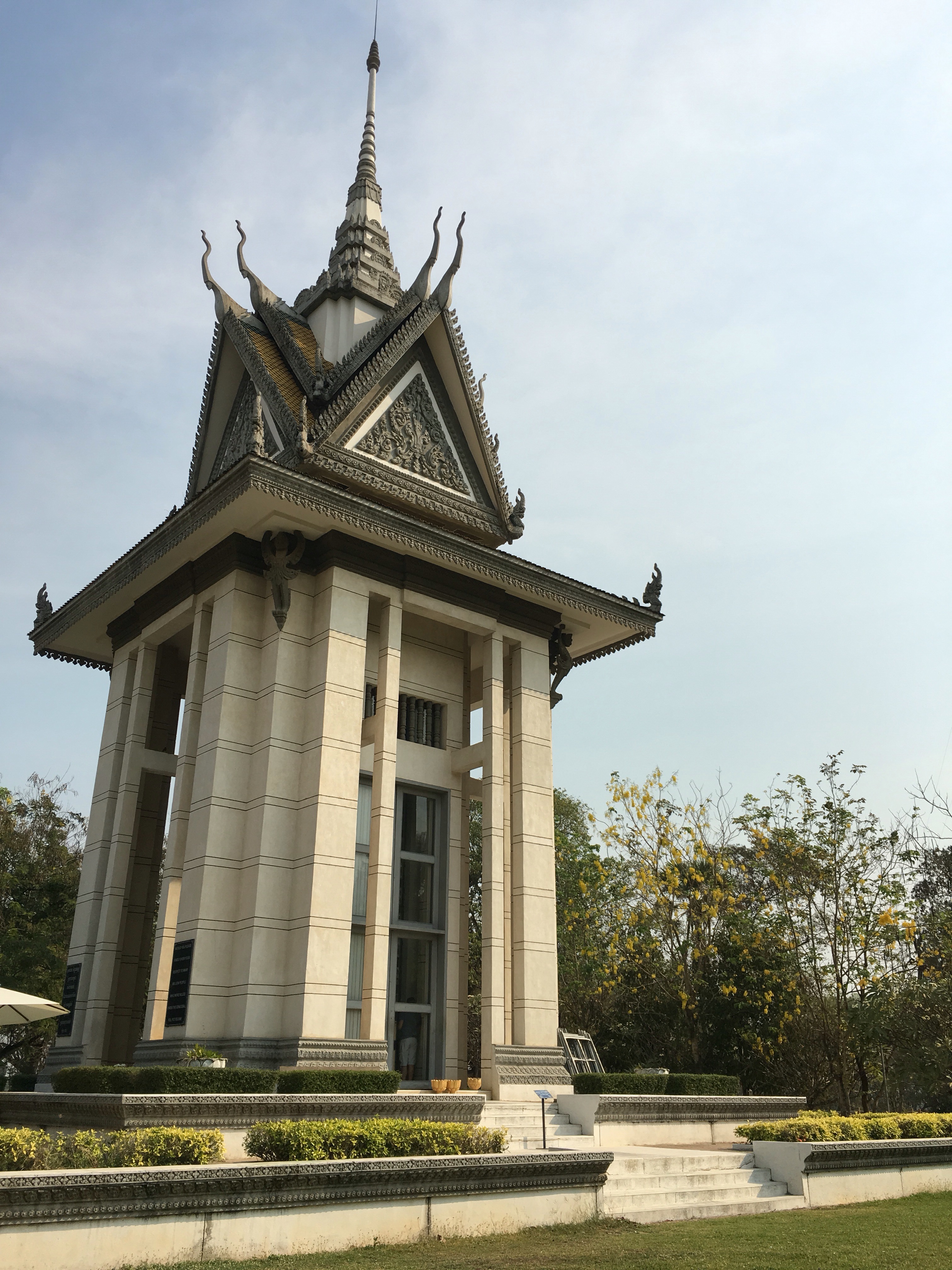
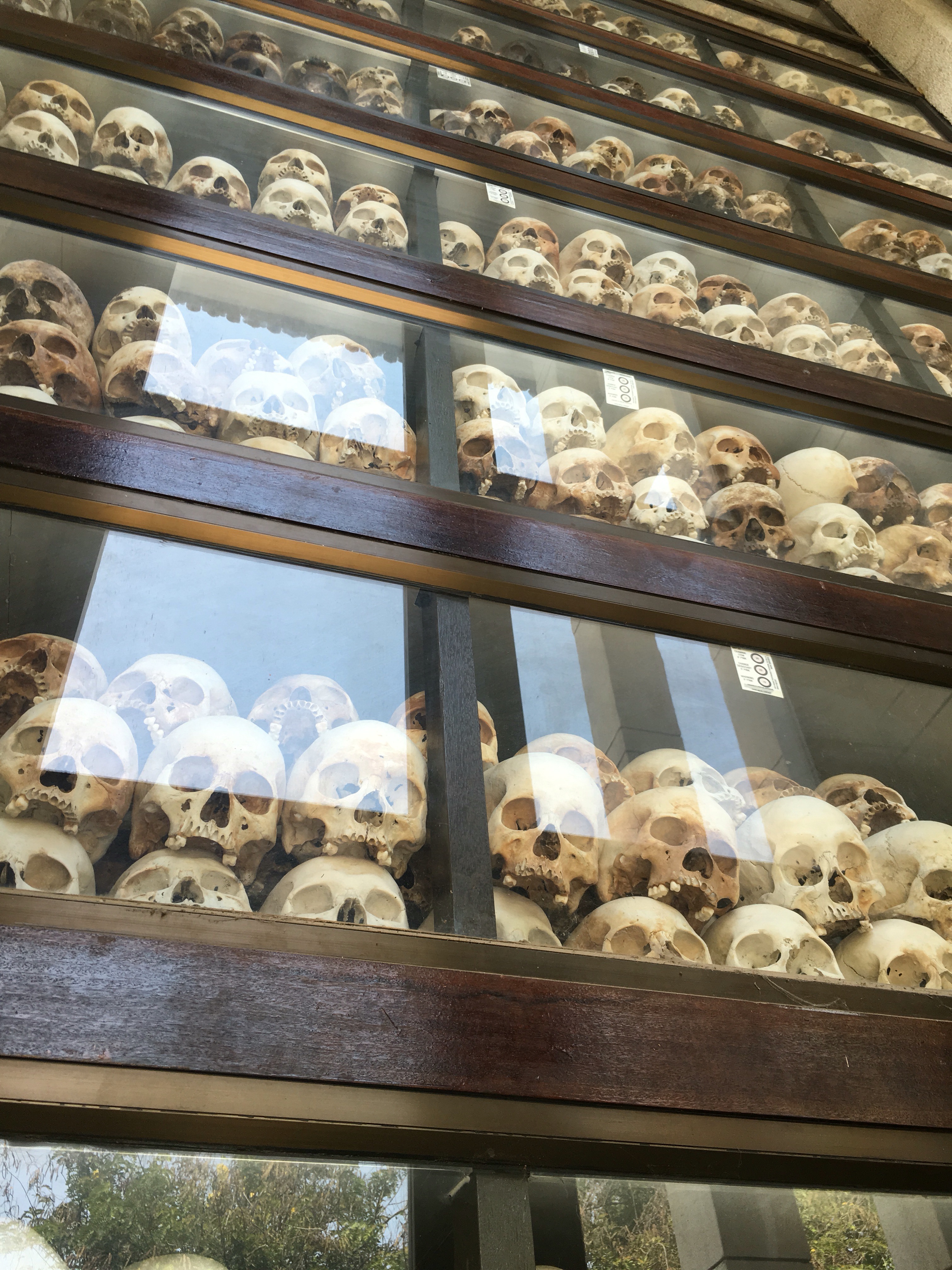
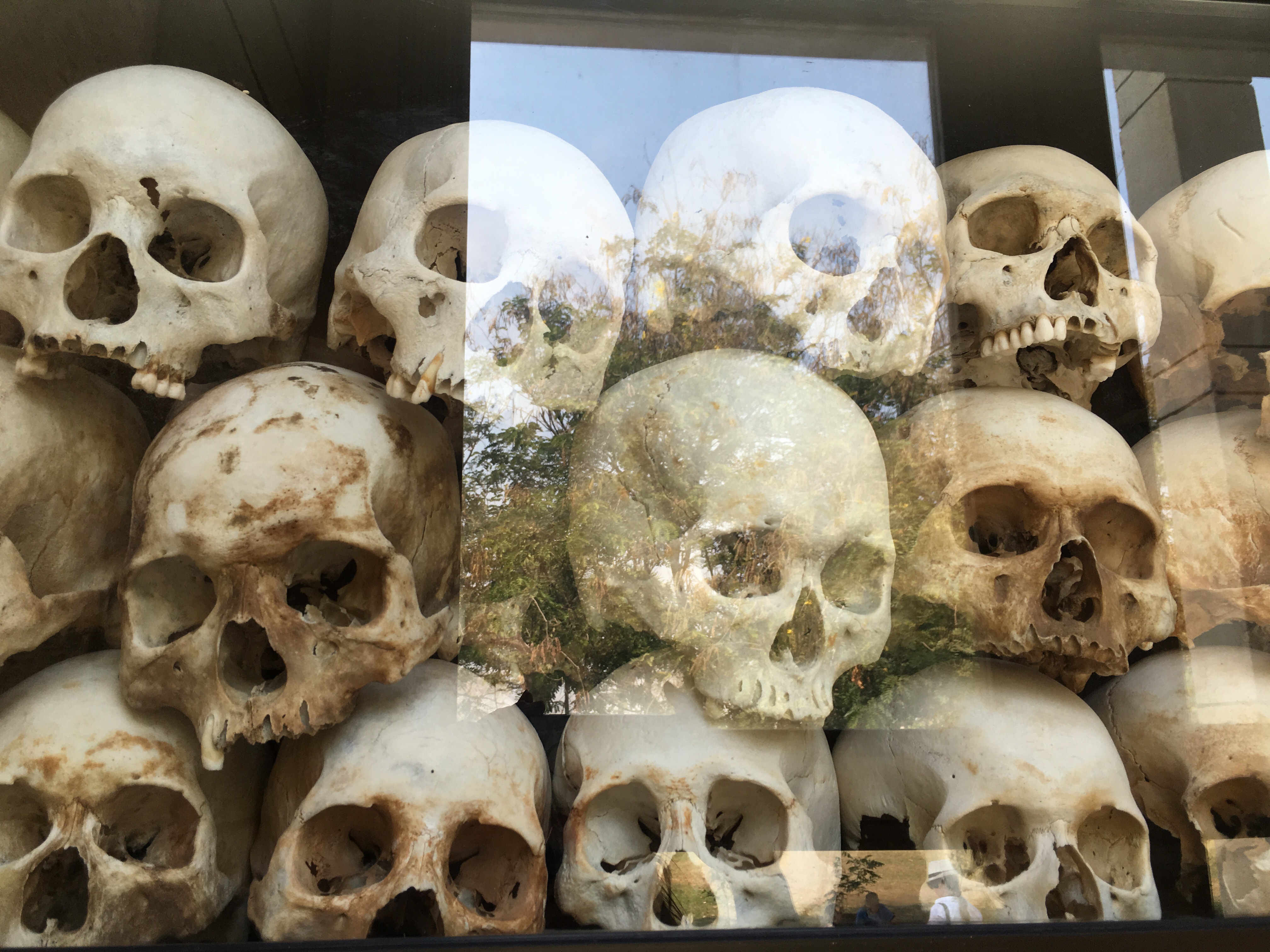
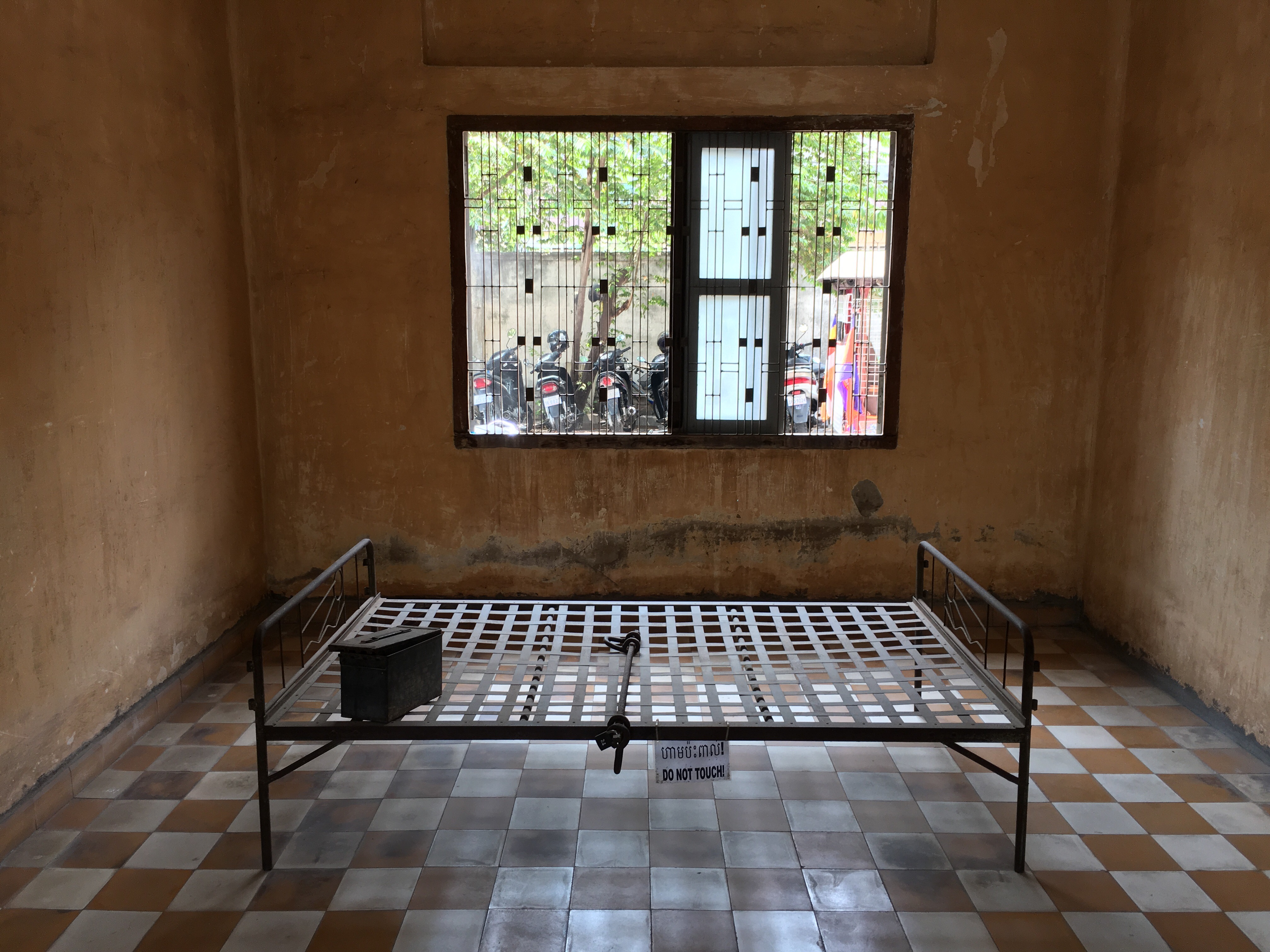
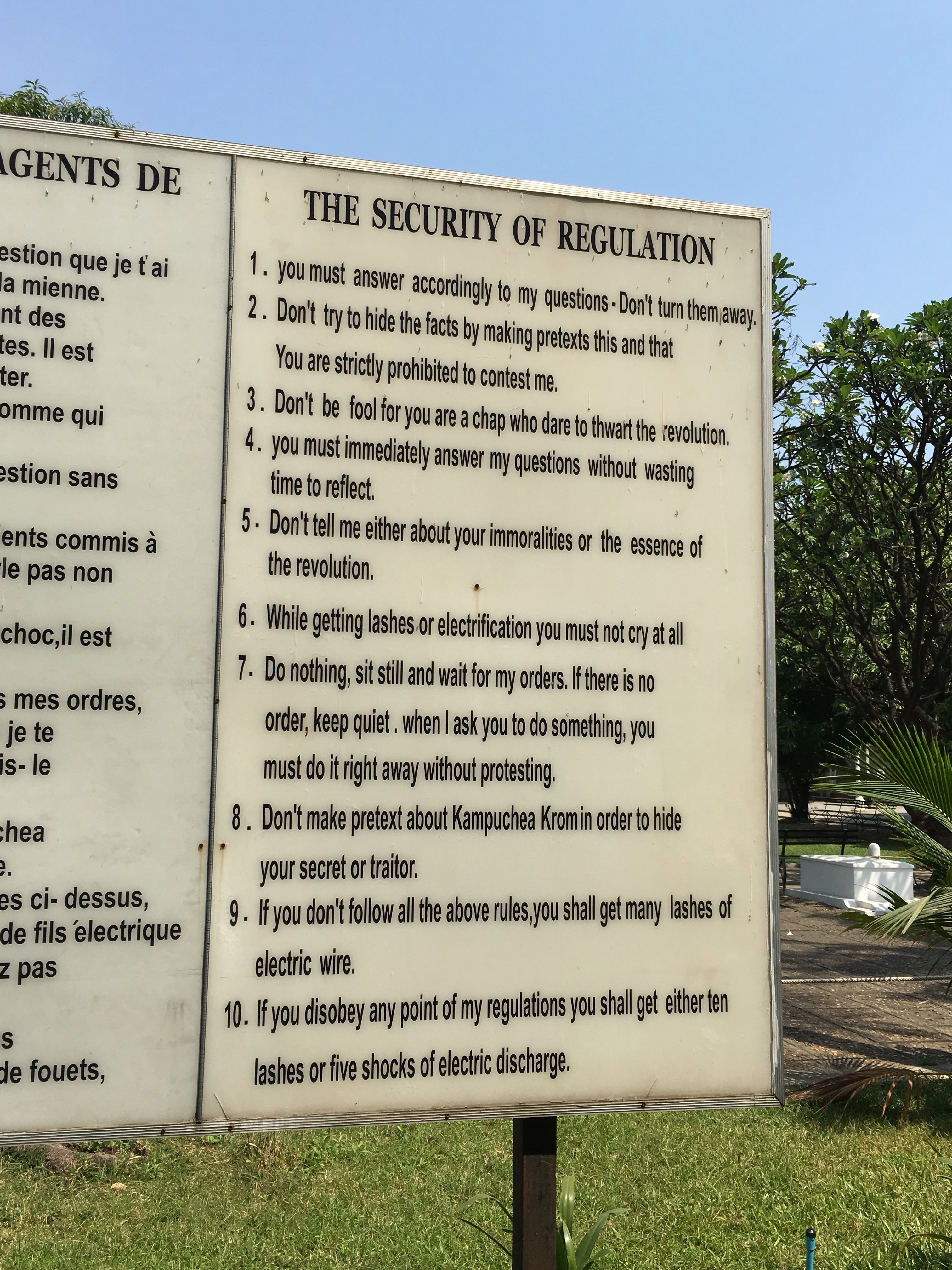
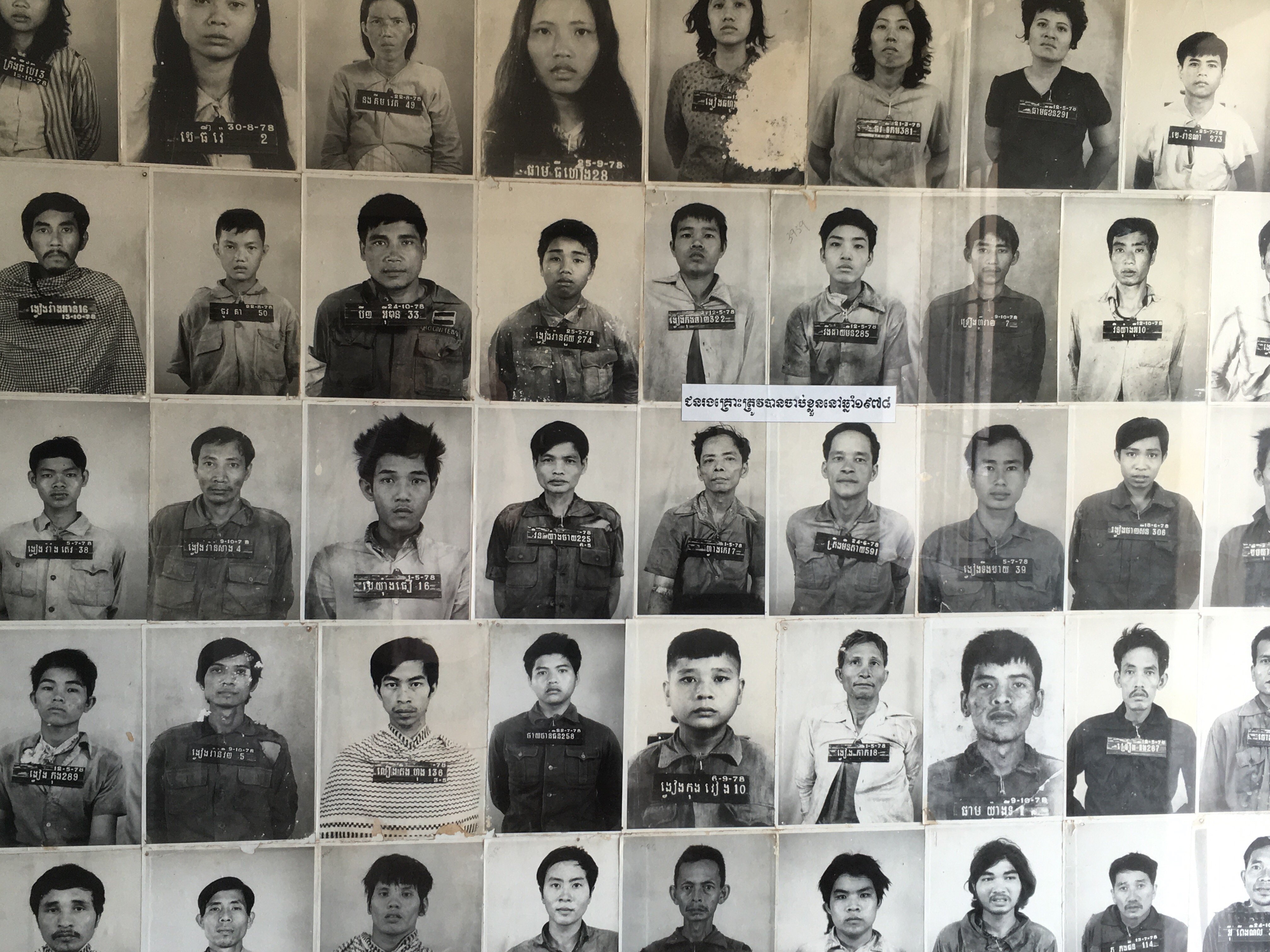
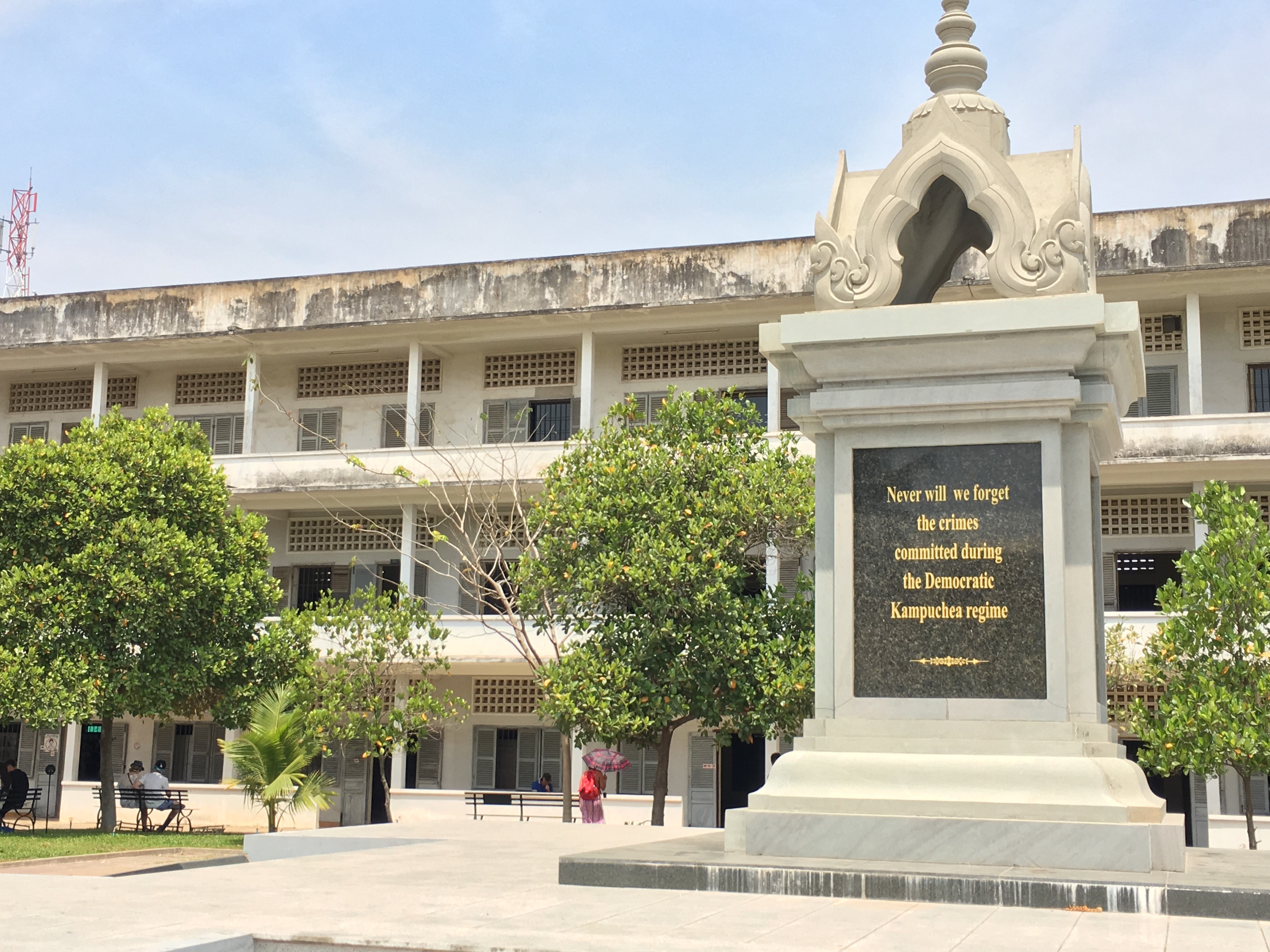
I had heard mixed reviews of Phnom Penh, Cambodia’s capital city. “A big bustling city with lots of things to do but not a lot of culture”. It was still very important for me to go as that was the epicenter of the Khmer Rouge takeover in 1975 and I felt I needed to see that history to be respectful of the Cambodian people. It’s kinda like visiting Auschwitz or other concentration camps… You know it’s not going to be a fun day of touring but it’s something you need to see. It’s that important. I first saw the great & very powerful early 80s movie “The Killing Fields” in my early 20s and read the book on which it’s based shortly thereafter & was incredibly moved. So this was a must-see for me. We booked a tuk tuk driver, Mr Vann, to take us touring of the S-21 Tuol Sleng prison in Phnom Penh and the Choeung Ek killing fields outside of the city. These are just two examples of hundreds of similar places that the Pol Pot regime setup to rid the country of any non-farmers or basic day laborers (e.g. teachers, doctors, any/all professionals, anyone wearing glasses). They were subject to gruesome torture at the prison and then shuttled off under cover of night to be killed and buried in mass graves at the killing fields. In 4 years, the Khmer Rouge killed over 3 million Cambodians, nearly 30% of the population. The US didn’t help the situation as it’s prior bombing of the eastern border of the country to flush out VC, forced rural Cambodians into PP, which was then emptied by the KR. I think what was most disgusting to me is how the world could standby and let this happen AGAIN after what Hitler did in WW2. I’m sure the US political atmosphere was such that entering into another war in SE Asia, immediately after getting our asses handed to us by the Vietnamese/Russians/Chinese, was not what Washington wanted. But sometimes you have to do the right thing & not only enter into war to defend your own financial or political interests. To make matters worse, even after the Vietnamese ousted the Pol Pot regime in 1979, the US (and the rest of the west) proceeded to back (financially, politically, militarily) the Khmer Rouge as it had a seat in the UN through the 1990s bc the primary US concern was “the spread of communism” & of course couldn’t support a government propped up by the Vietnamese/Russians. It’s just disgusting. And what’s even more disgusting is the same thing is probably going on in Syria right now. I’ve traveled to a lot of places but in SE Asia, more than any other place, it’s been real tough to respect the decisions our government has made (also includes not-so-secret bombing of Laos during the Vietnam war). Mr Vann told us his family’s story after the day of touring. Of 8 kids, 4 of his siblings were killed in the US bombings, forcing the family to move to PP. Once there, the rest of his immediate family fortunately survived the Khmer Rouge as they were farmers. But other family and friends of his were not so lucky. He said “I’ve met Americans and I like them, they’re good people, but I really don’t like or respect their government”. I can’t really blame him.






Cambodia, a country absent any apparent traffic laws
I wasn’t sure I’d ever see crazier traffic than what we saw in Bangkok. And then we arrived in Cambodia. While Bangkok surely is much bigger, it now occurred to me that it was an organized chaos as drivers for the most part seemed to obey traffic signals. Cambodia, on the other hand, seems devoid of any traffic signals, stop signs, anything. So you come to a 4-way intersection and everyone goes at once from any direction. I’m not just talking cars here… This also includes tour buses, tuk tuks, scooters and people-pushed street vendor carts. Further complicating things, is the lanes of traffic but from what we can tell, they are adhered to by only about 75% of drivers. The other 25% (primarily scooter drivers but there’s an occasional car) drive towards you, in the opposite direction of traffic flow, making things real exciting. But somehow it all works. We saw no accidents. We never felt unsafe as our tuk tuk drivers, Saru in Siem Reap and Mr Vann in Phnom Penh, were solid drivers. People use the hell out of their horns and it seems there’s an unspoken rule that size rules in descending order so buses dictate and scooters adjust. We agreed this would never work in America, recalling the confusion that ensues after a storm knocks out power at a big intersection and all the Trump-voting morons struggle to coordinate an efficient timed response in which all cars on opposite sides go at once. We tried to capture this awesome and utter chaos on video but largely failed as we were too caught up in the experience. There’s a couple video links below that don’t come close to doing it justice.
https://youtu.be/jnBddBv0Kjc
https://youtu.be/8ItKNznswo4
Boating, Cambodia style
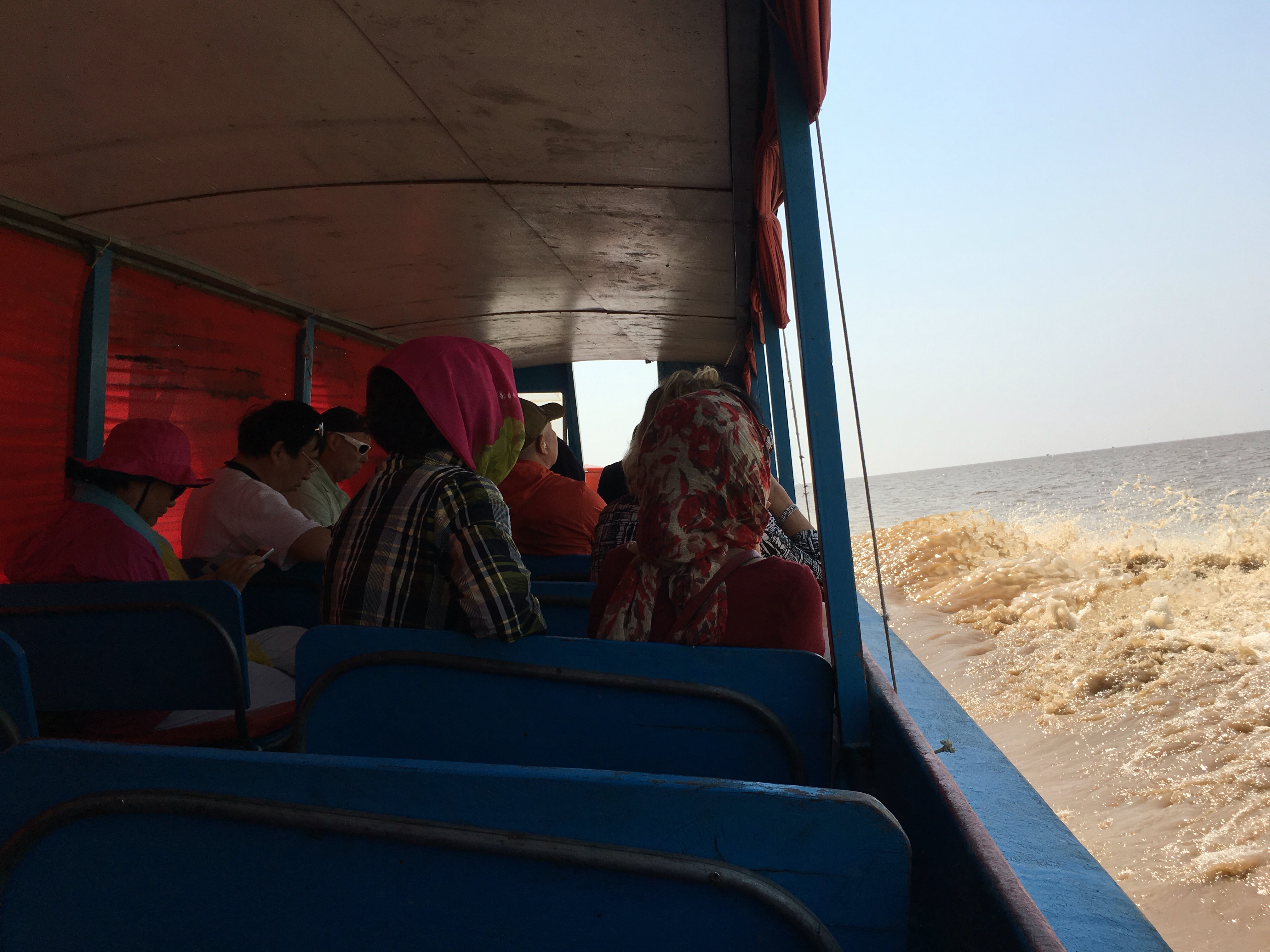
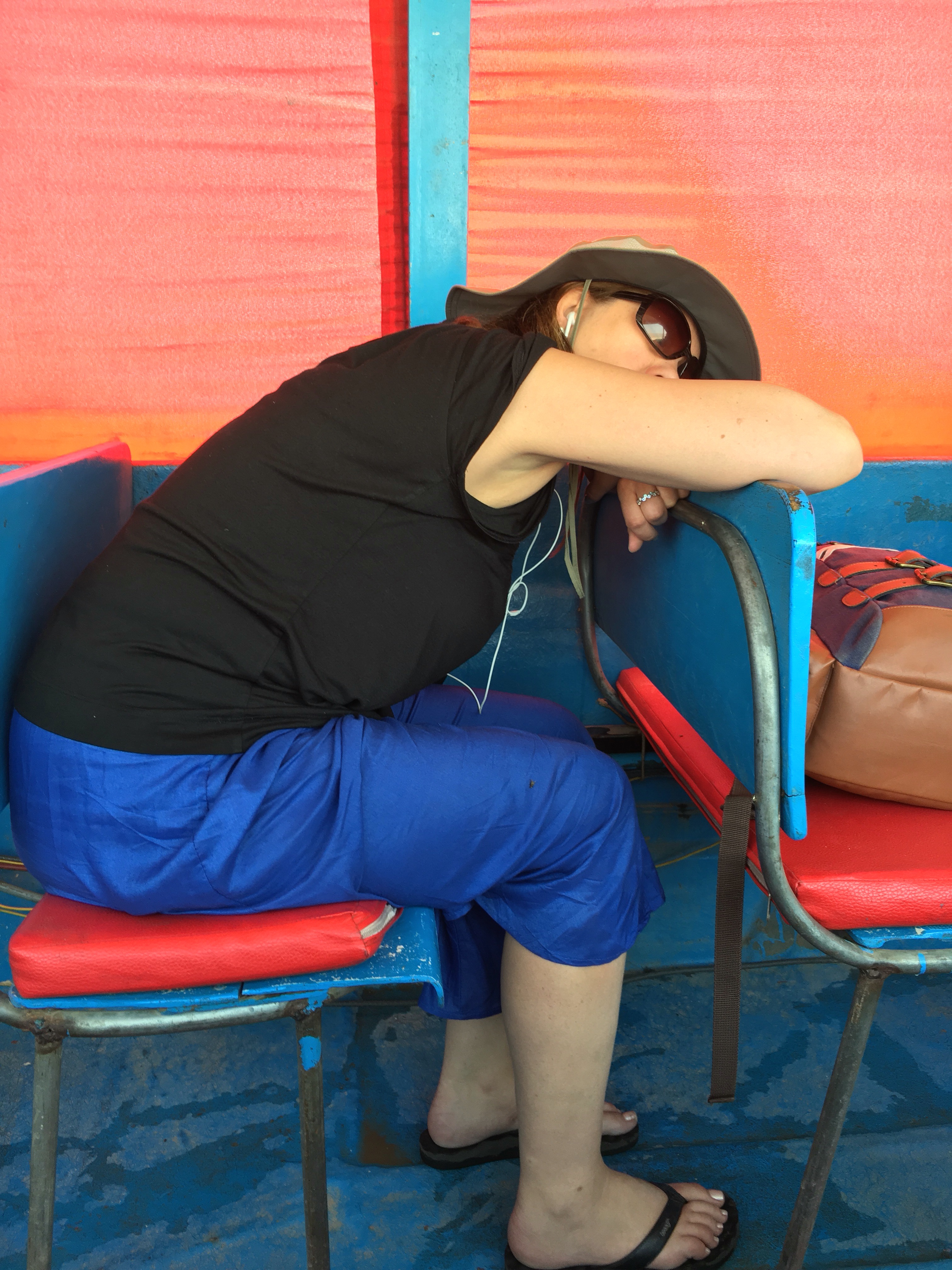
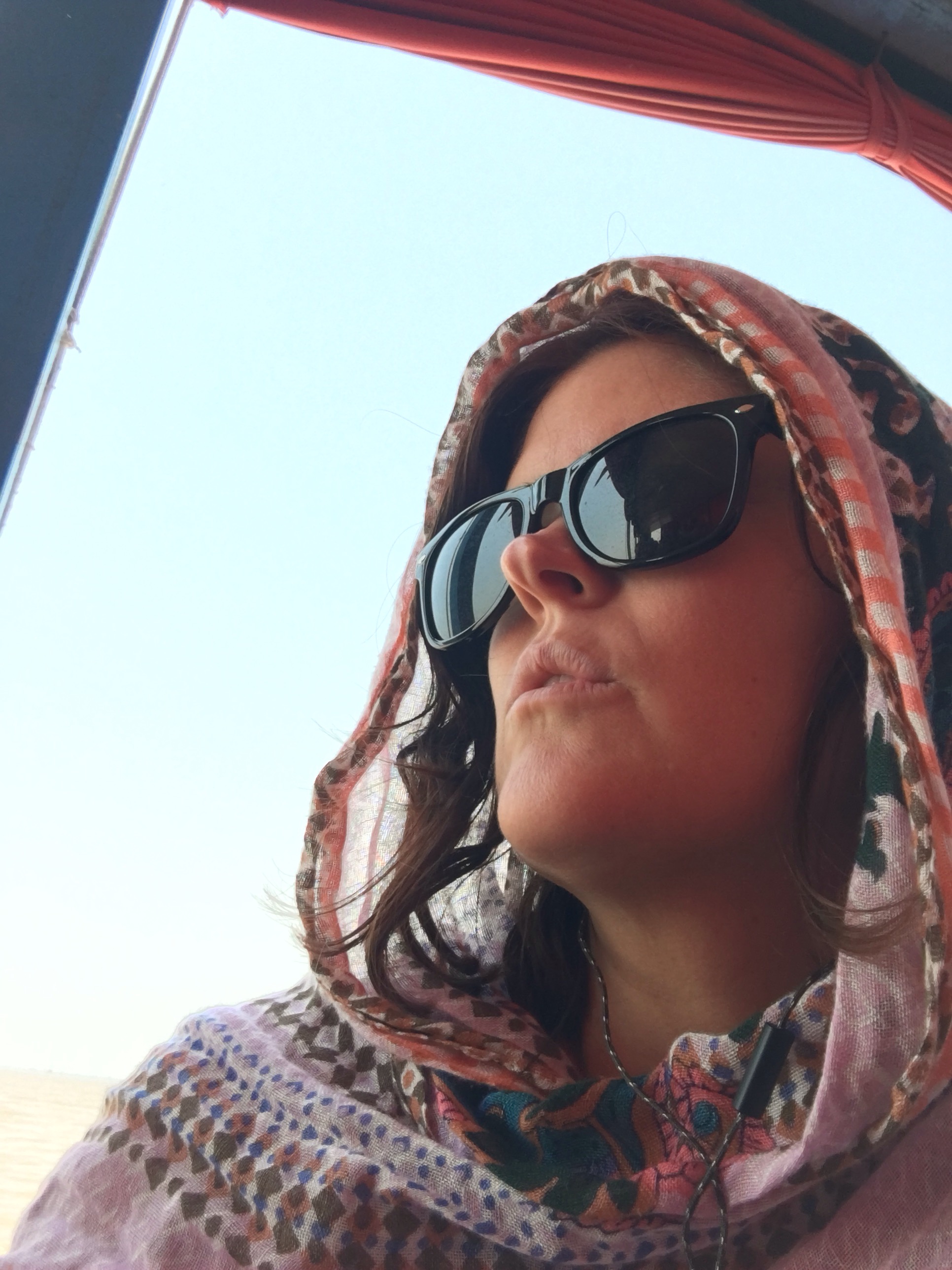
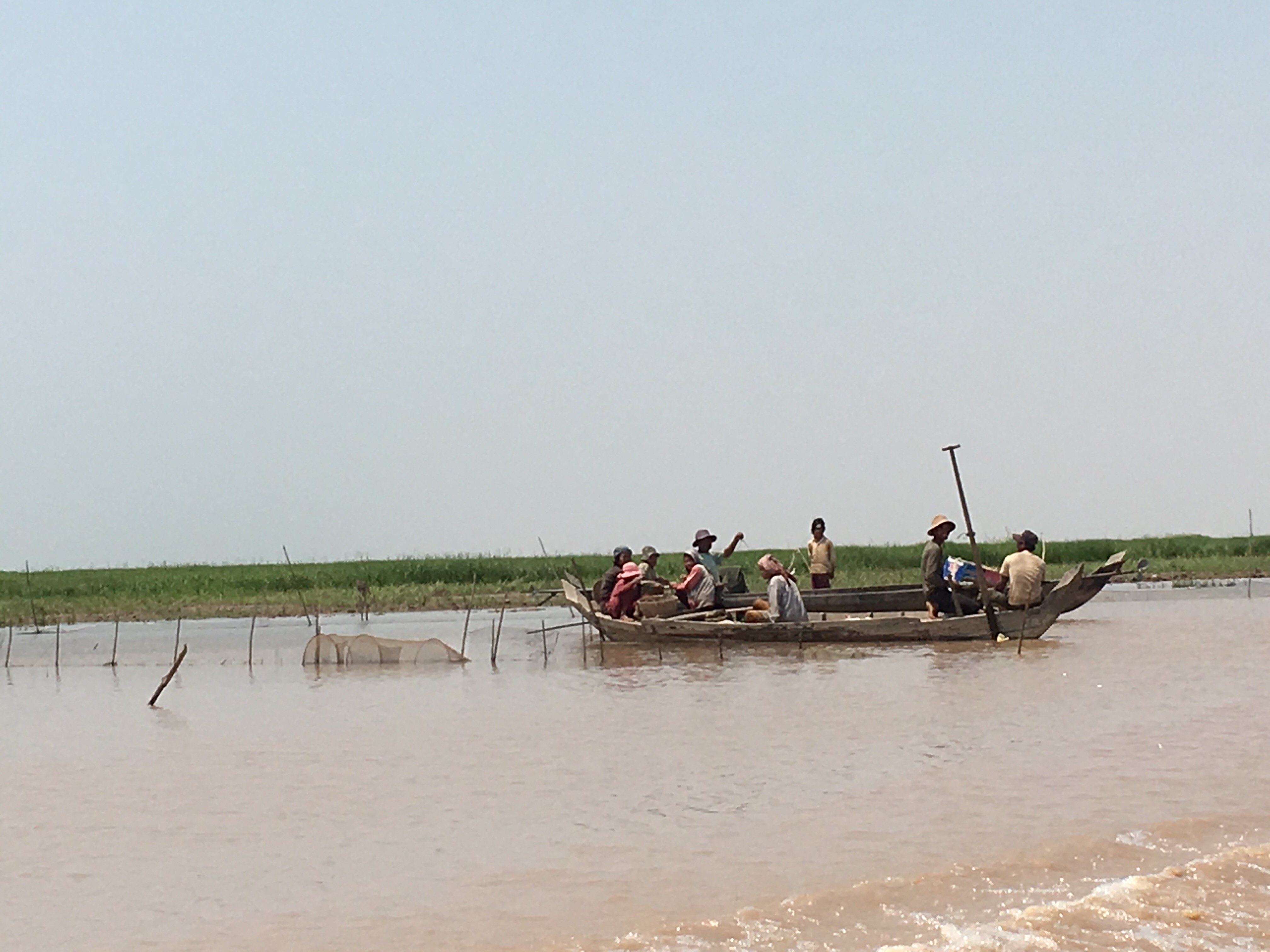
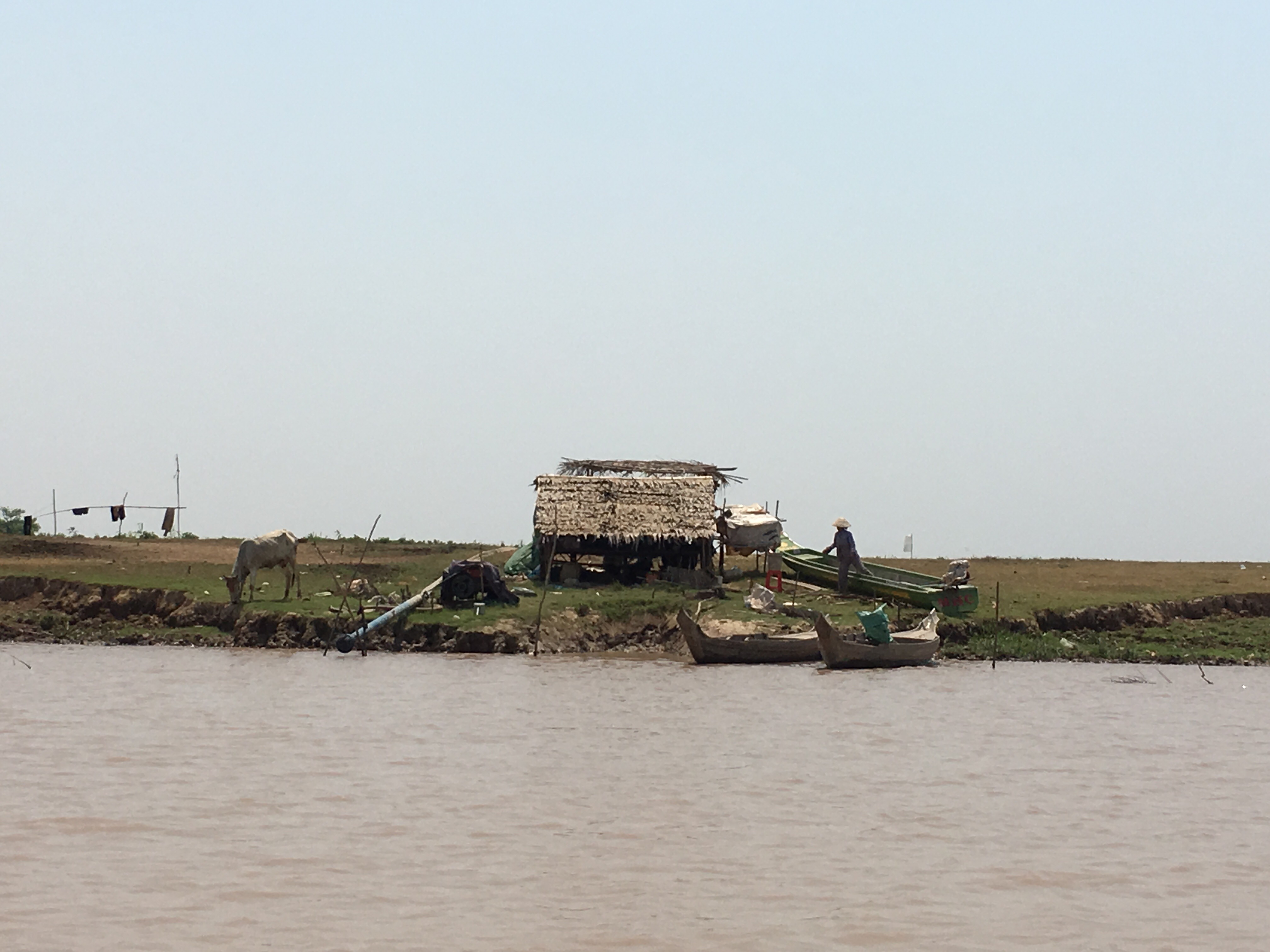
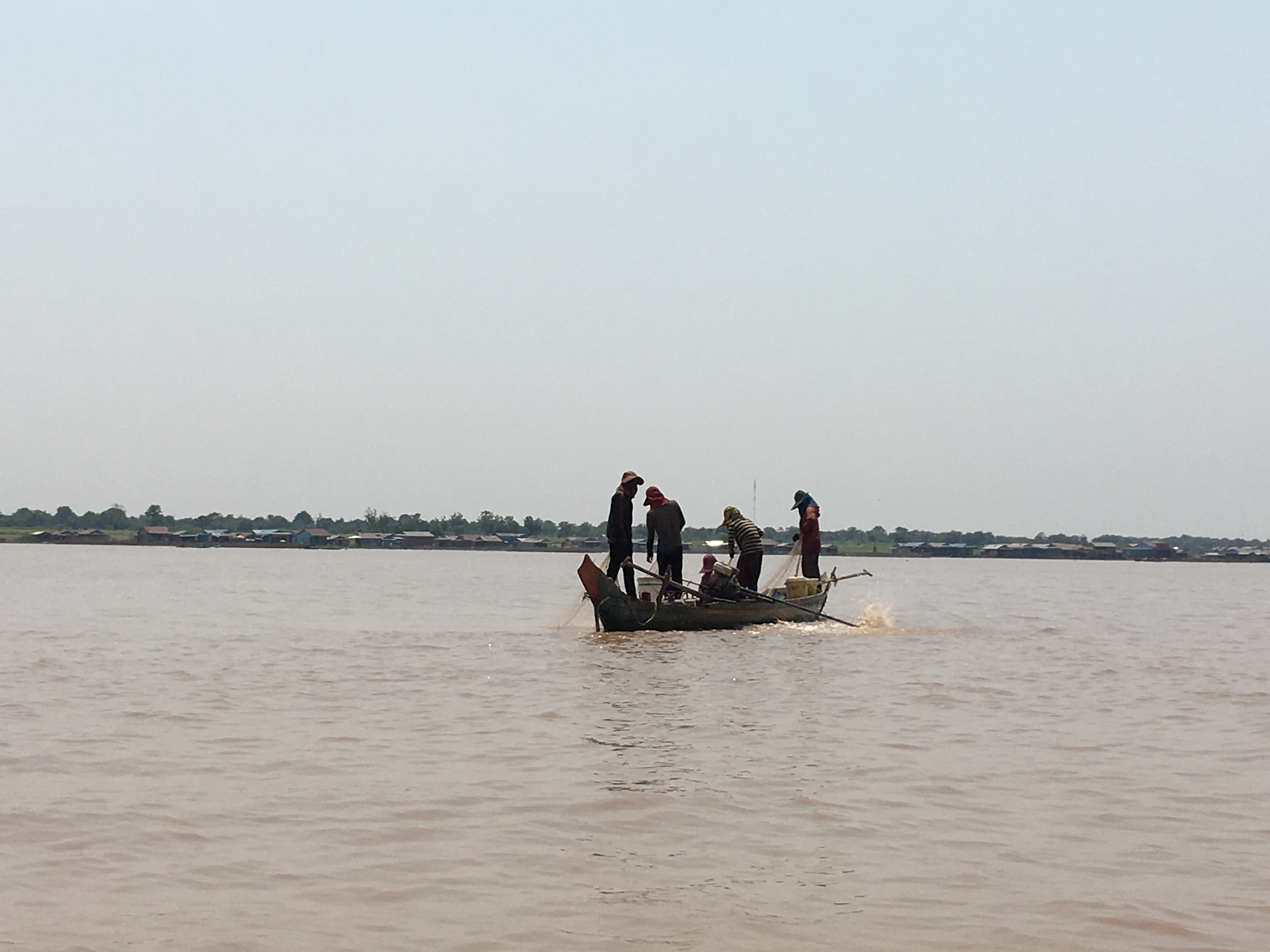
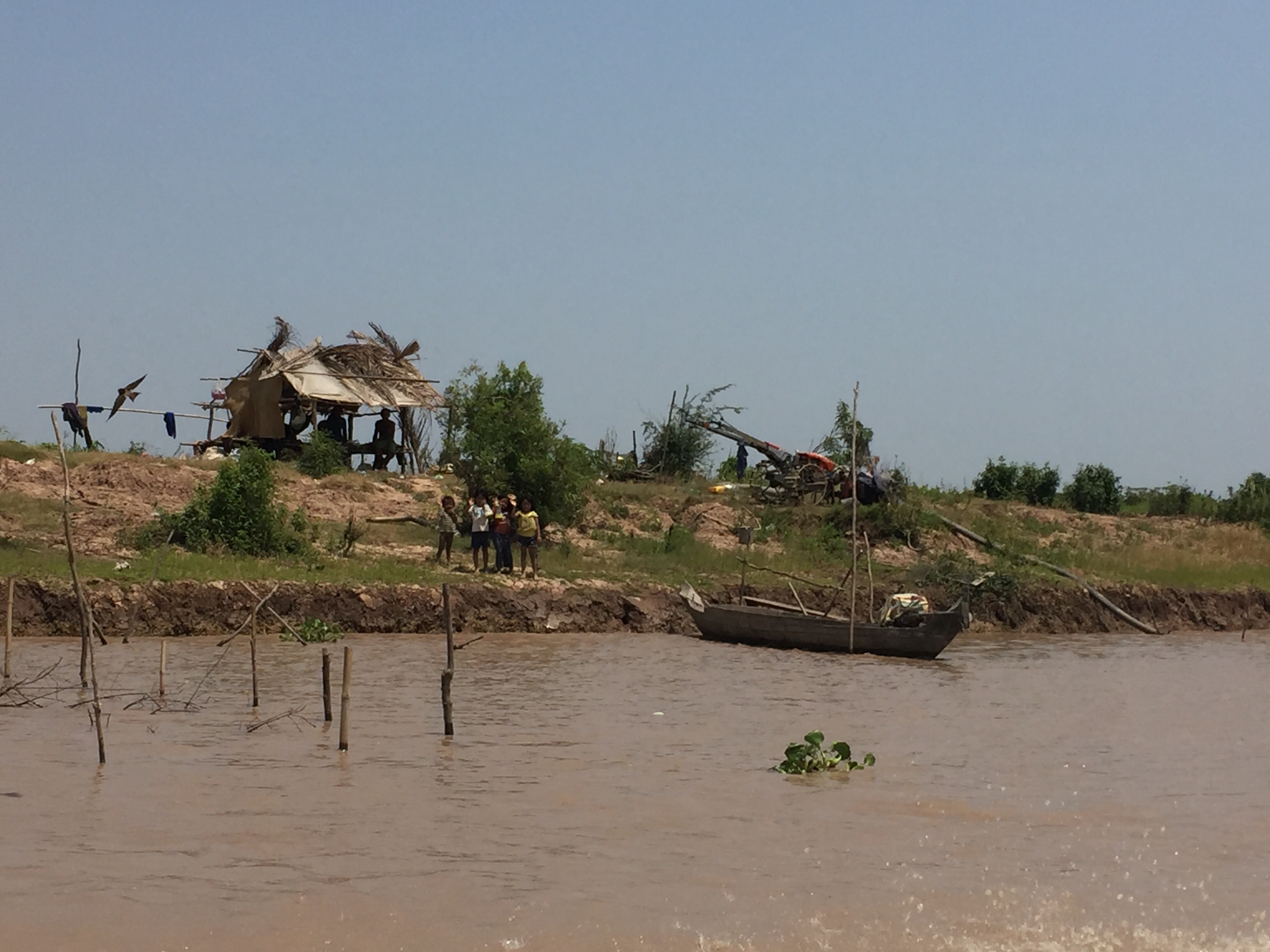
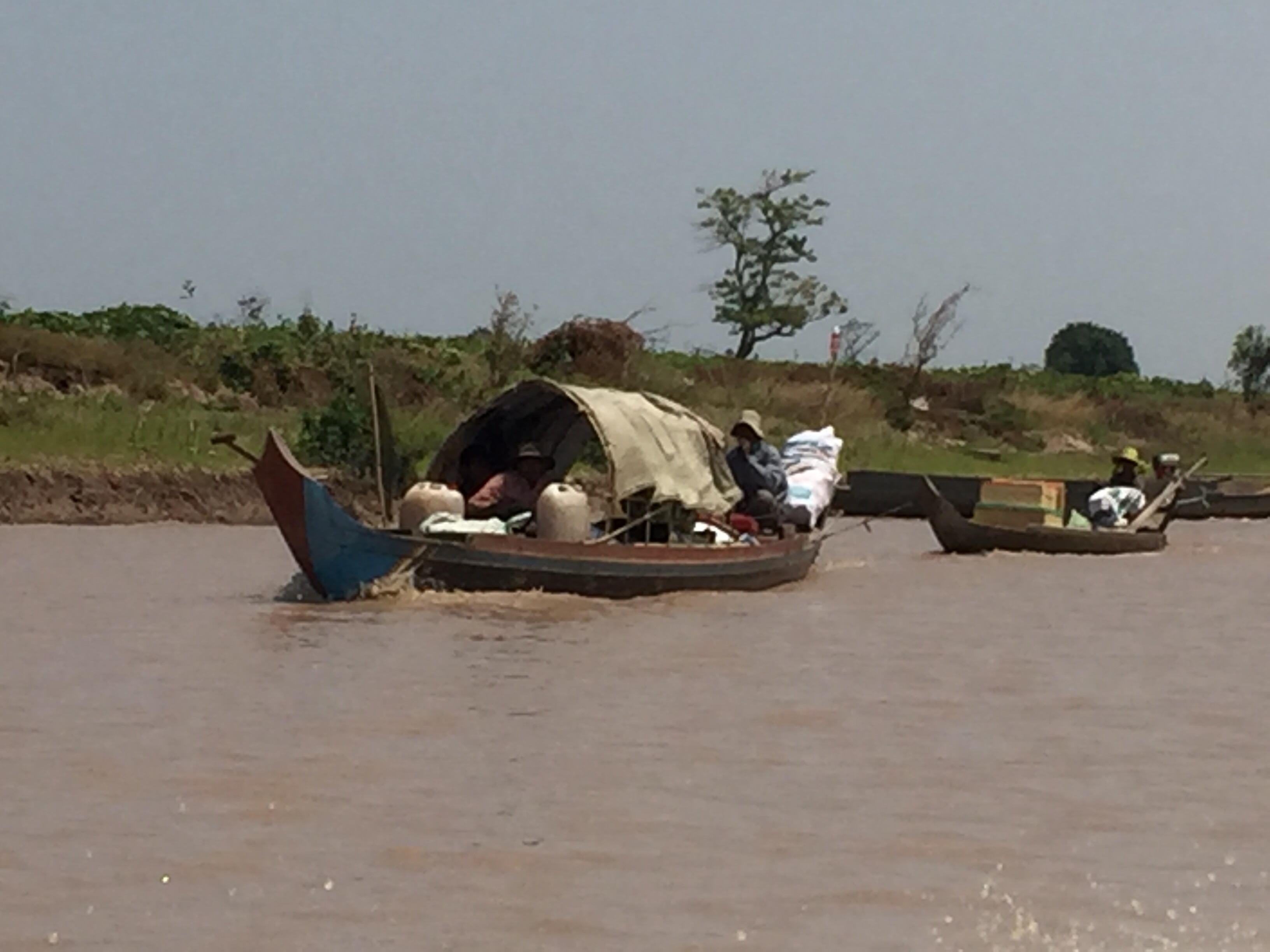
In an attempt to mix up modes of travel, we decided to take a boat from Siem Reap to Phnom Penh. The boat left at 7:30 and the operator sent a jumbo tuk tuk driver to pick us up at 6:30. After a variety of mishaps including his inability to find other guests (never did) and culminating in a flat tire, we found ourselves stuck at the side of a SR road at 7:30. Another tuk tuk driver swooped in to take us the rest of the journey to the boat, all the while, Amy and I were wondering why a “large boat w 3 levels including a sunbathing open air level on top” would bother to wait for us. We didn’t arrive at the pier until 8am, fully expecting to have missed the boat & already mentally planning to head to the airport (airports in SE Asia, as an aside, have been far more efficient that US airports). We were met by the boat captain who told us to “hurry up” (as if any of the last 1.5 hours was our fault), and quickly ushered us onto definitely-not-a-large boat as our backpacks were taken & thrown on top. It was a small wooden boat with only one level. Maybe sat 30 people in real uncomfortable wooden seats. I then recalled we were told that bc it was dry season, a small boat would first be taking us to our large boat as the large boat can’t make it to the pier given water levels. So that put us at ease, figuring we’d only have 30 minutes on this uncomfortable beast until we met, what now in my mind was a luxurious liner, in Tonle Sap Lake. 4 hours and several engine outages later, we had made it entirely through the largest part of the massive lake only to meet our “large boat” in a relatively narrow portion of the lake. Obviously the photos of the lovely large boat presented in their marketing materials in no way reflects the actual large boat that we were now boarding. There was a bit more room but it wasn’t as advertised. All we could do was laugh. Especially when we had to spend another 4 hours on the large boat before finally reaching Phnom Penh (the trip was a bit longer than initially communicated). In hindsight, we agreed we’d do it again bc the glimpse into local Cambodian life of those that live on the water was very special. The only thing we’d do differently was perhaps bring food & more water. But then again, the bathroom situation on both boats was less than ideal so maybe it was for the best.
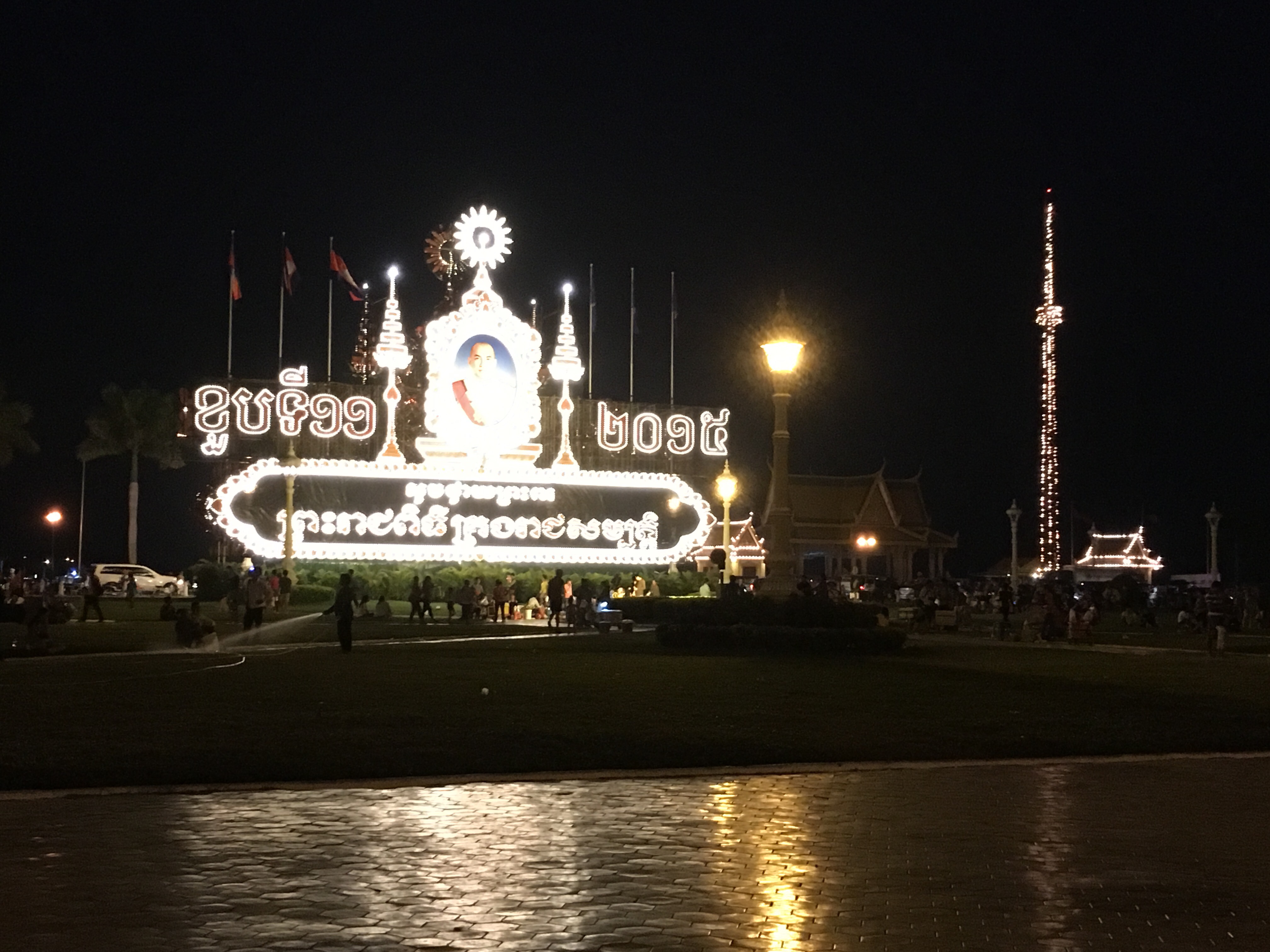
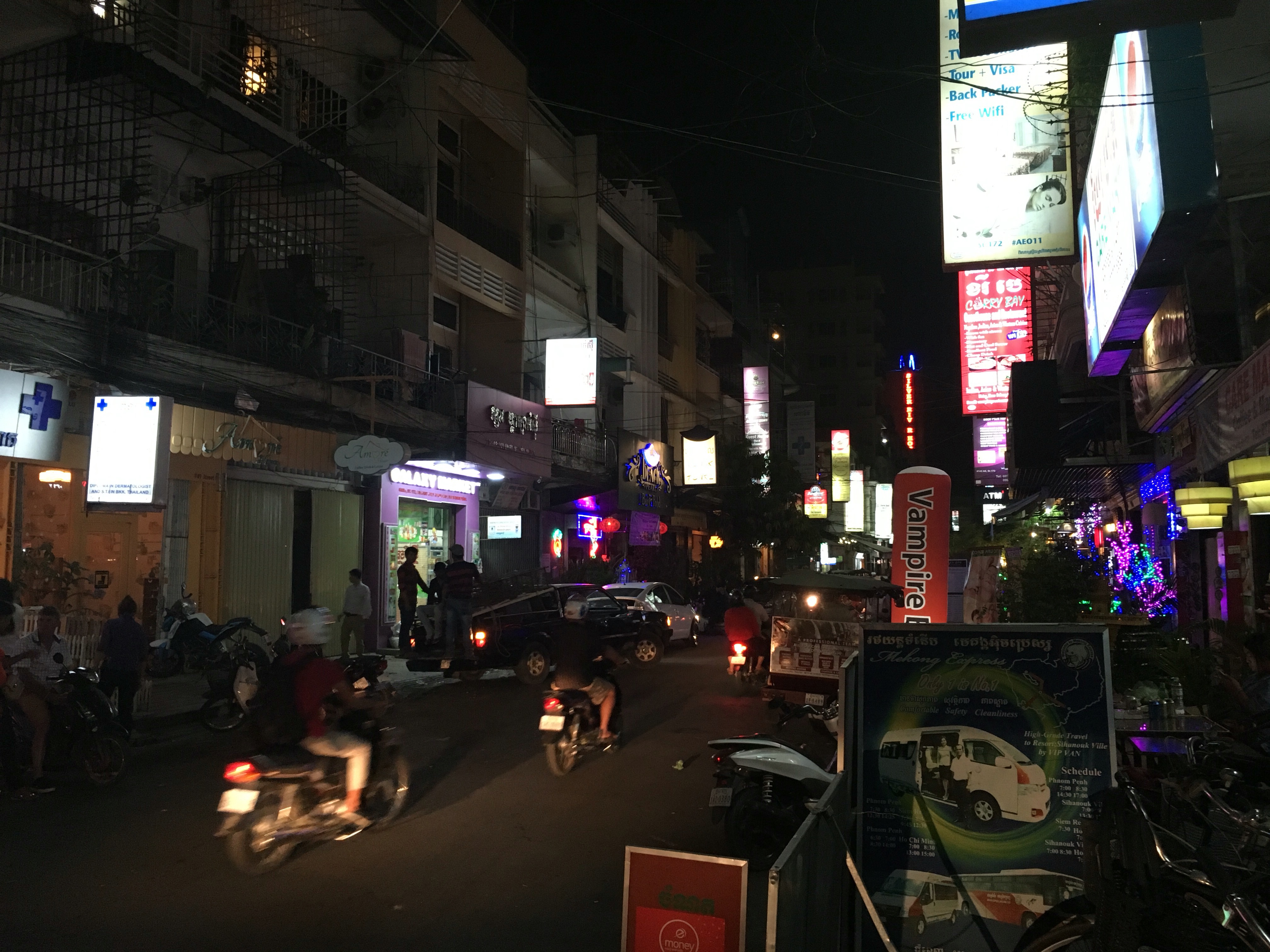
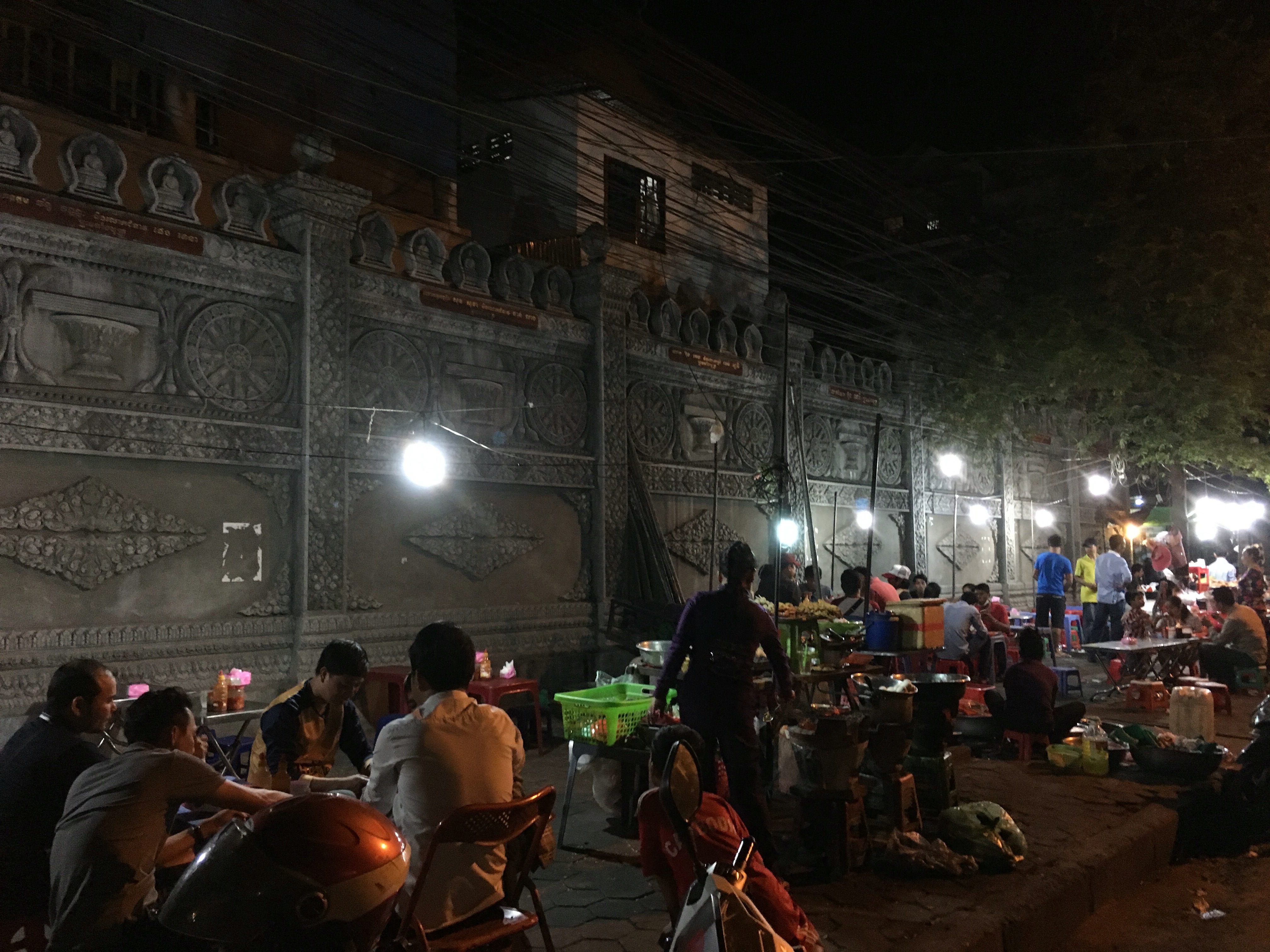
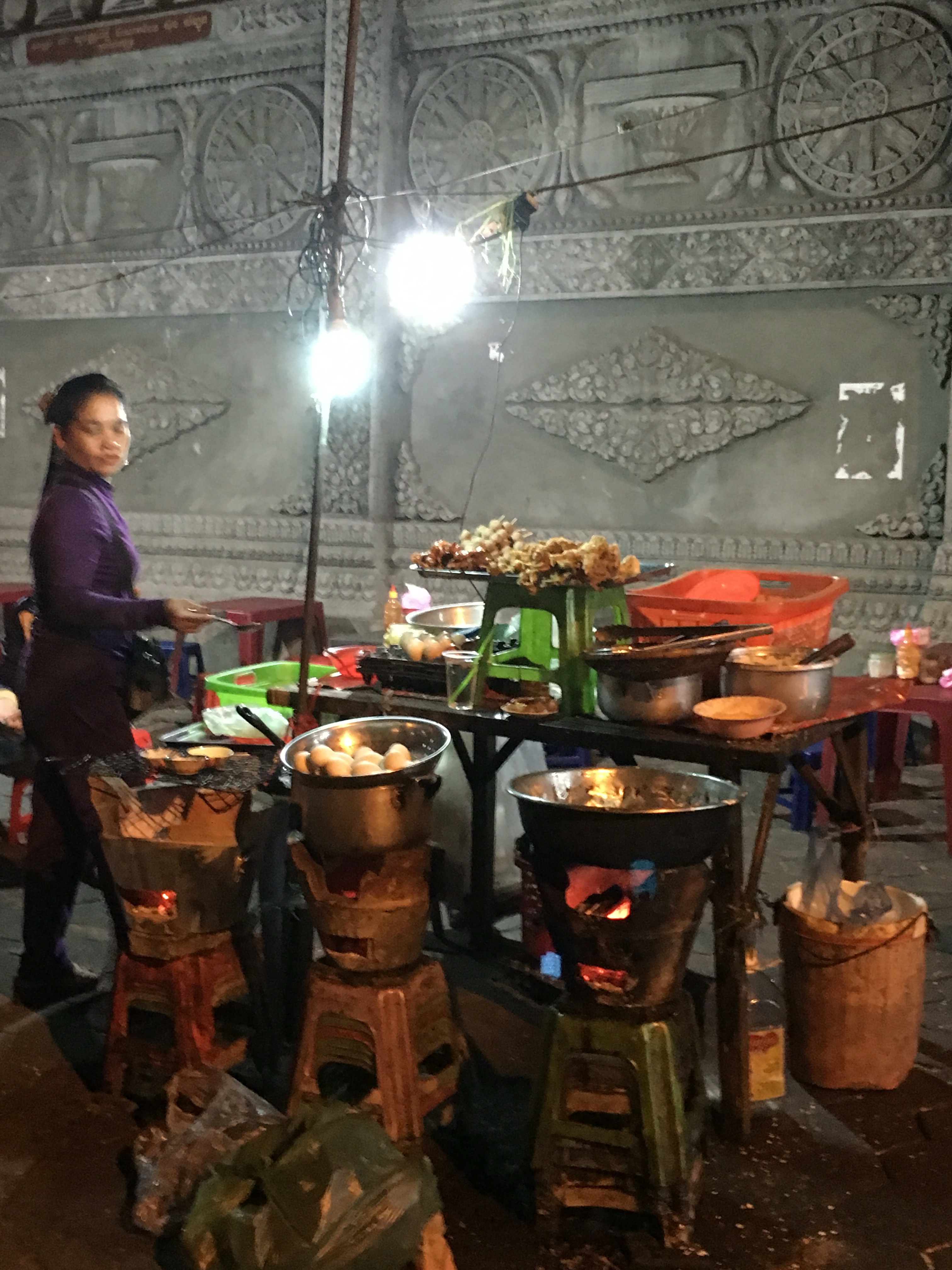
As we had seen more than enough of the river, we spent the evening walking around the city center and taking in the royal palace, the continued Cambodian obsession w bright neon lights as decoration, street food stalls, a few cocktails and a lazy night. We did find something interesting on a menu in one of the restos…





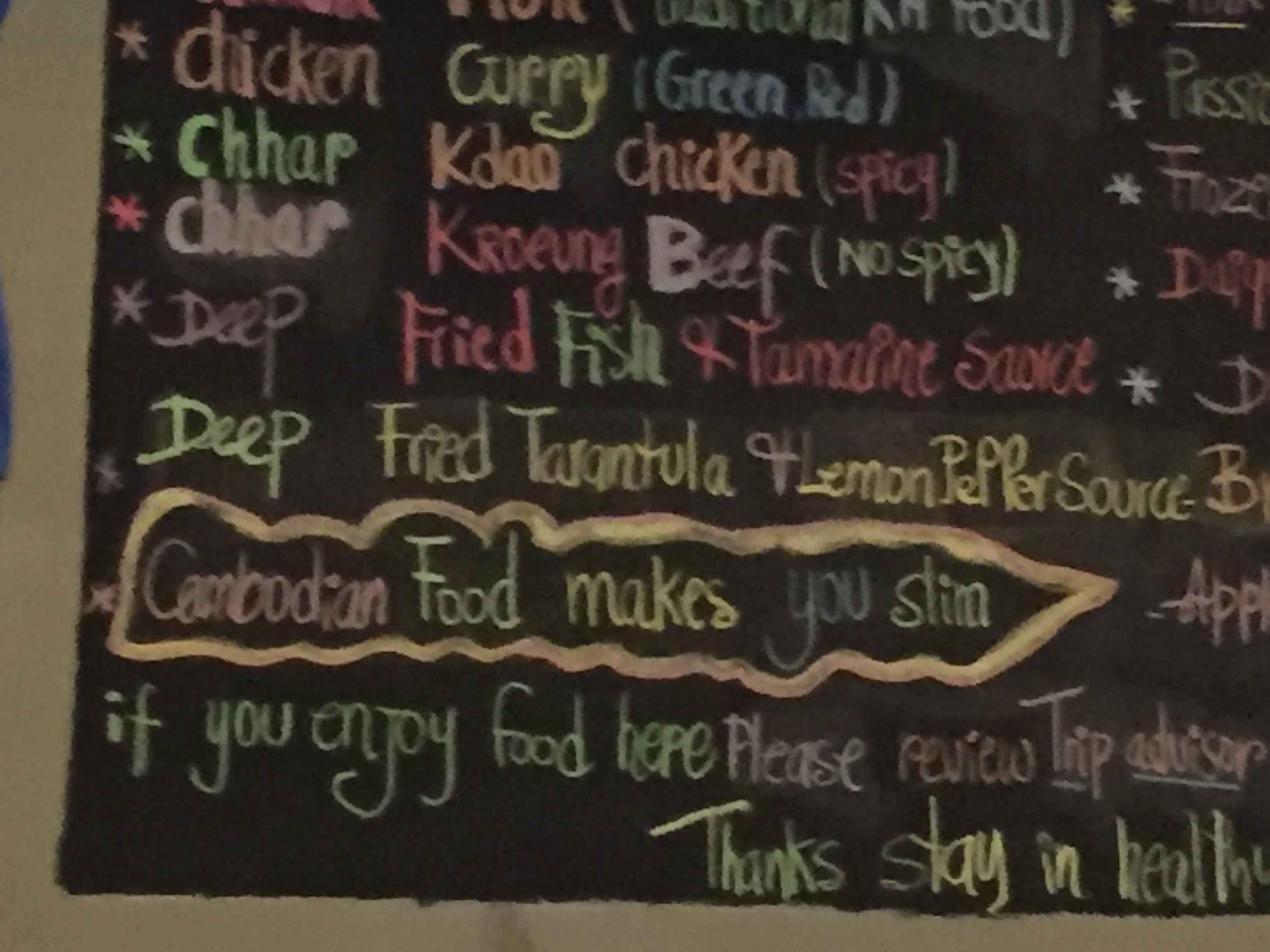
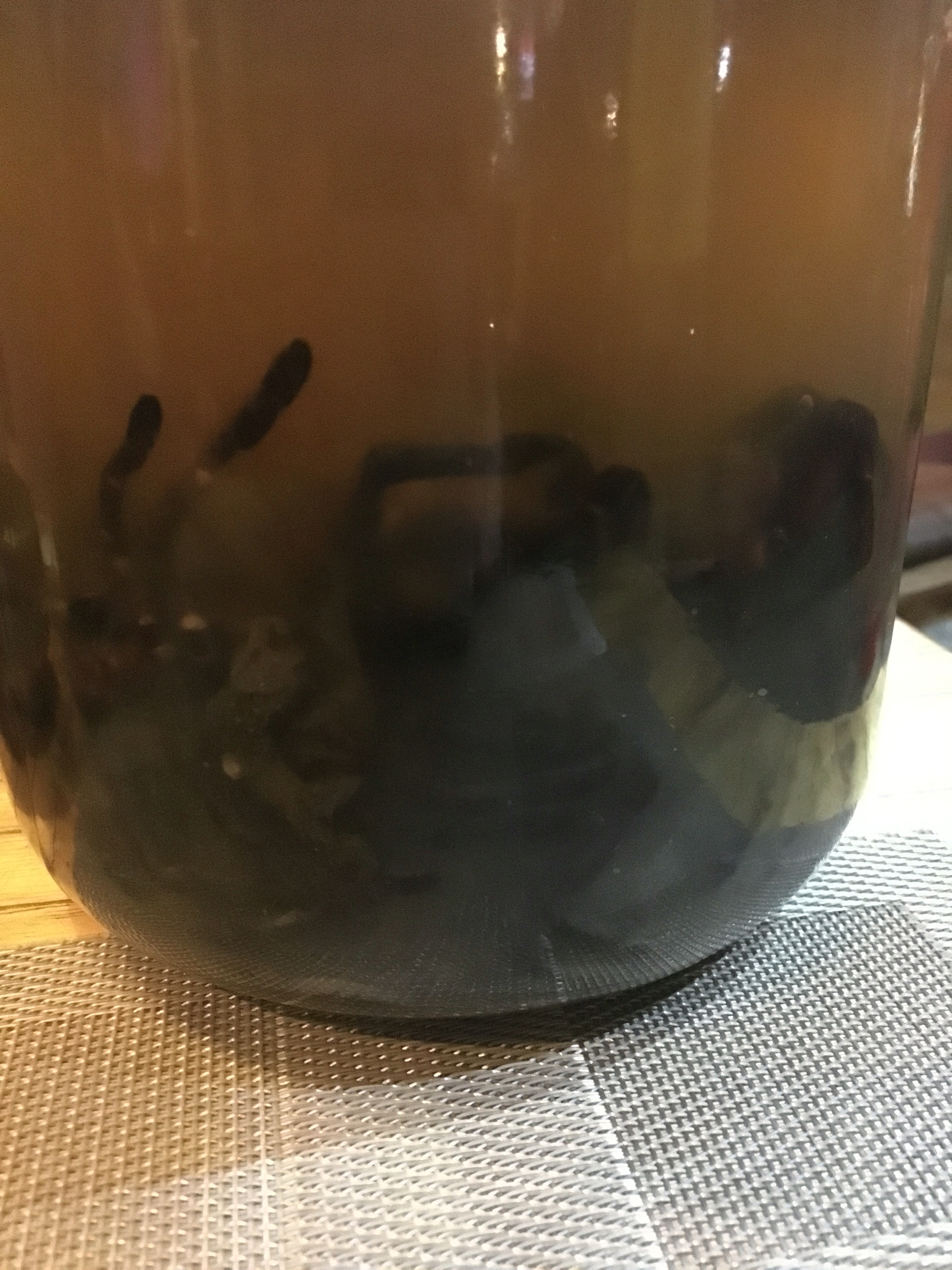
Siem Reap, more than just temples
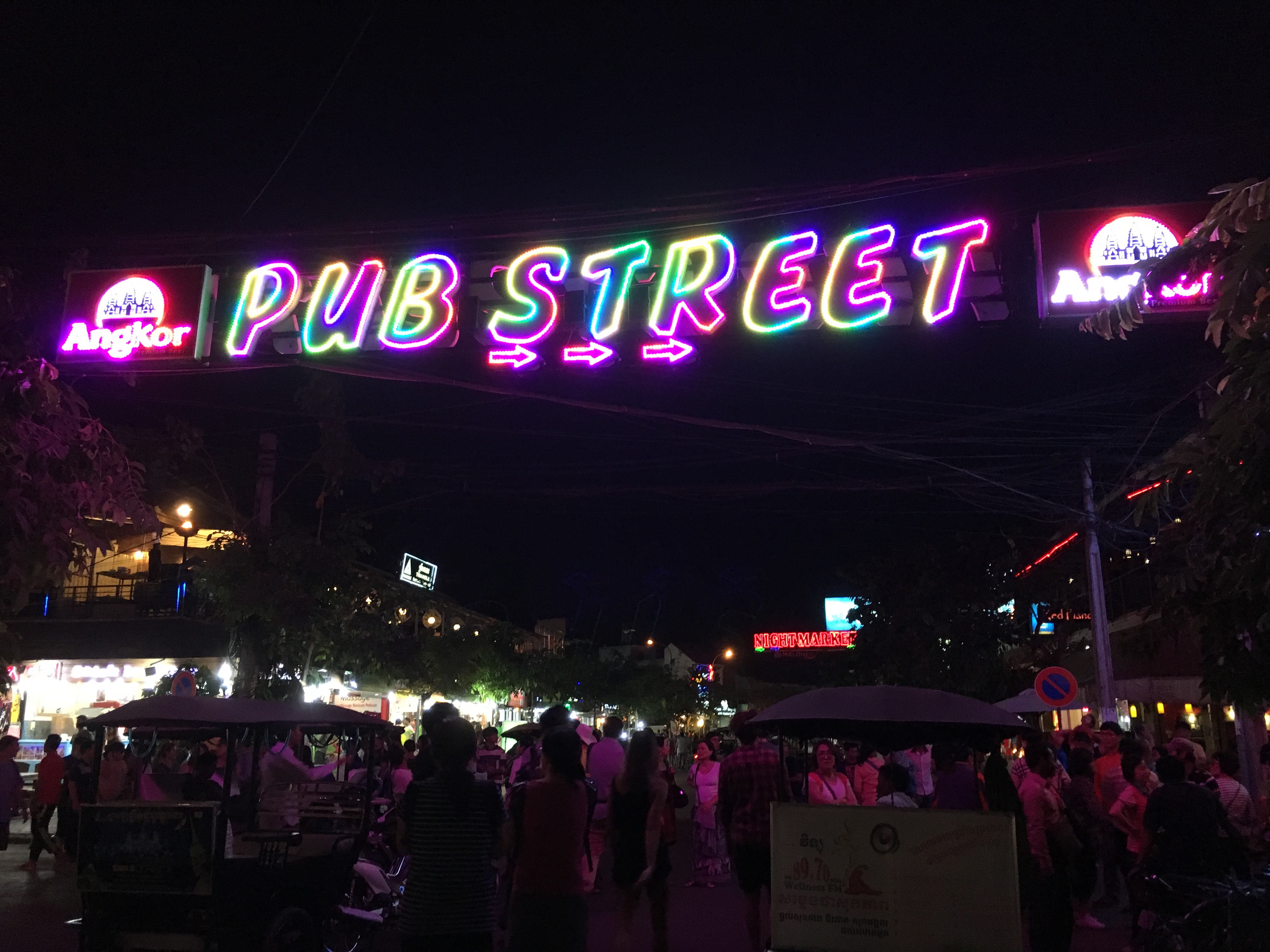
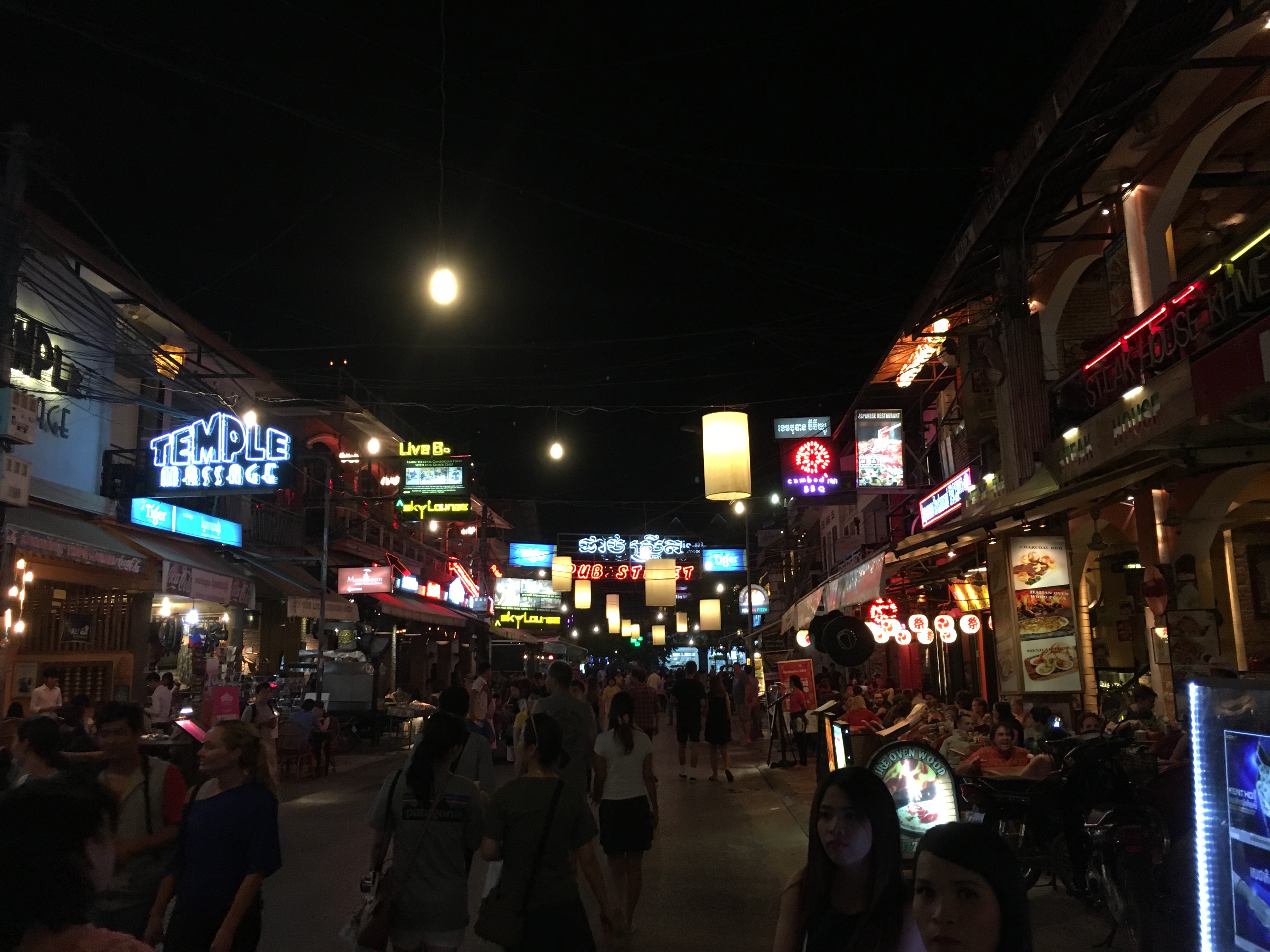
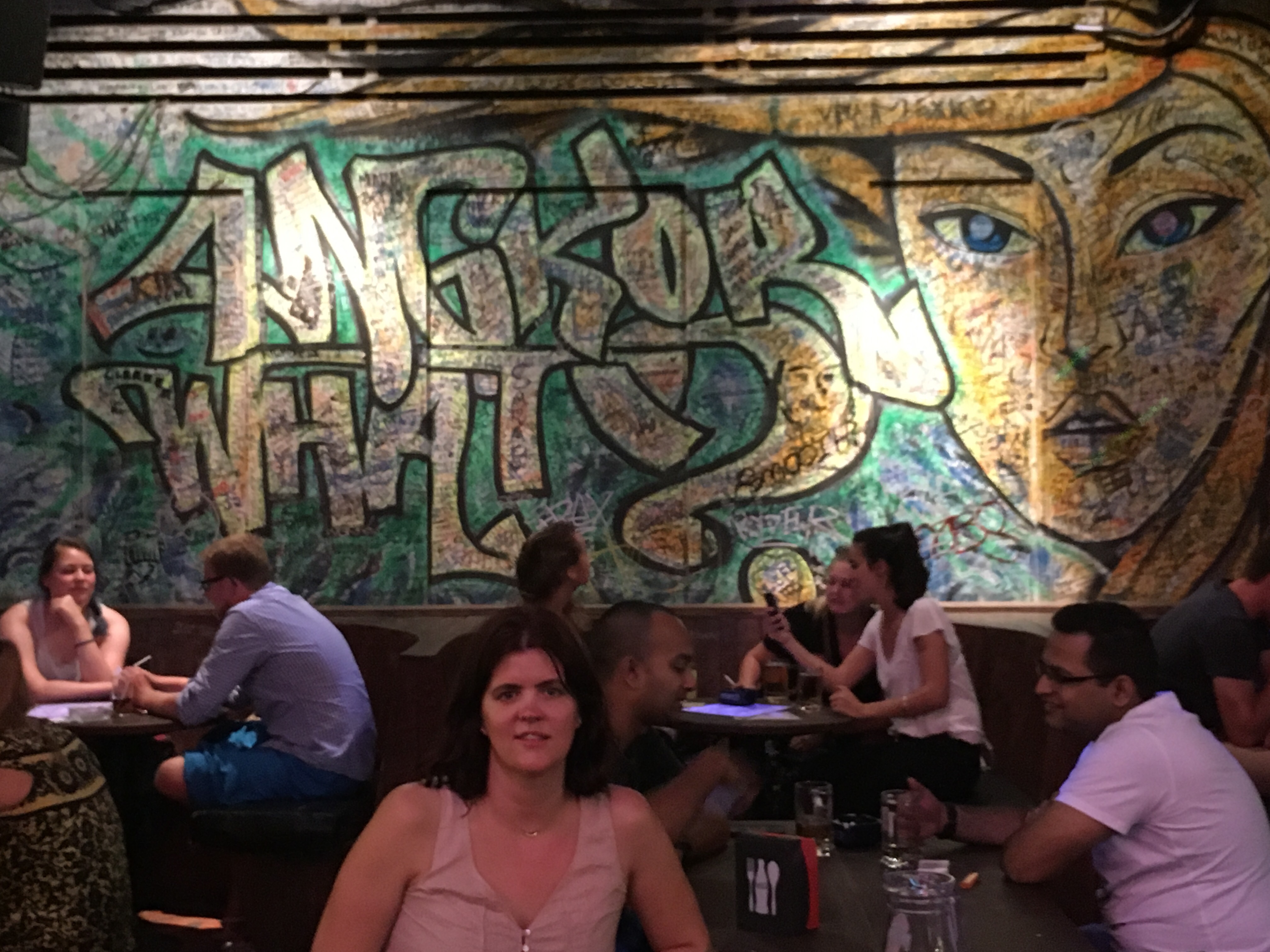
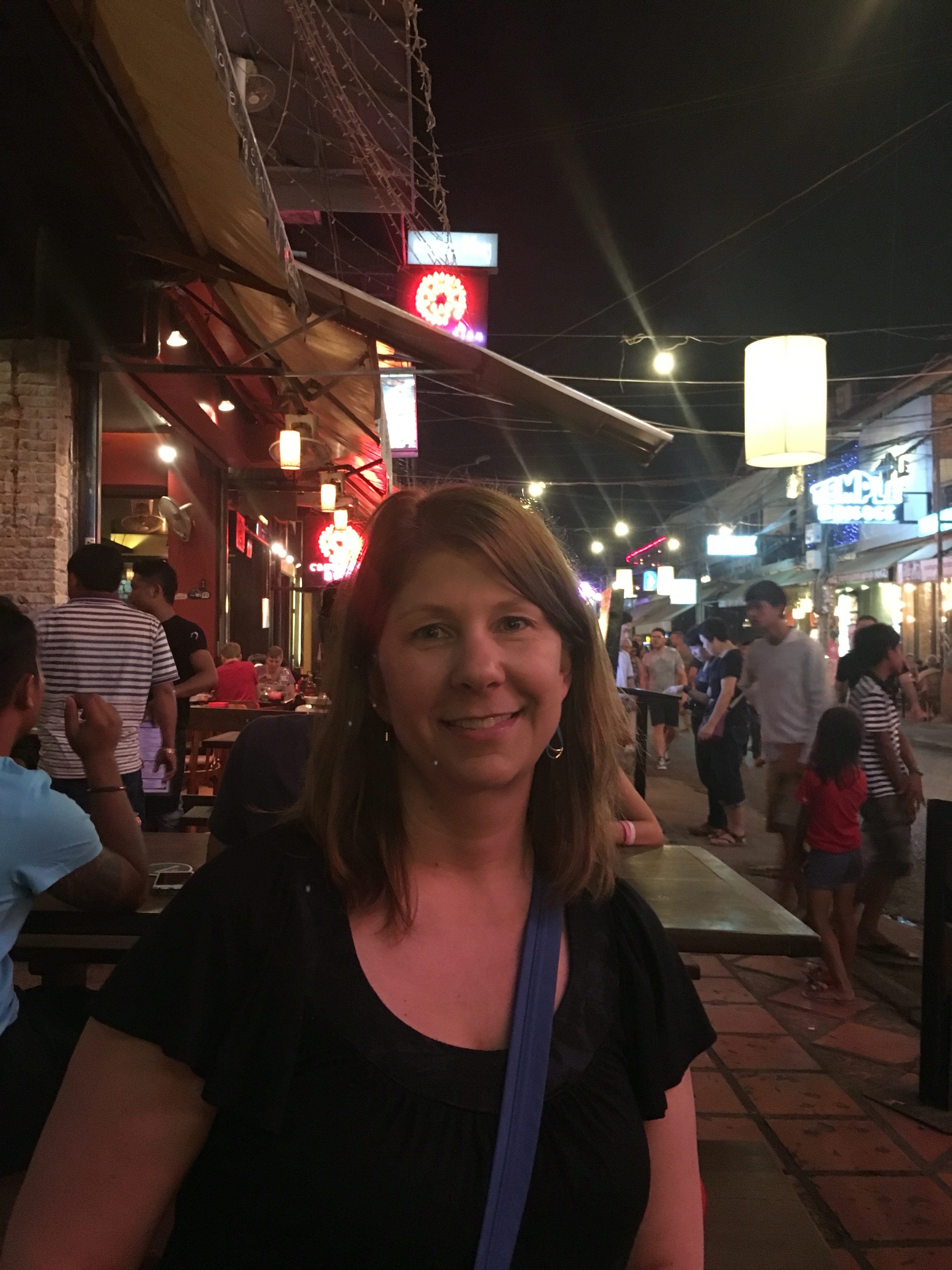
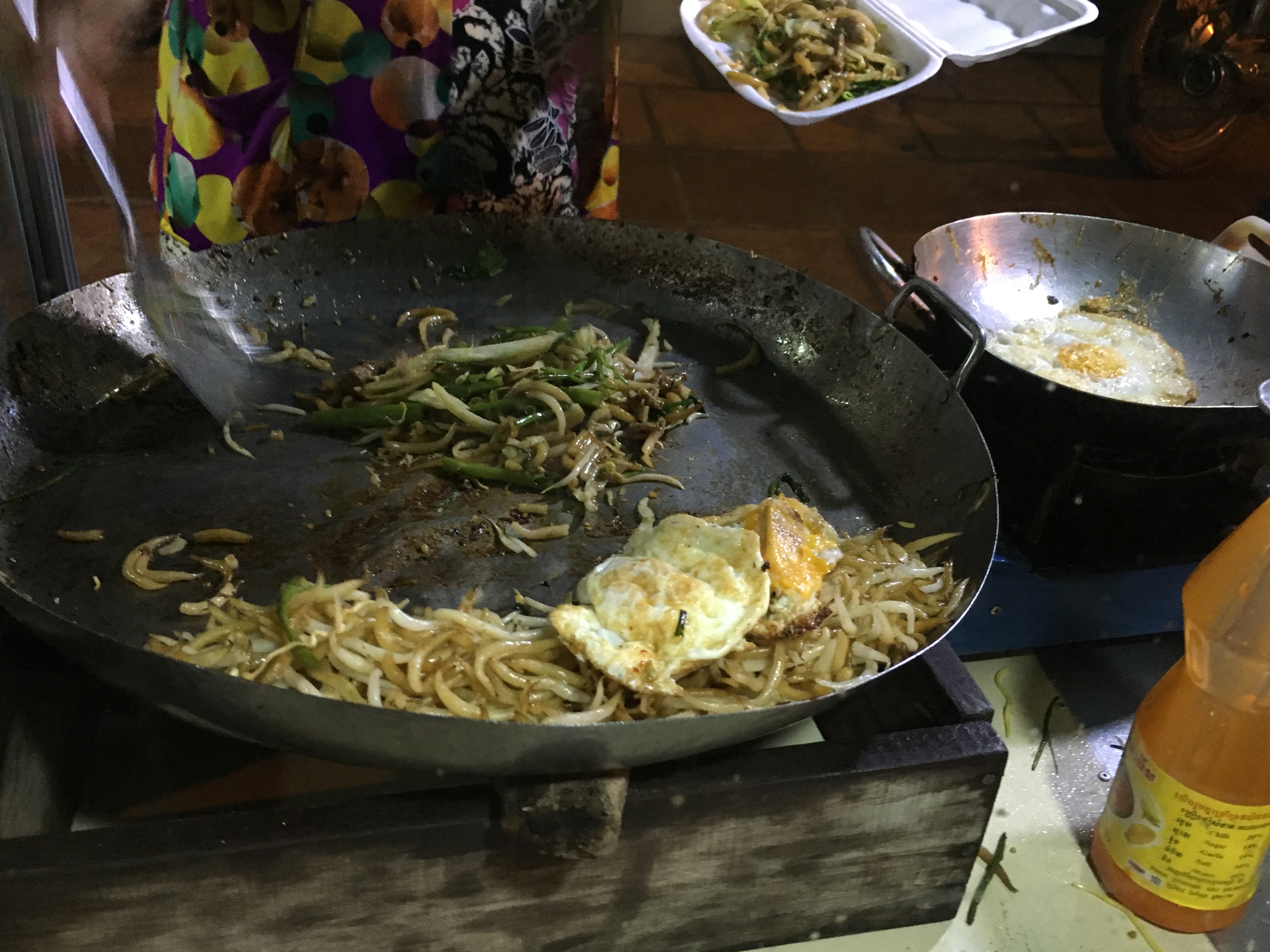
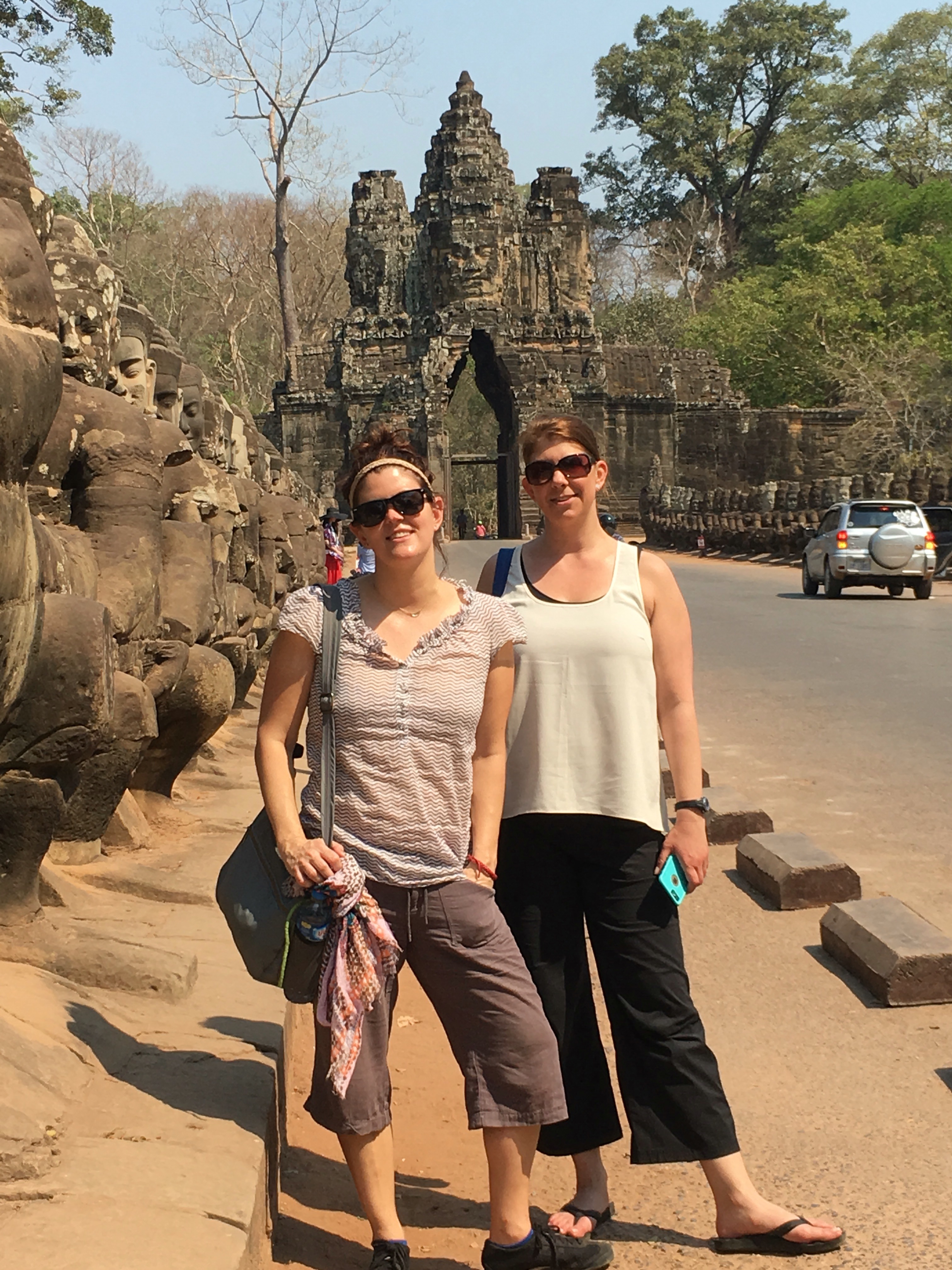
People come to Siem Reap, Cambodia to visit the Angkor temples, 8th wonder of world which is only 5 km away, but that’s not all. Siem Reap city center is quite touristy, featuring a blatantly labeled “Pub Street”, which is exactly what you think it is. Amy accurately described it as “the Bourbon Street of SE Asia” as it’s terribly touristy but it is fantastic for people watching. Apparently temple-goers, after a long hot day in the 93 degree sun trekking around old massive archeological holy sites, feel the need to satisfy their inner cravings, whether it be by downing a few local beers & some street food, as I did, or by wrangling up a young Cambodian prostitute, as we witnessed at least 4 old white men do on Pub Street. I did mention it was great for people watching.
There’s also pretty great food. And the locals are real nice. You come to Siem Reap for Angkor, which is a can’t miss. But I think I can cross it off my return list.

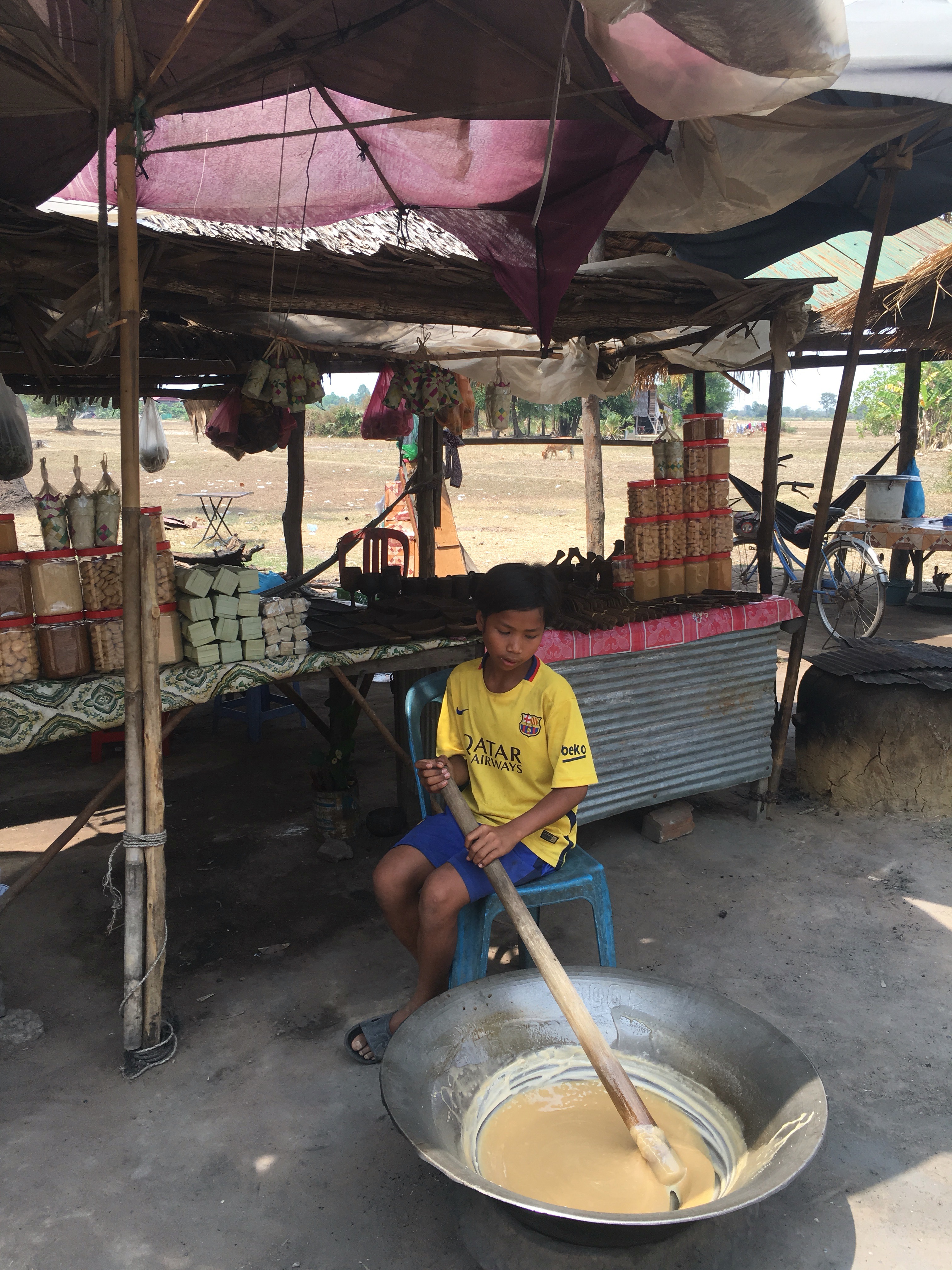
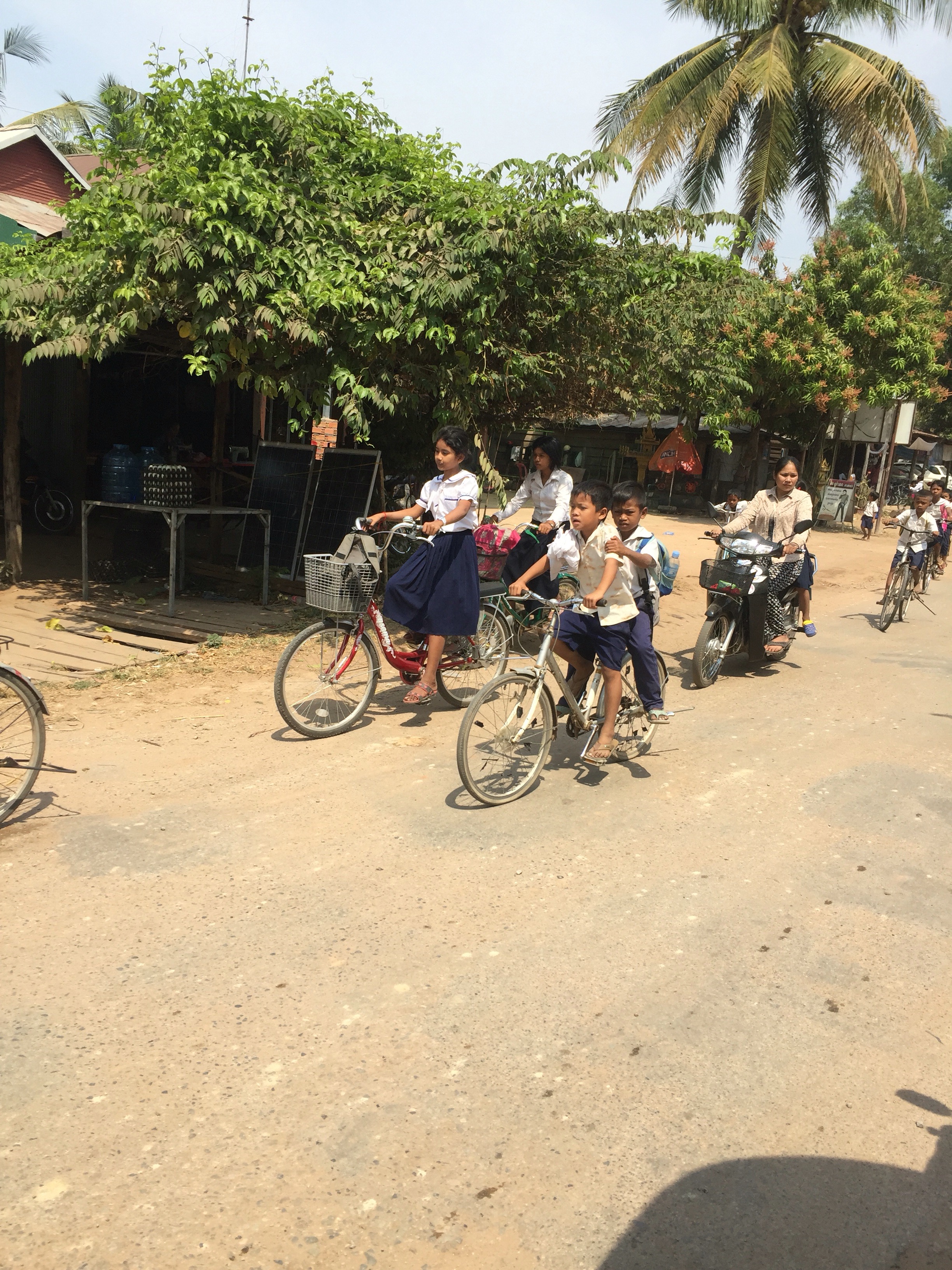
Street life (kids just off from school)
Watting, Indiana Jones style
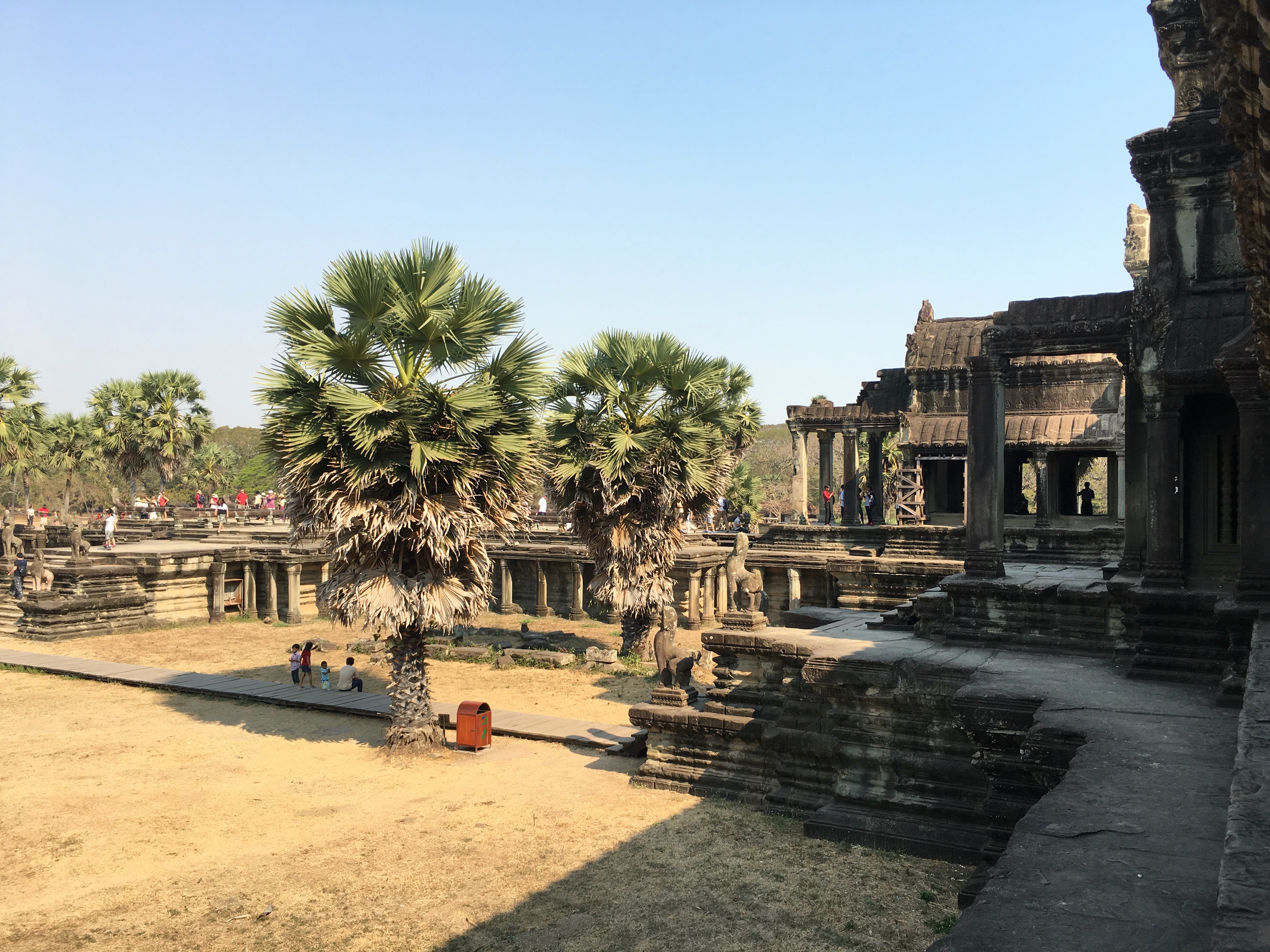
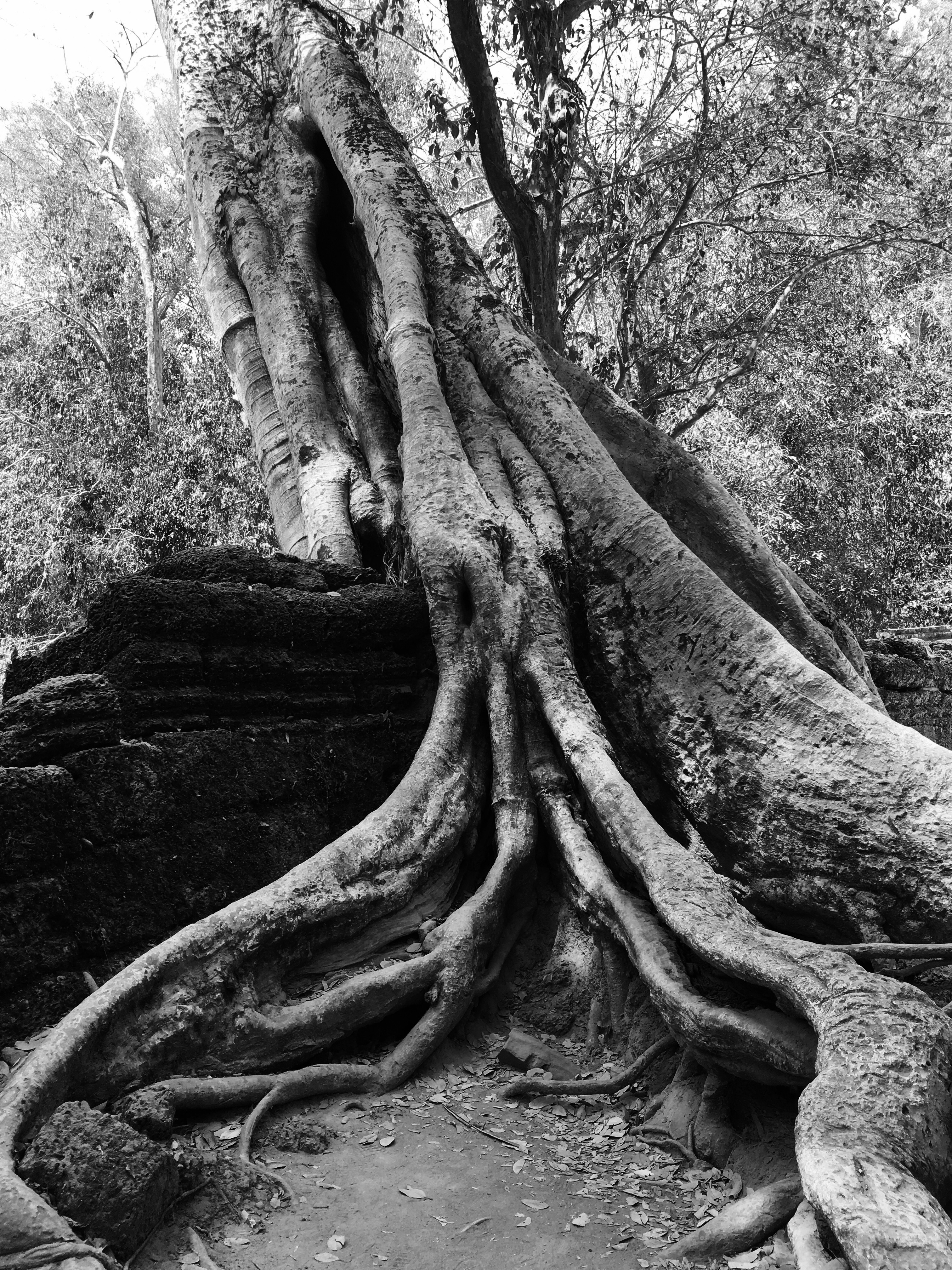
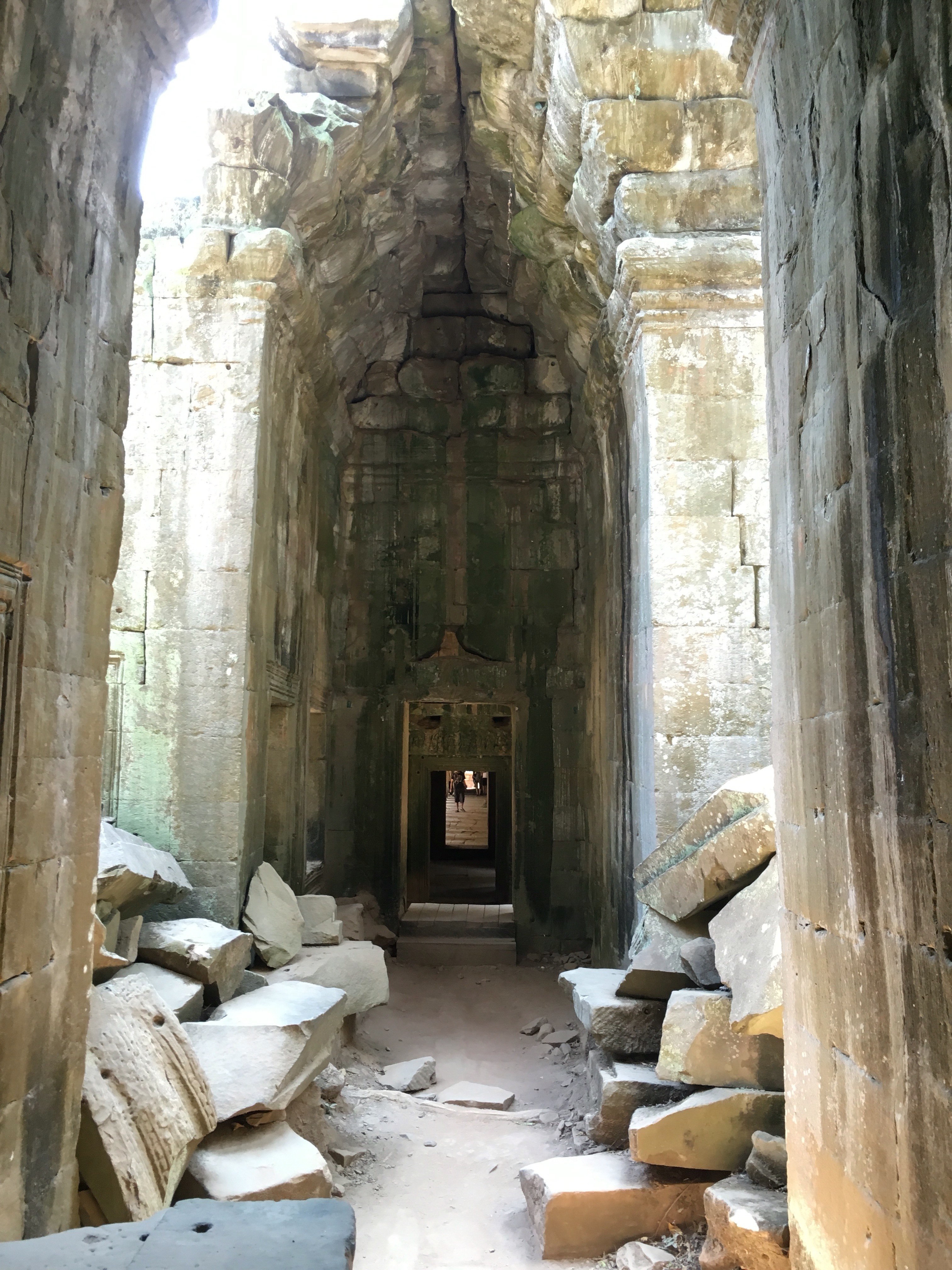
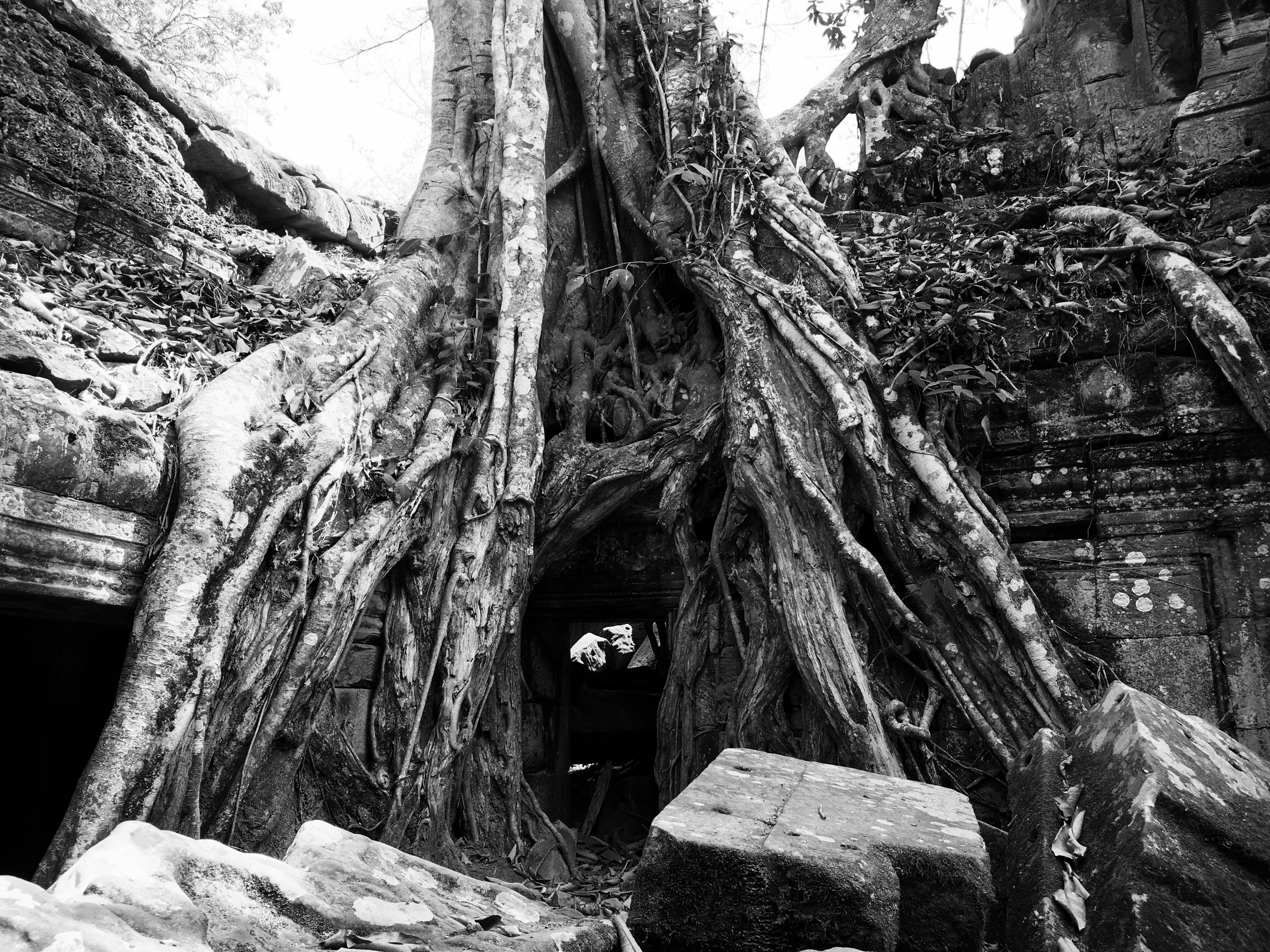
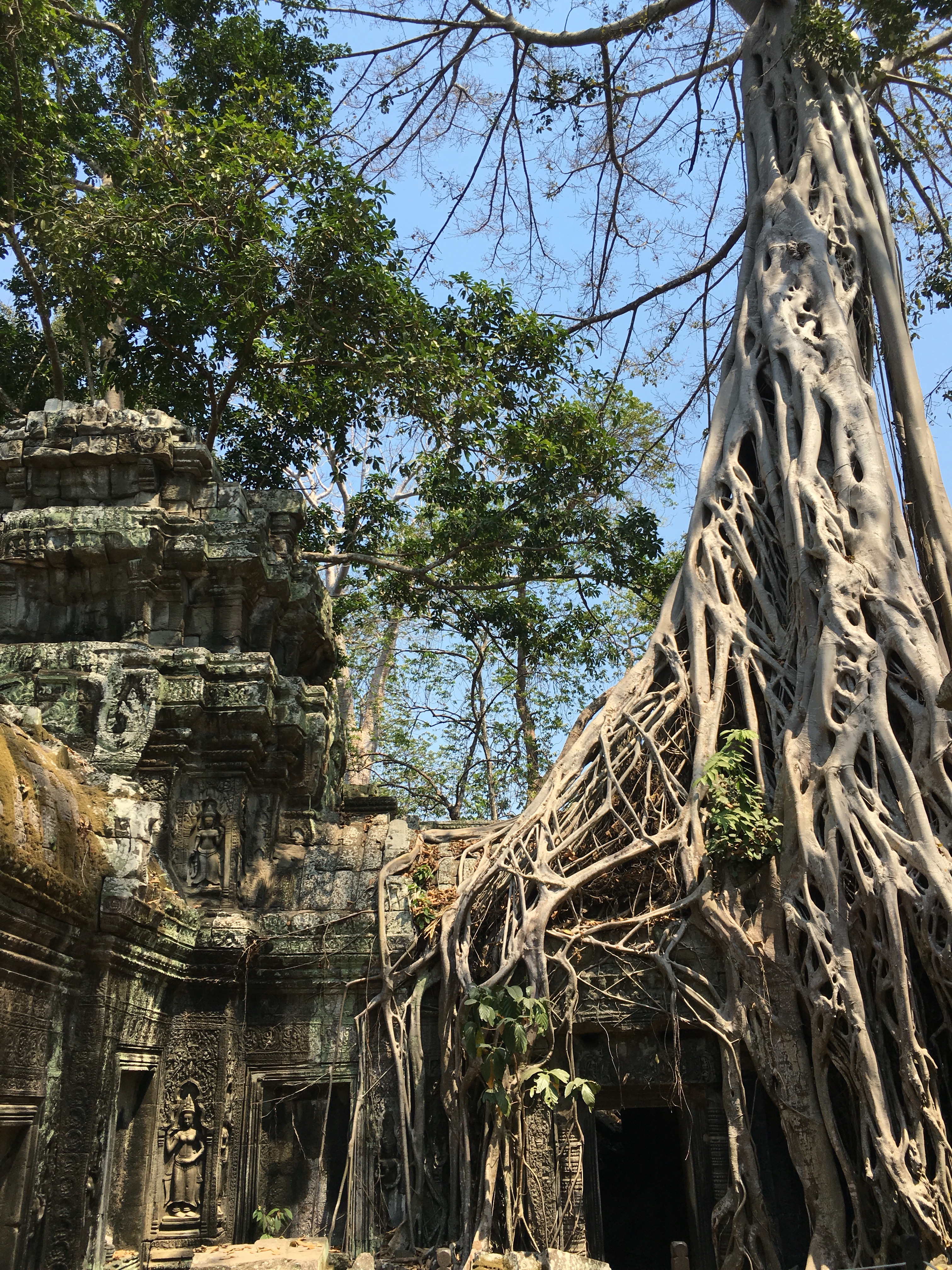
Now this is watting I can get behind. Angkor is often compared, by people a lot smarter than me, to the Egyptian pyramids and Jordan’s Petra, two other fantastic displays of ancient civilizations putting slave labor to good use erecting unnecessarily massive palaces and temples. Beginning in the 12th century, Angkor served as the capital city for the Khmer Empire and was apparently home to over a million people which made it the biggest civilization of the time. The most famous is Angkor Wat but my favorite was Ta Prohm as it was jungle-like with the trees growing in/atop the structures. It’s shameful how many pix I took so only a few are below.

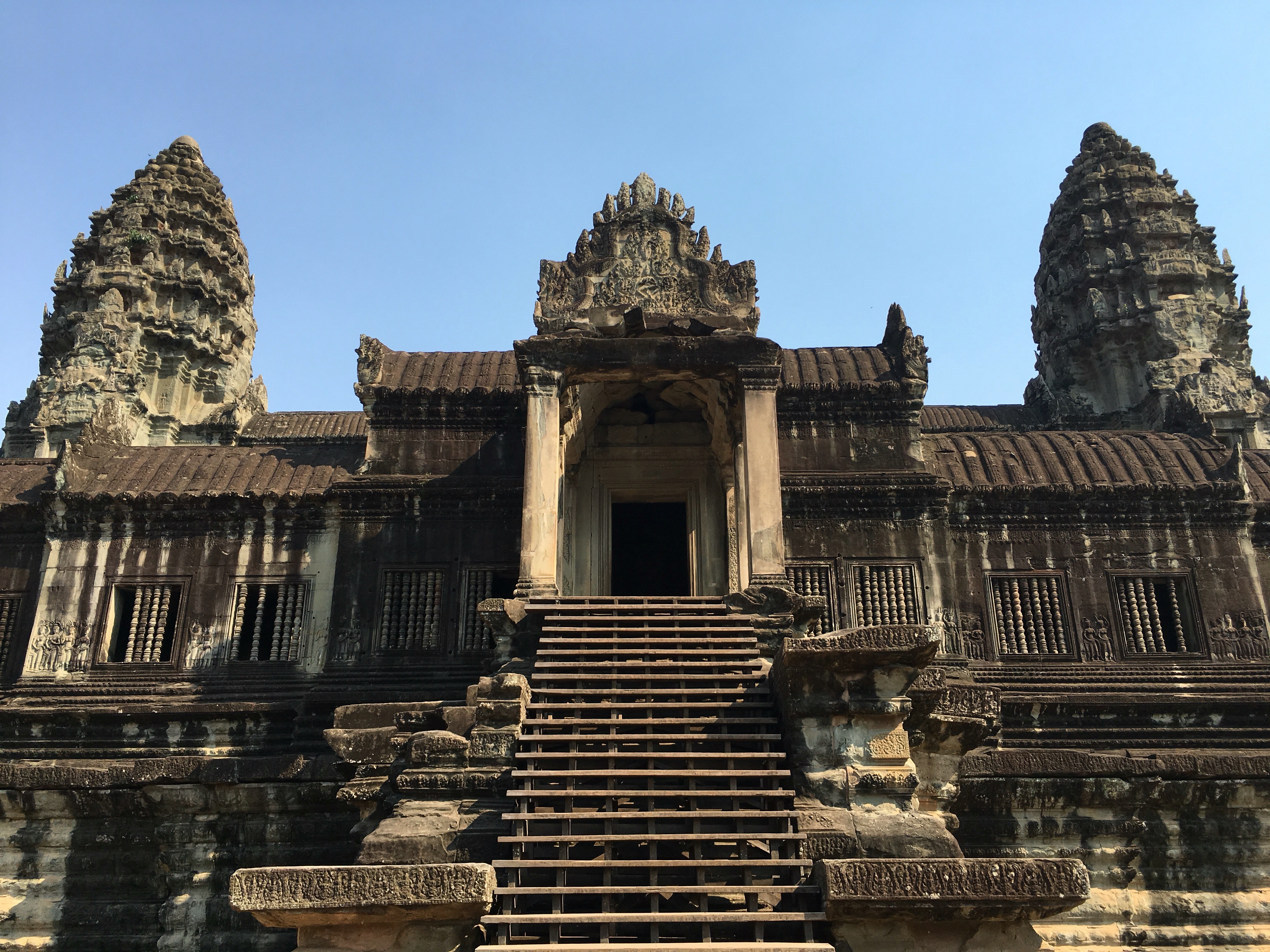
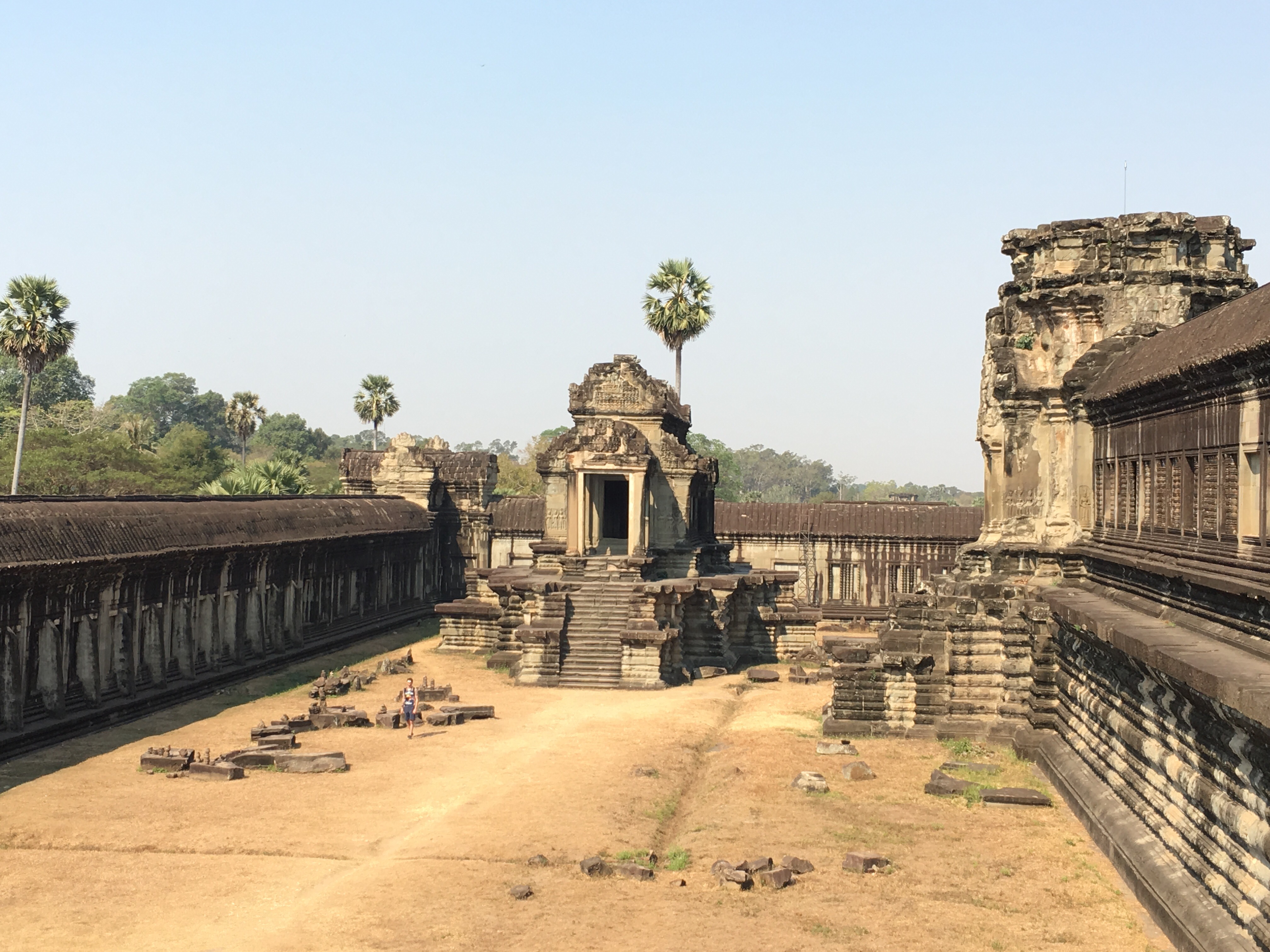
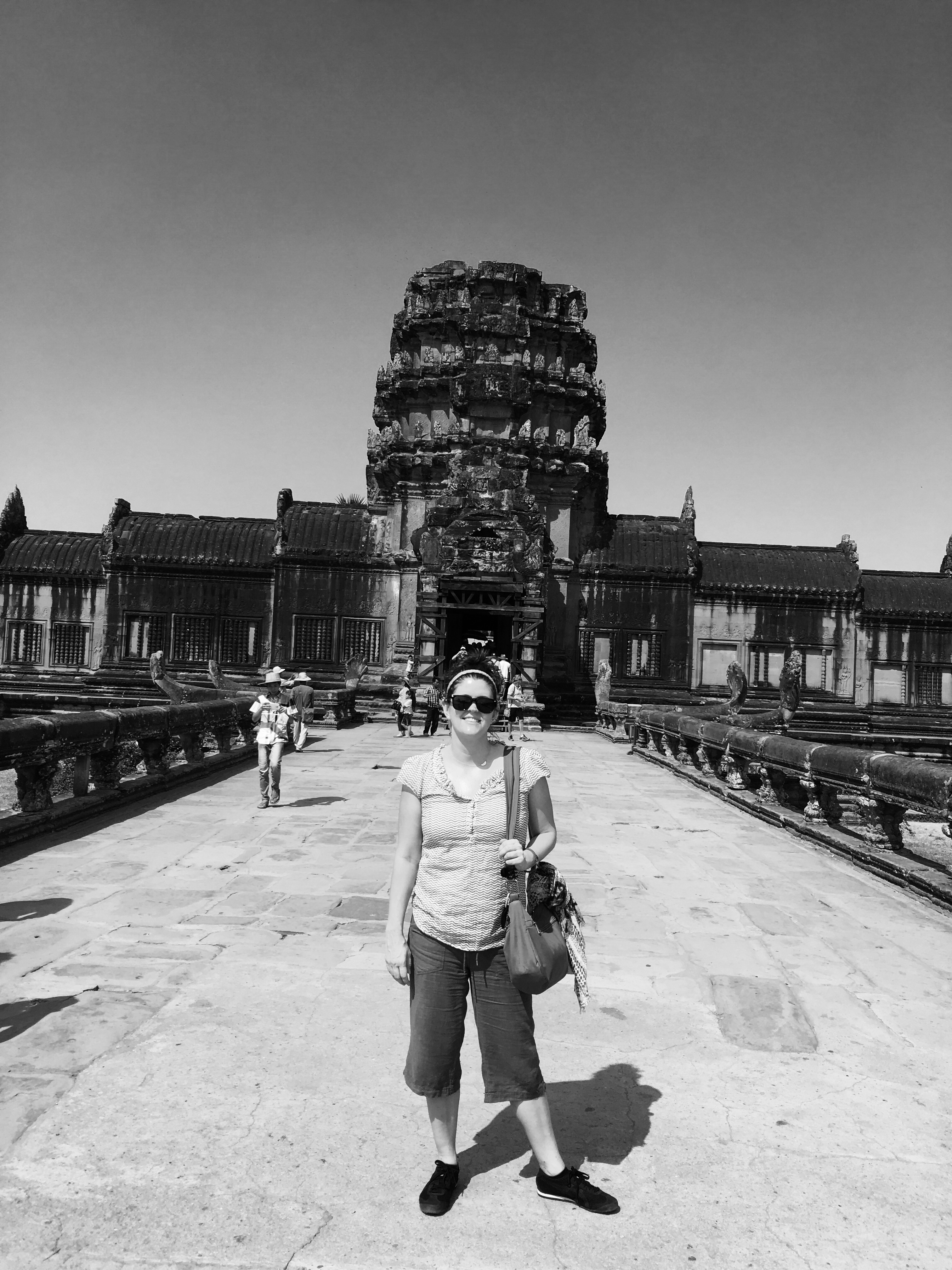

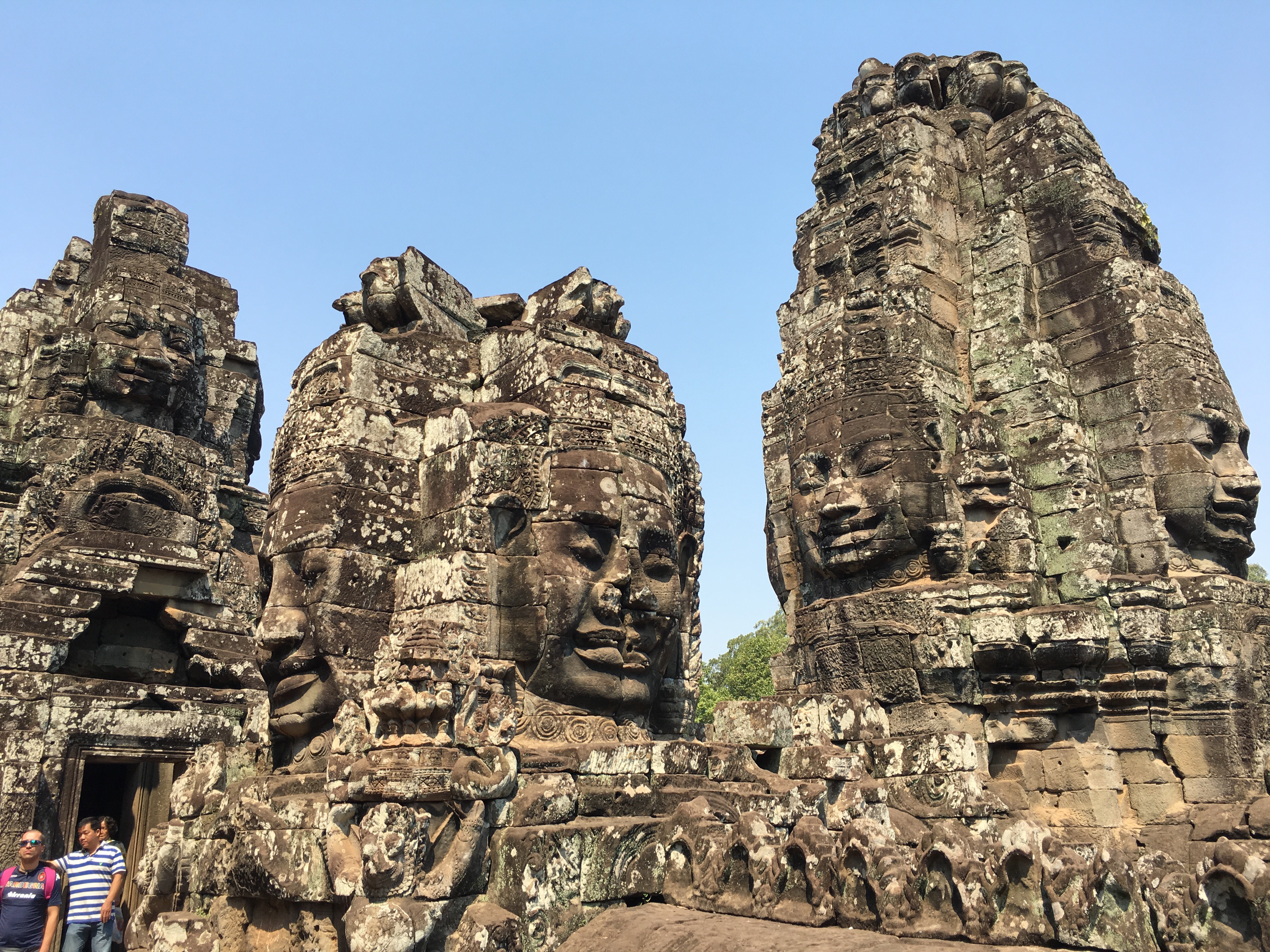





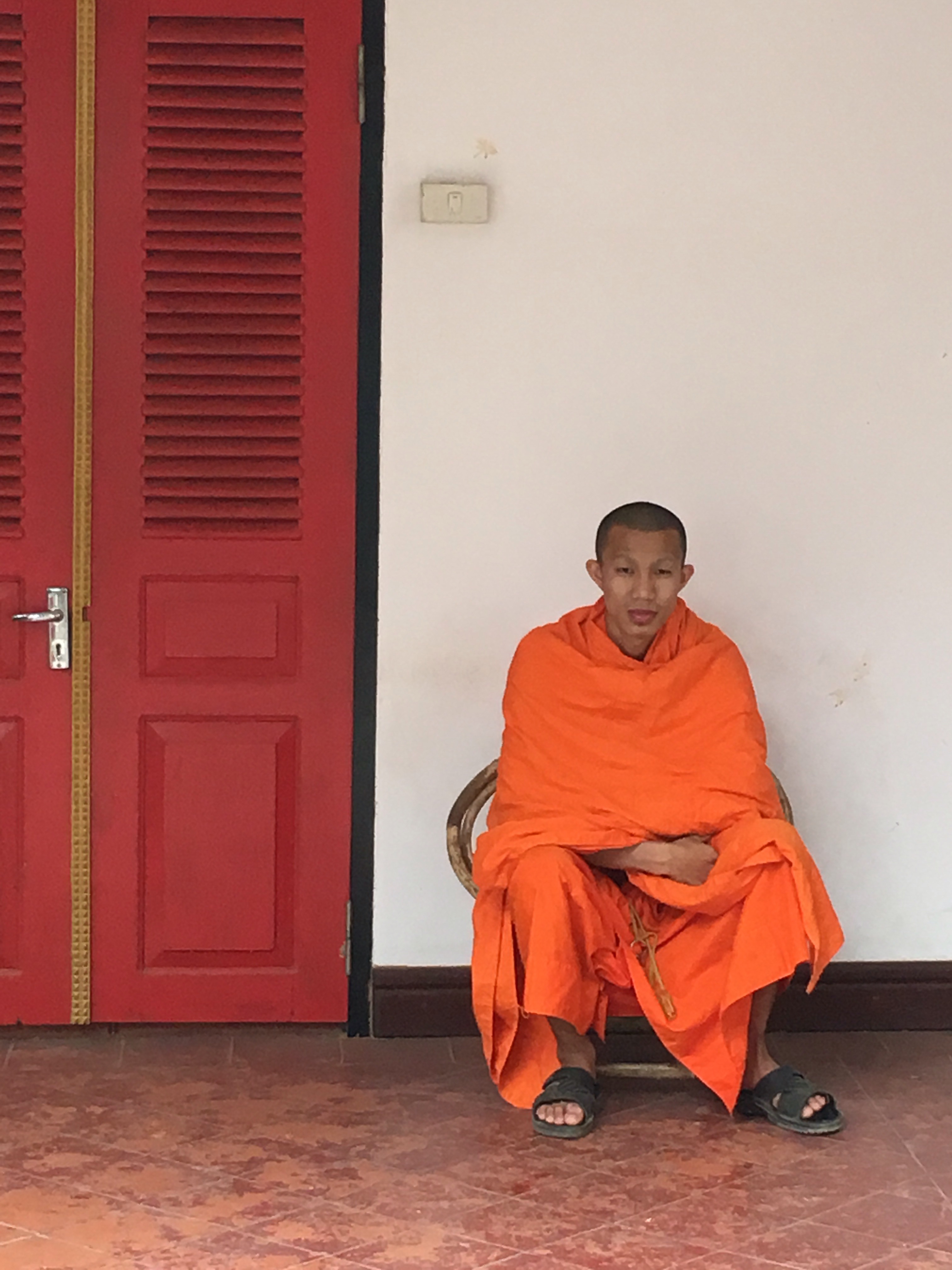
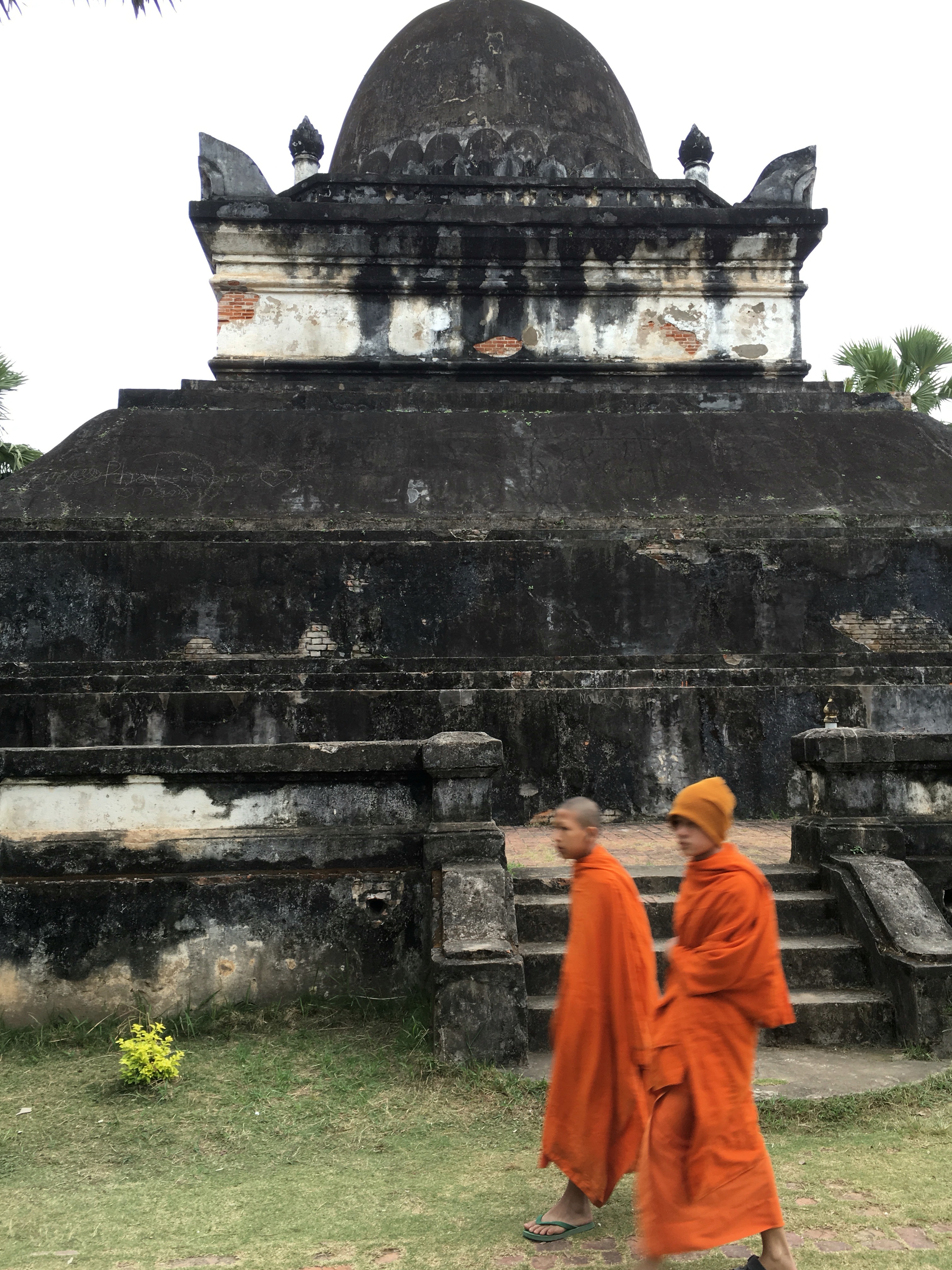
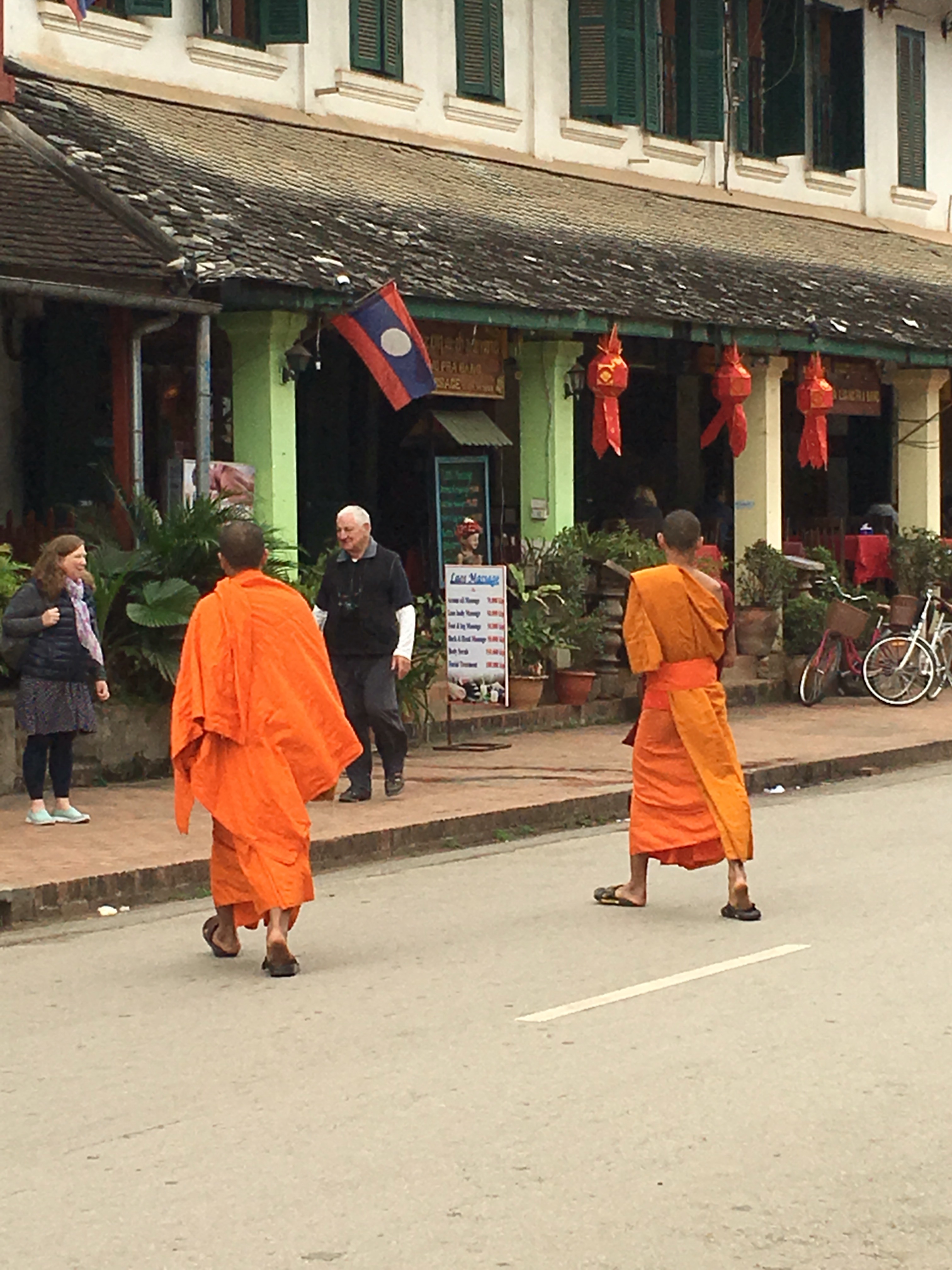
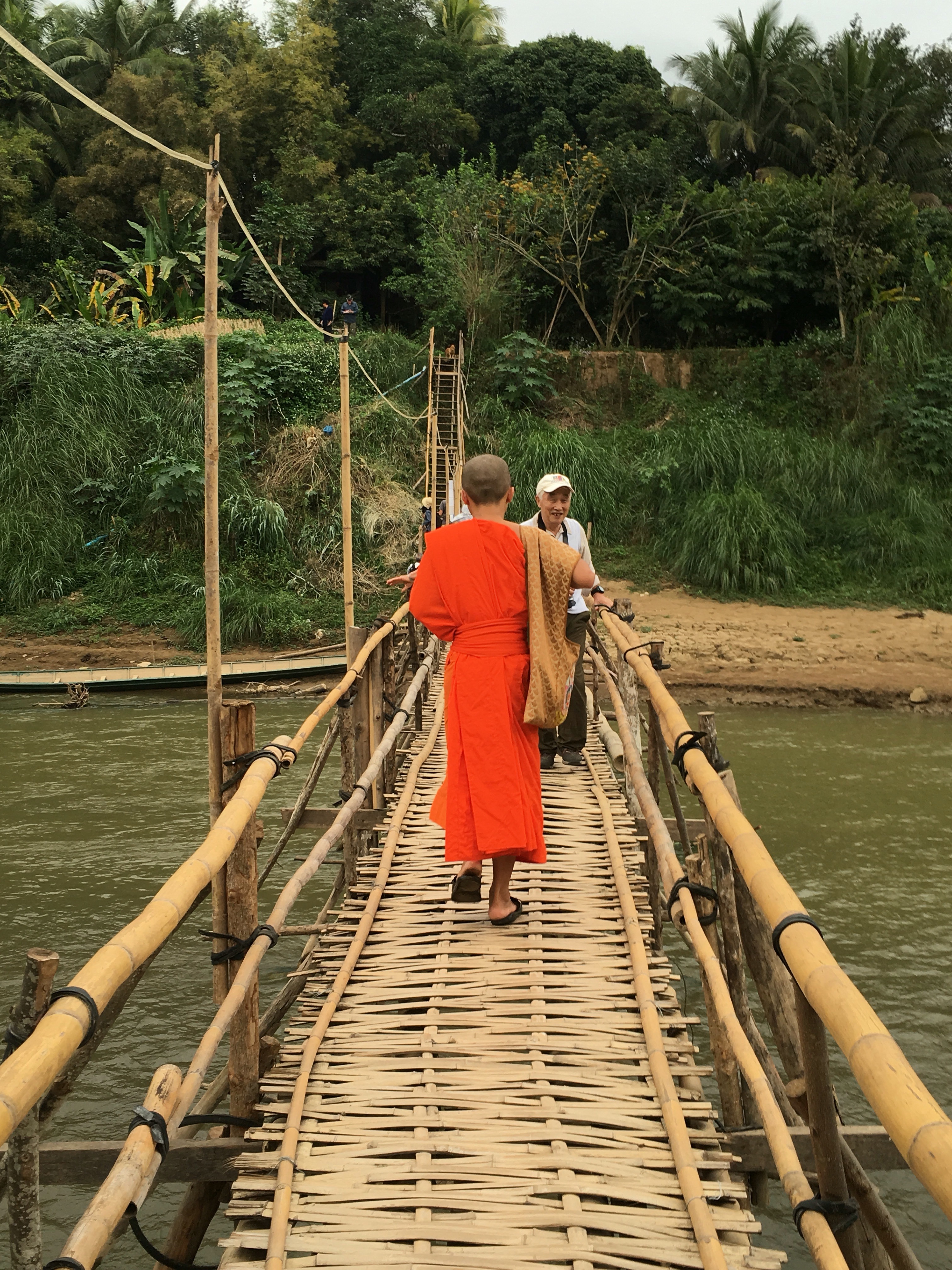
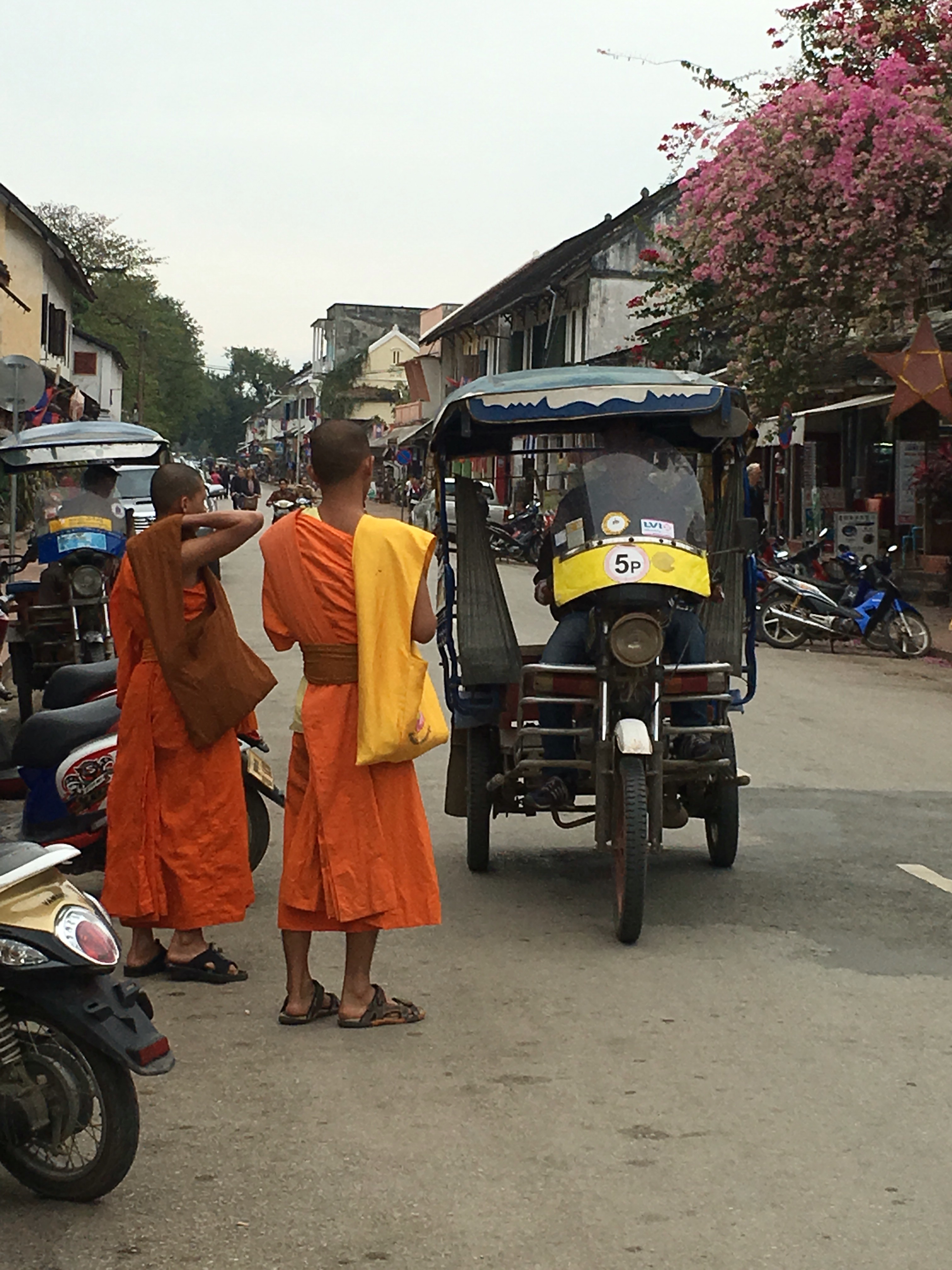
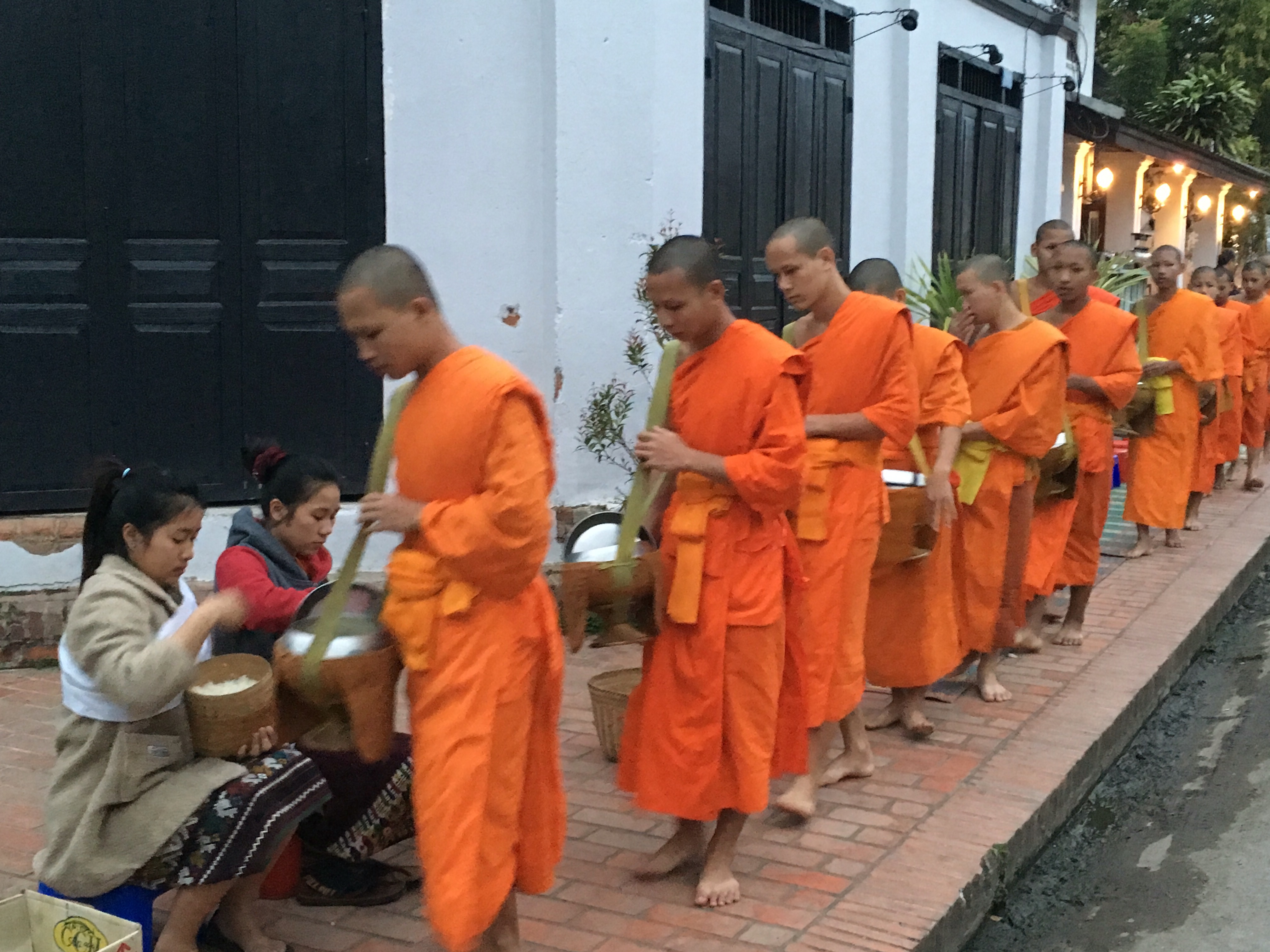
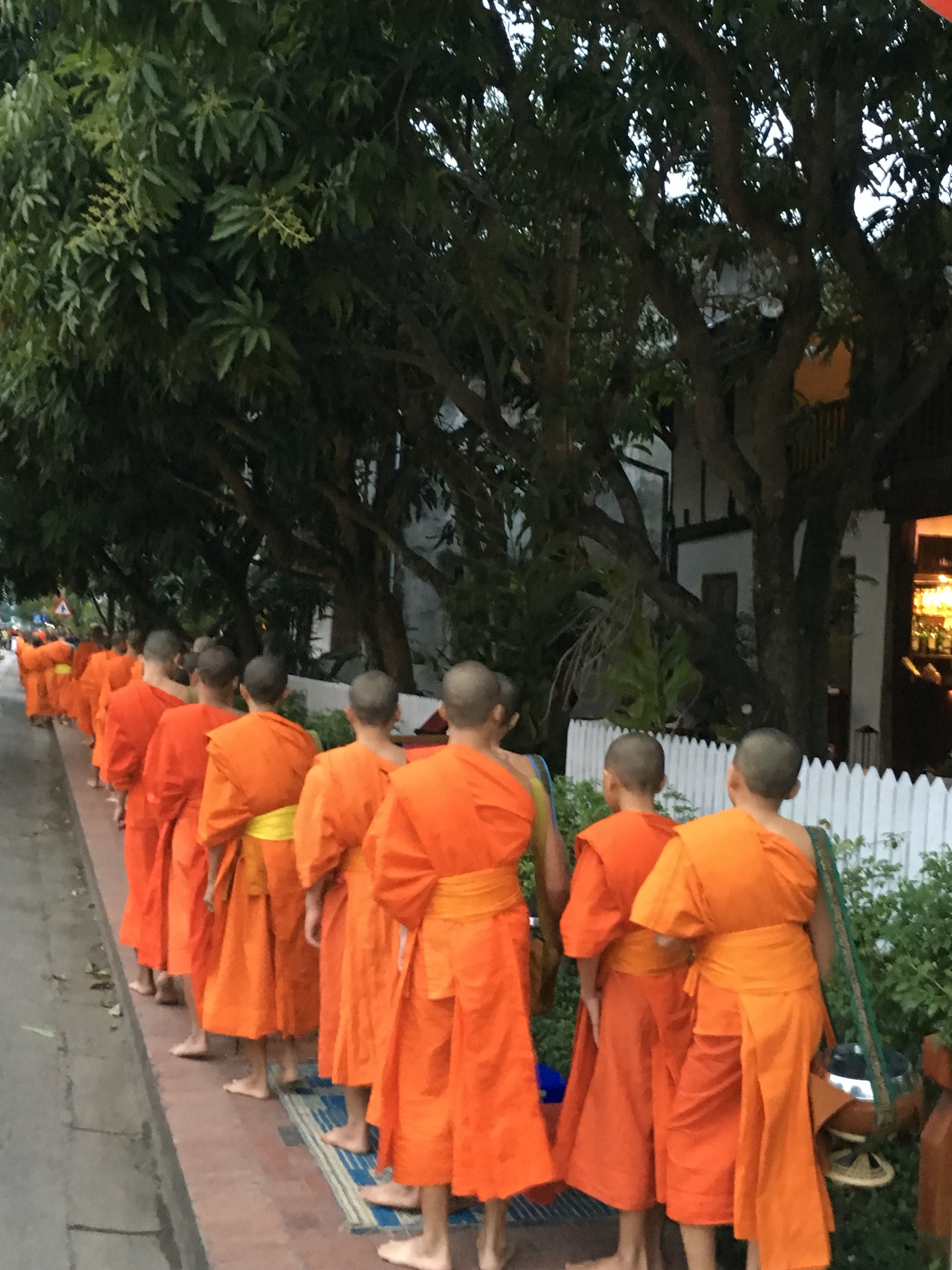
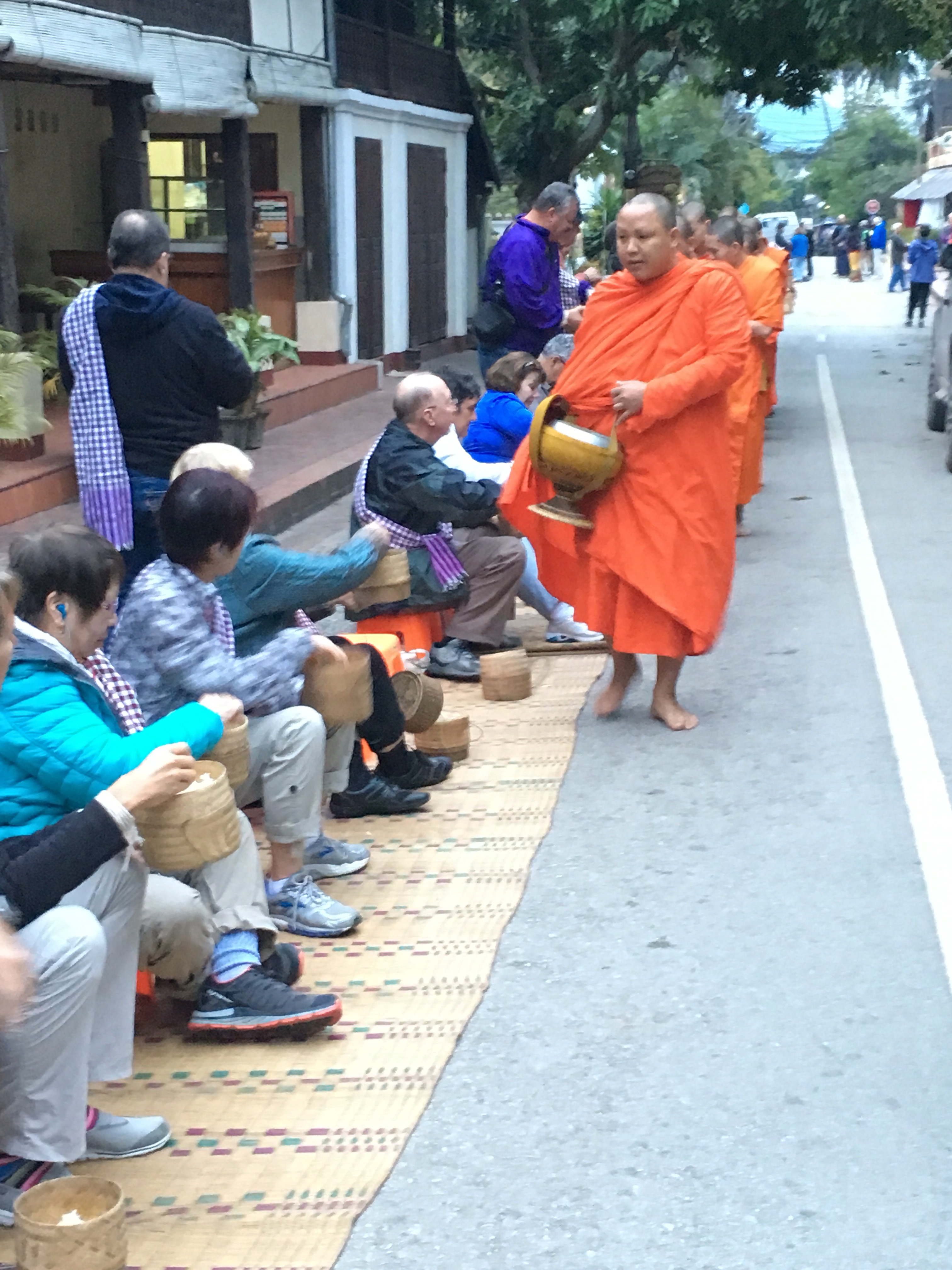
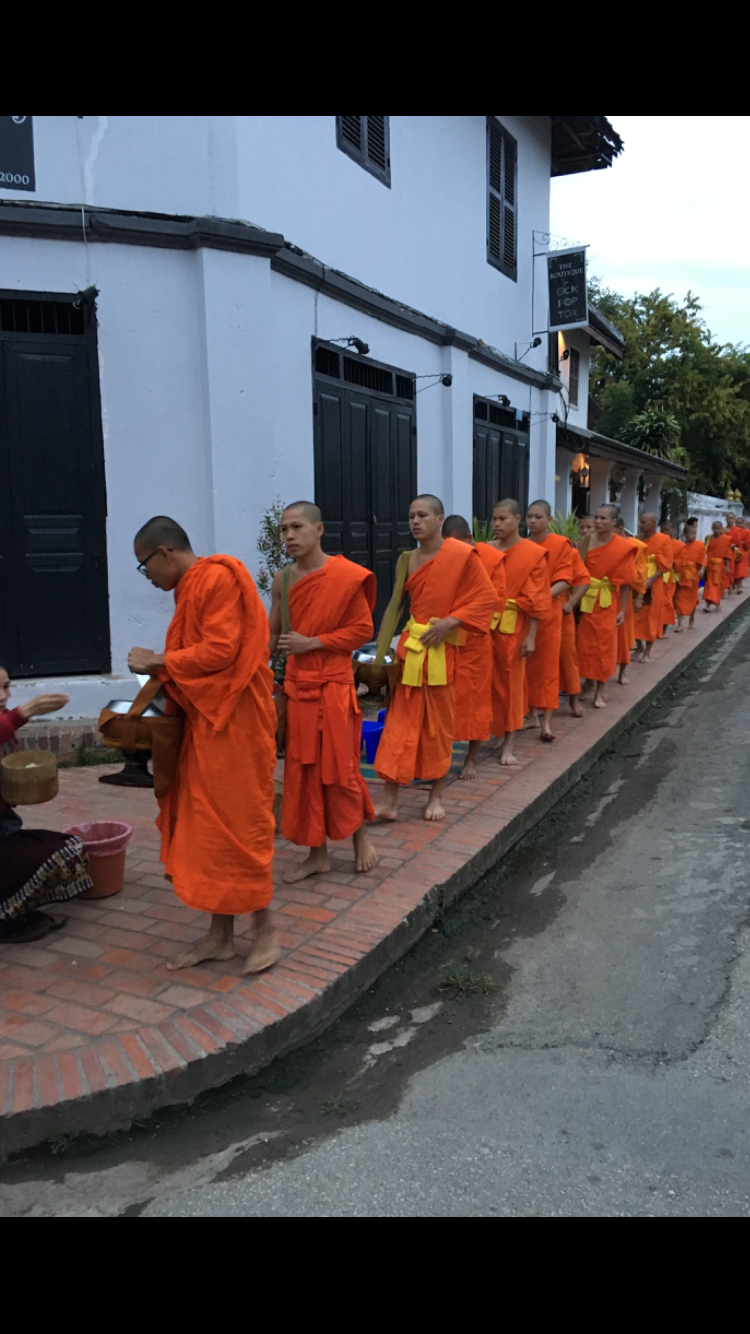
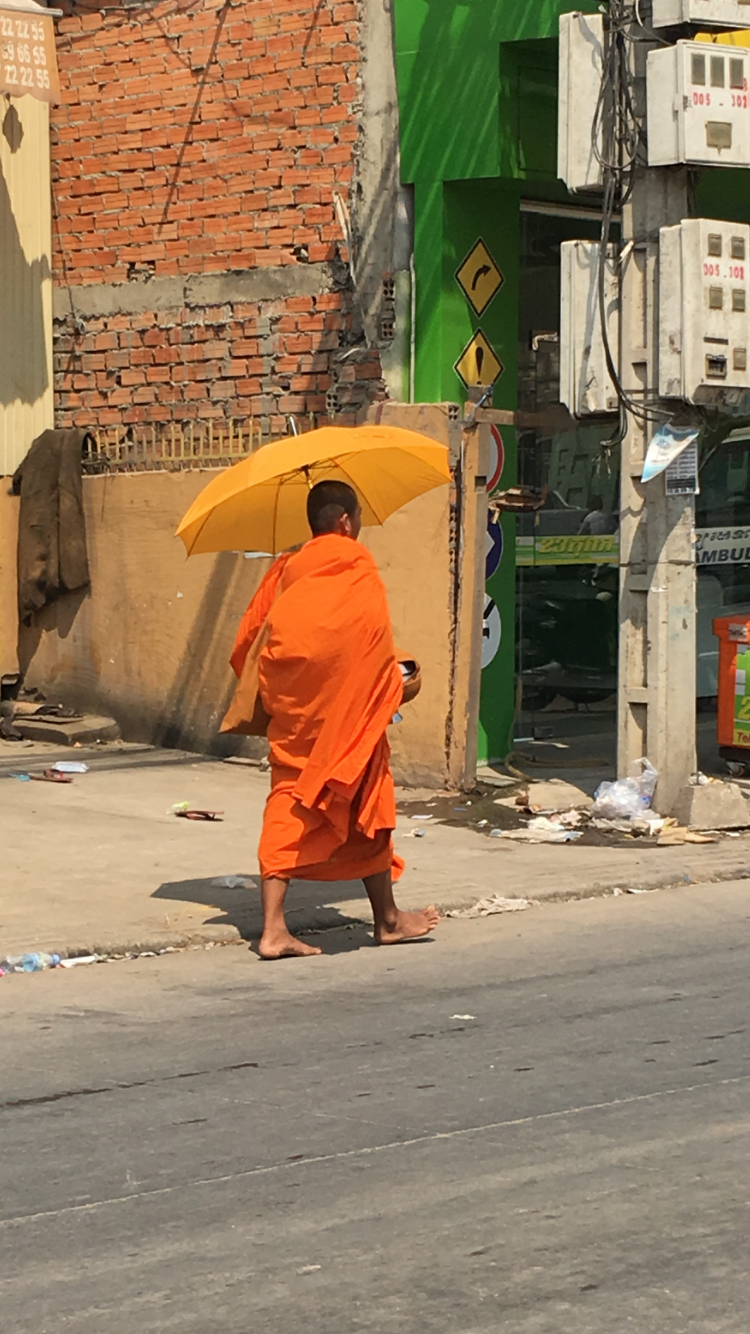
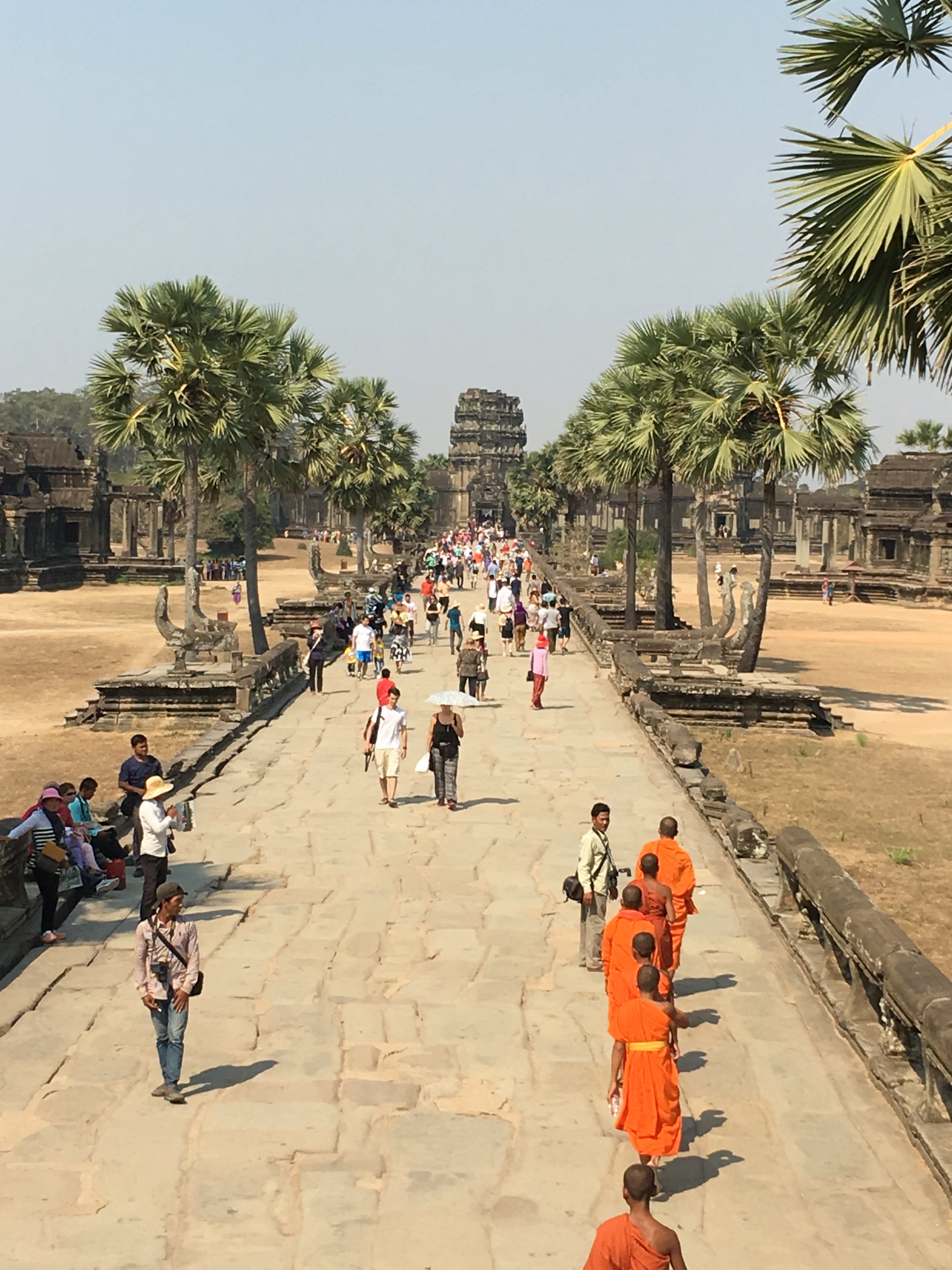
Monk action series
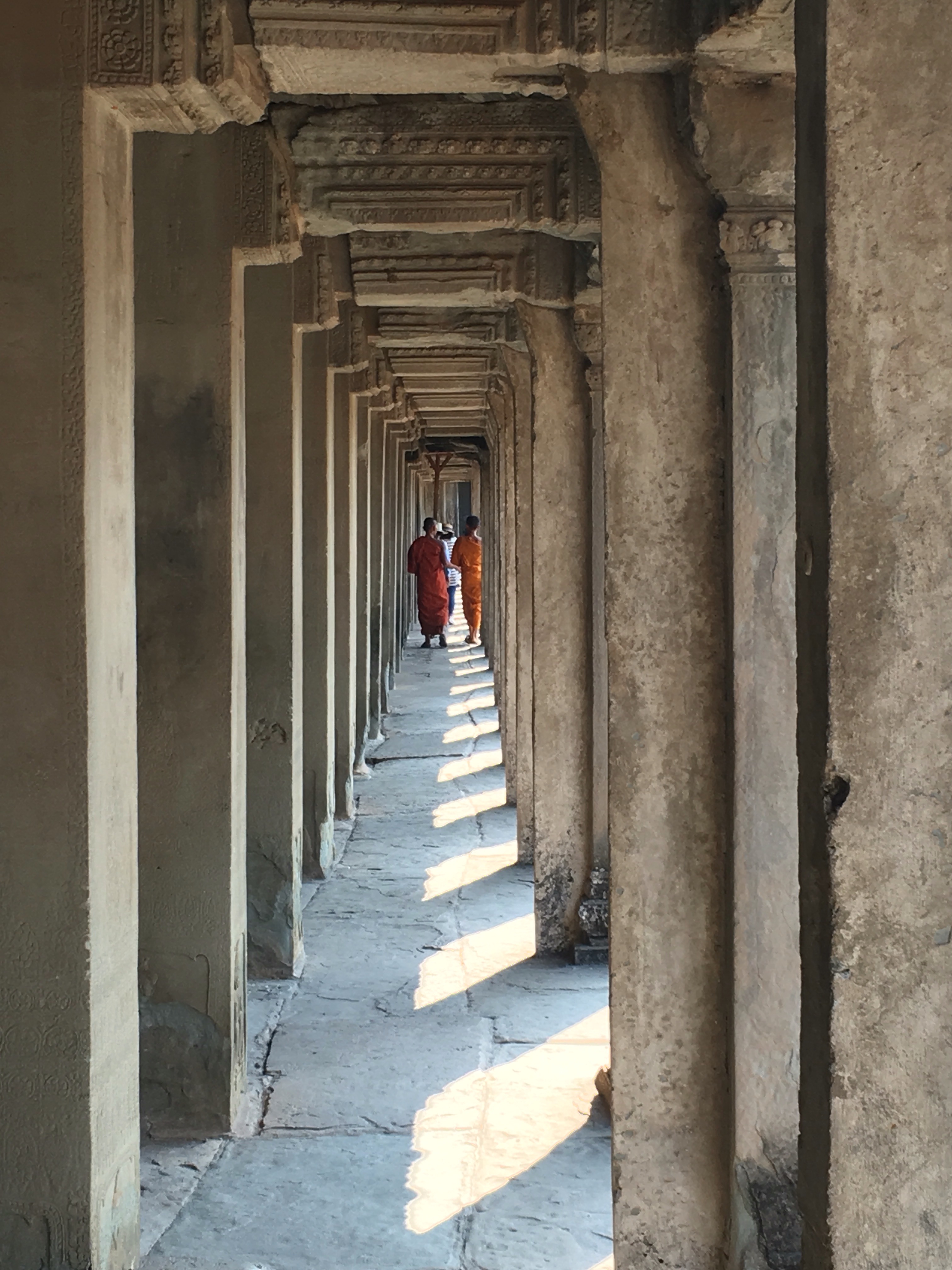
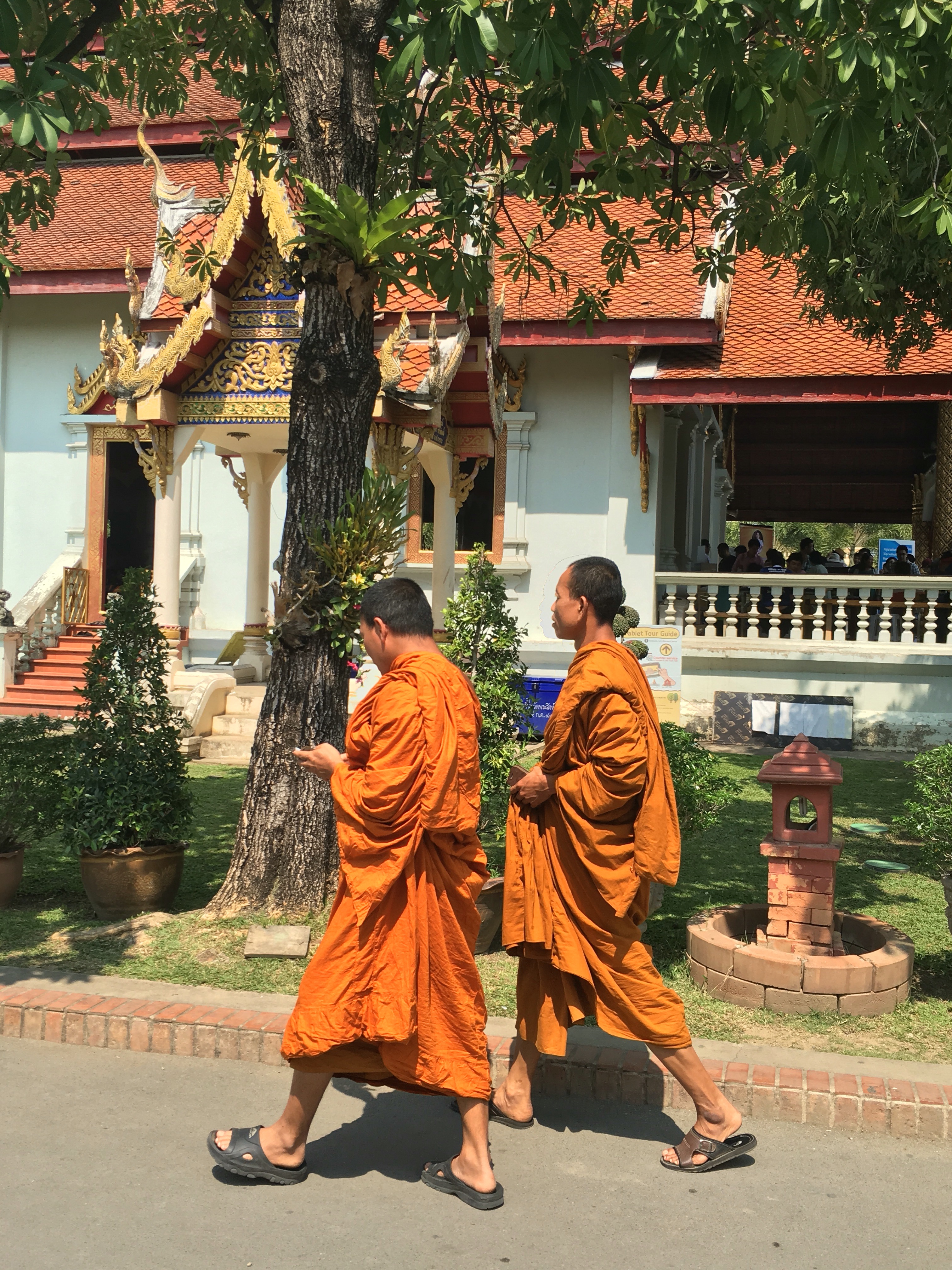
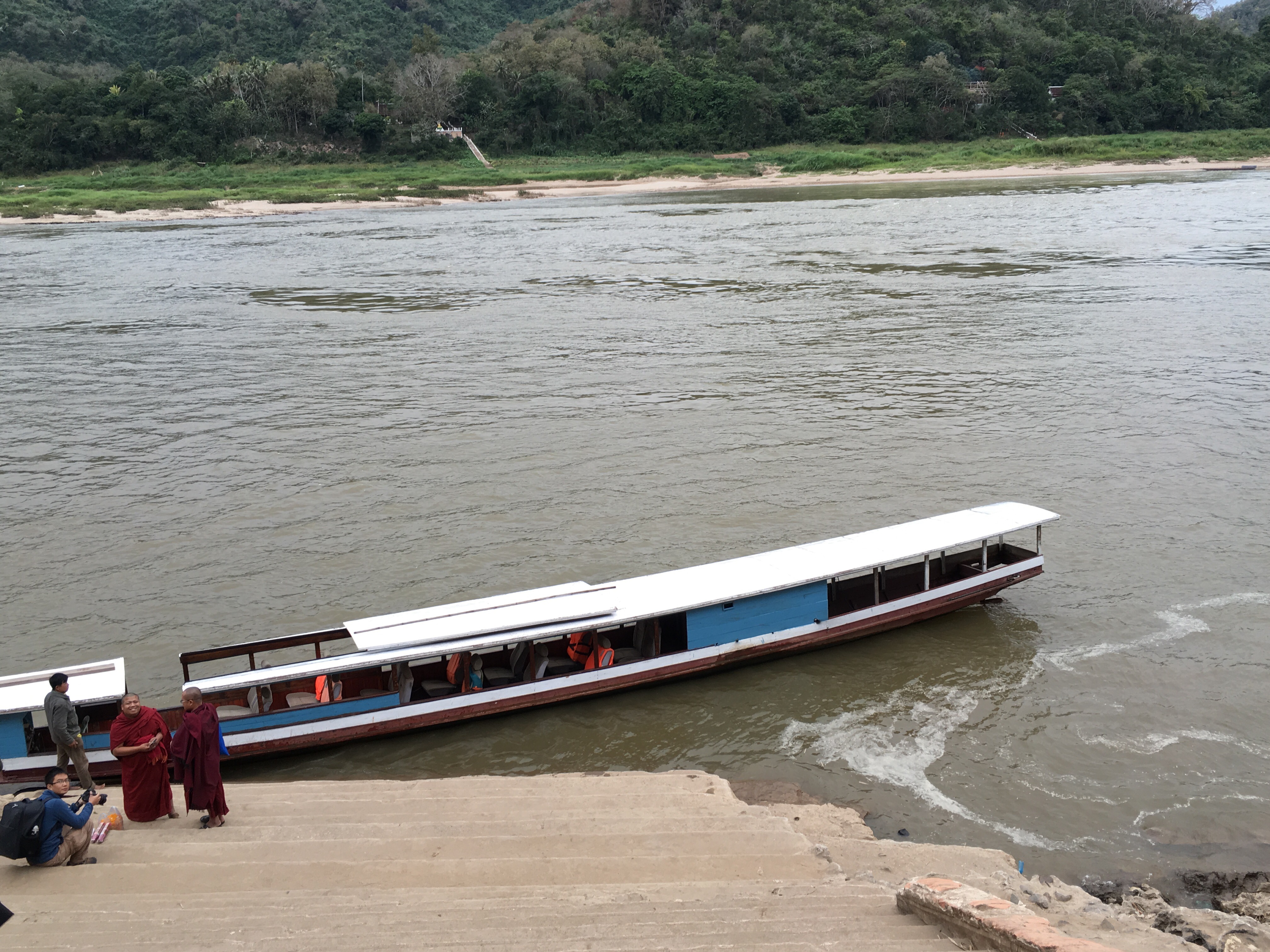
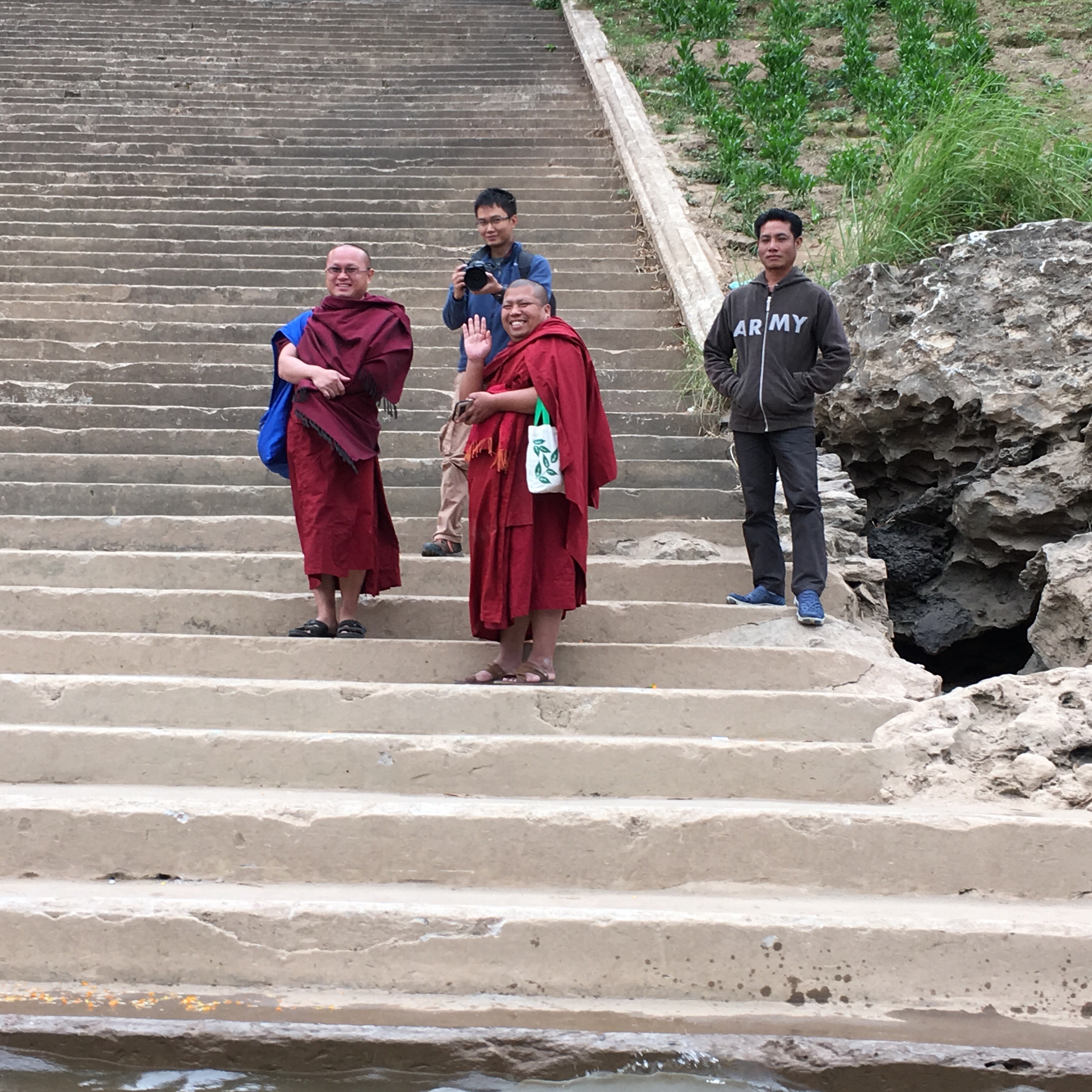
Throughout Northern Thailand, Laos & Cambodia, I’ve developed a sort of monk obsession. I’m fascinated with them and their lifestyle. But I’m not talking about real deep stuff here. More along the lines of… Why do Bangkok monks have to go barefoot and are too skinny while Chiang Mai monks get to wear shoes (typically flip flops or leather sandals) and appear healthy (i.e. well fed)? Why do Lao monks have to keep their bald head freshly shaved while Thai & Cambodian monks can play it a little looser? However, I admit that my primary interest in them is most likely even more superficial… their bright orange robes really make a picture pop. “Monk alert” is a term we’ve coined when one of us spots their orange robes so we can quickly become camera-ready. Lao monks have turned out to be my favorite, probably due to their daily early morning alms procession (I got up before 6am 3 out of 4 mornings to witness it bc I just couldn’t help myself). I was beyond thrilled when we showed up at the river bank for our Mekong boat day only to find two monks seemingly waiting to board our boat. Dreams of a live monk action series leapt into my head and while that unfortunately didn’t materialize (they instead waved us goodbye), that was the inspiration for this post and a collection of my monk photos, which I’ve largely spared you to-date.




Wat’s up
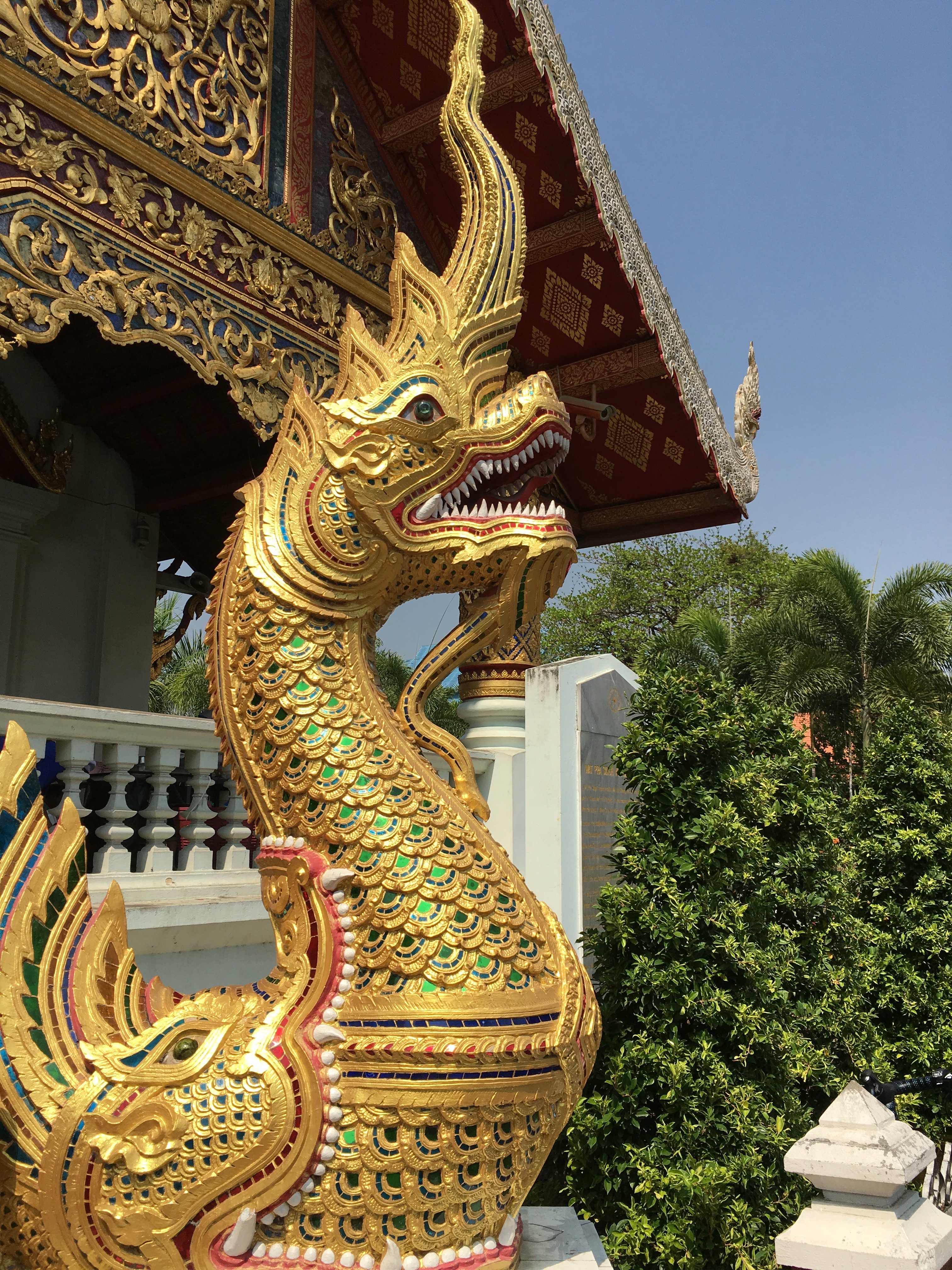
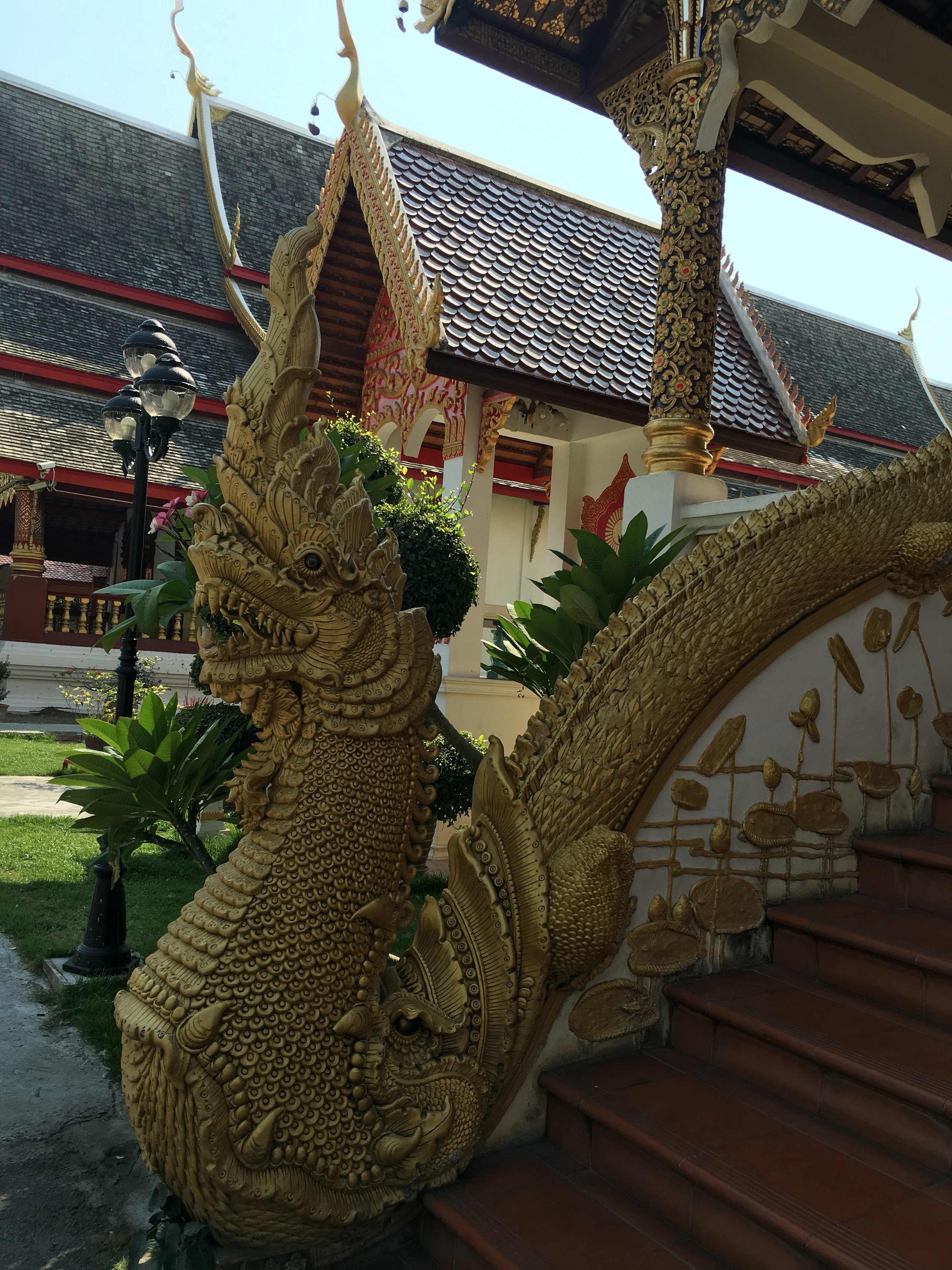
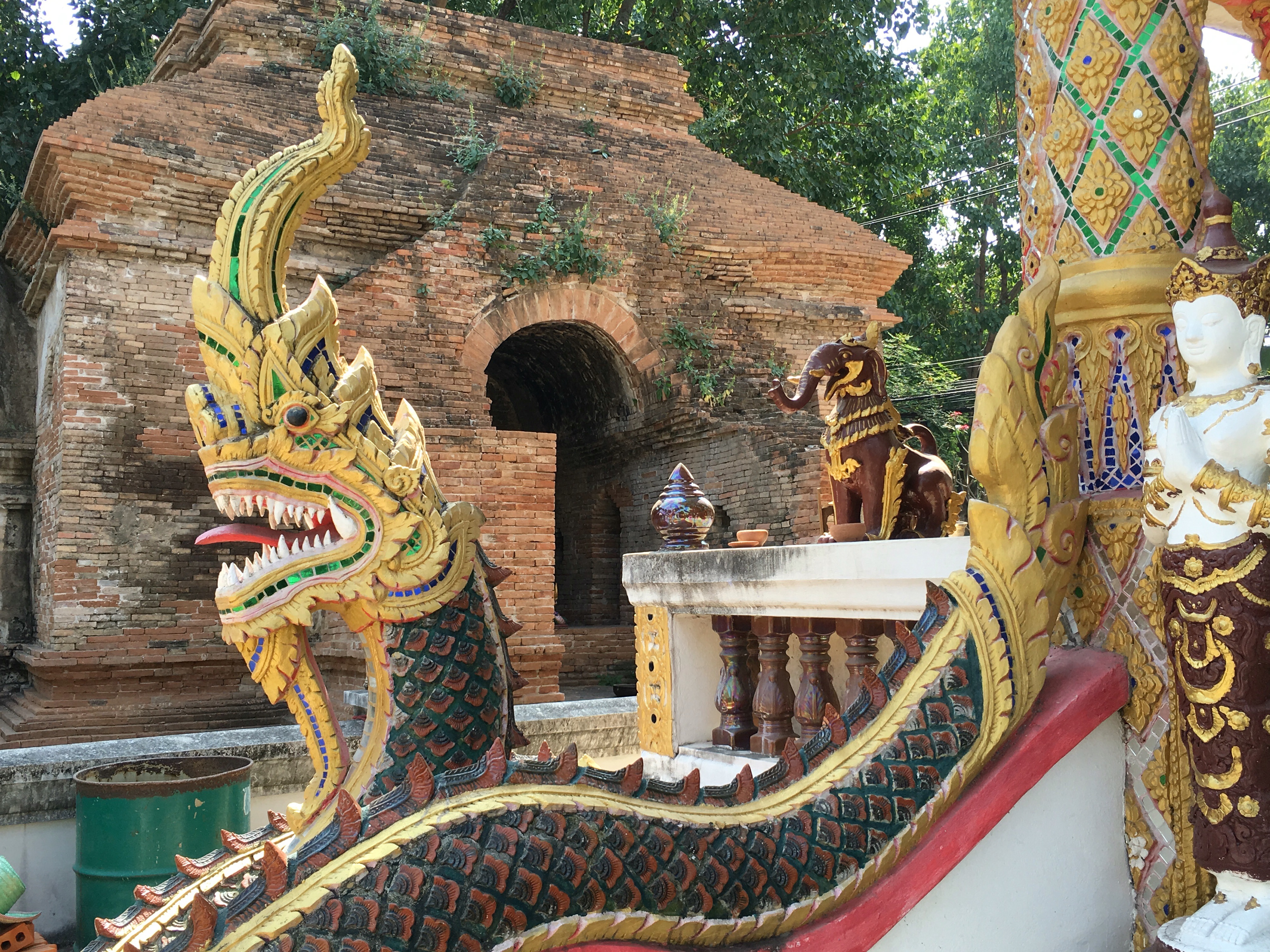
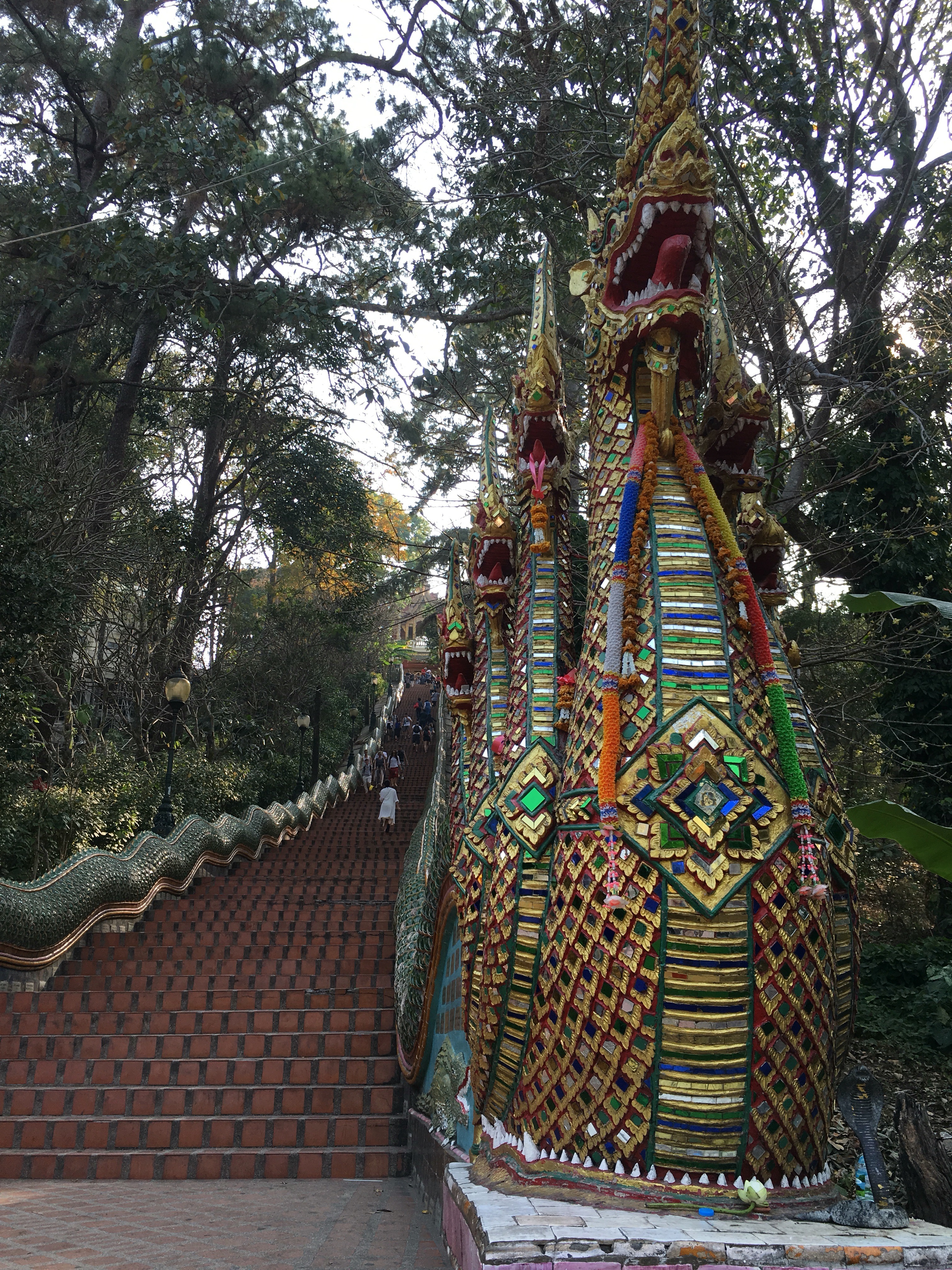
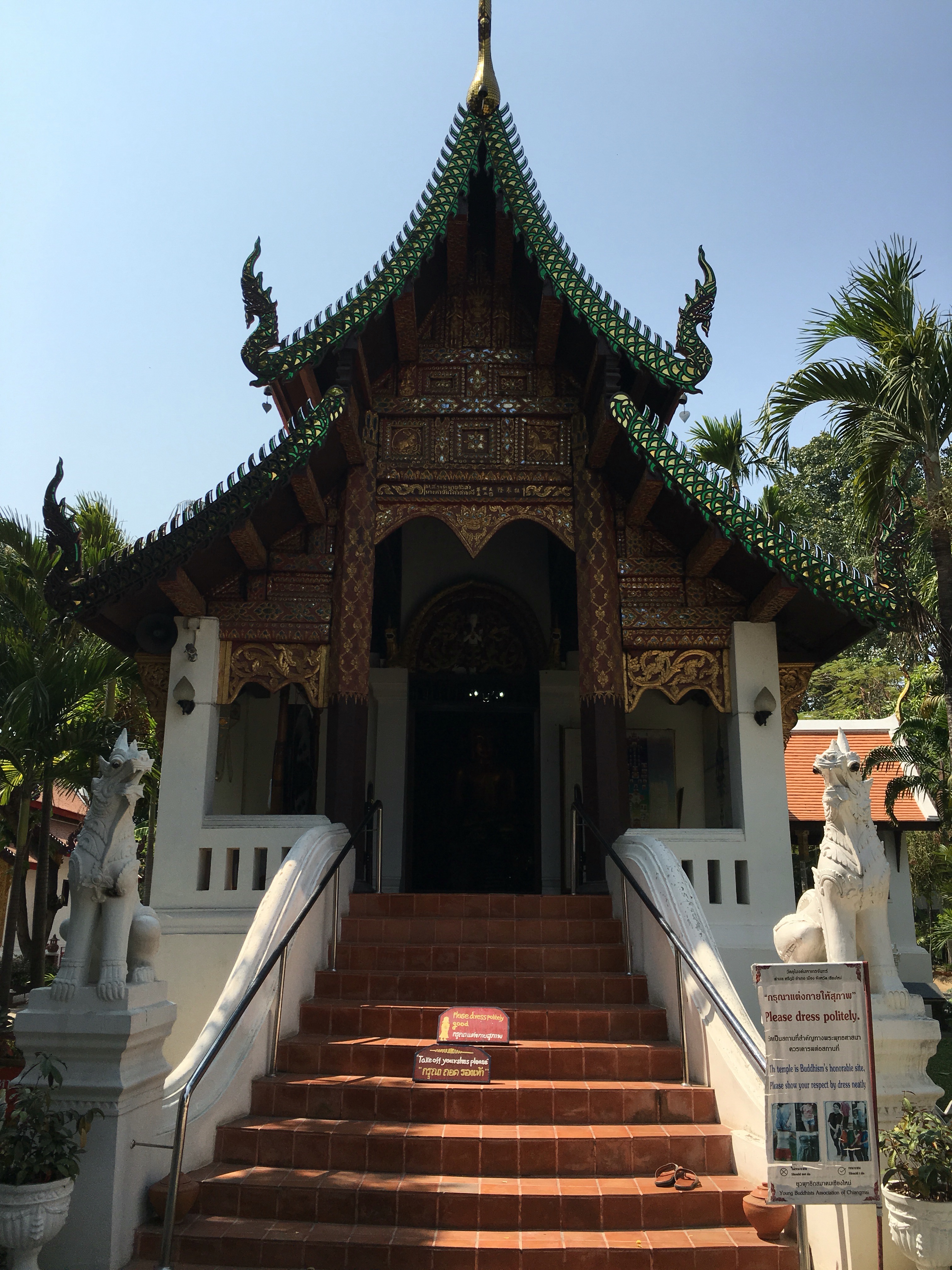
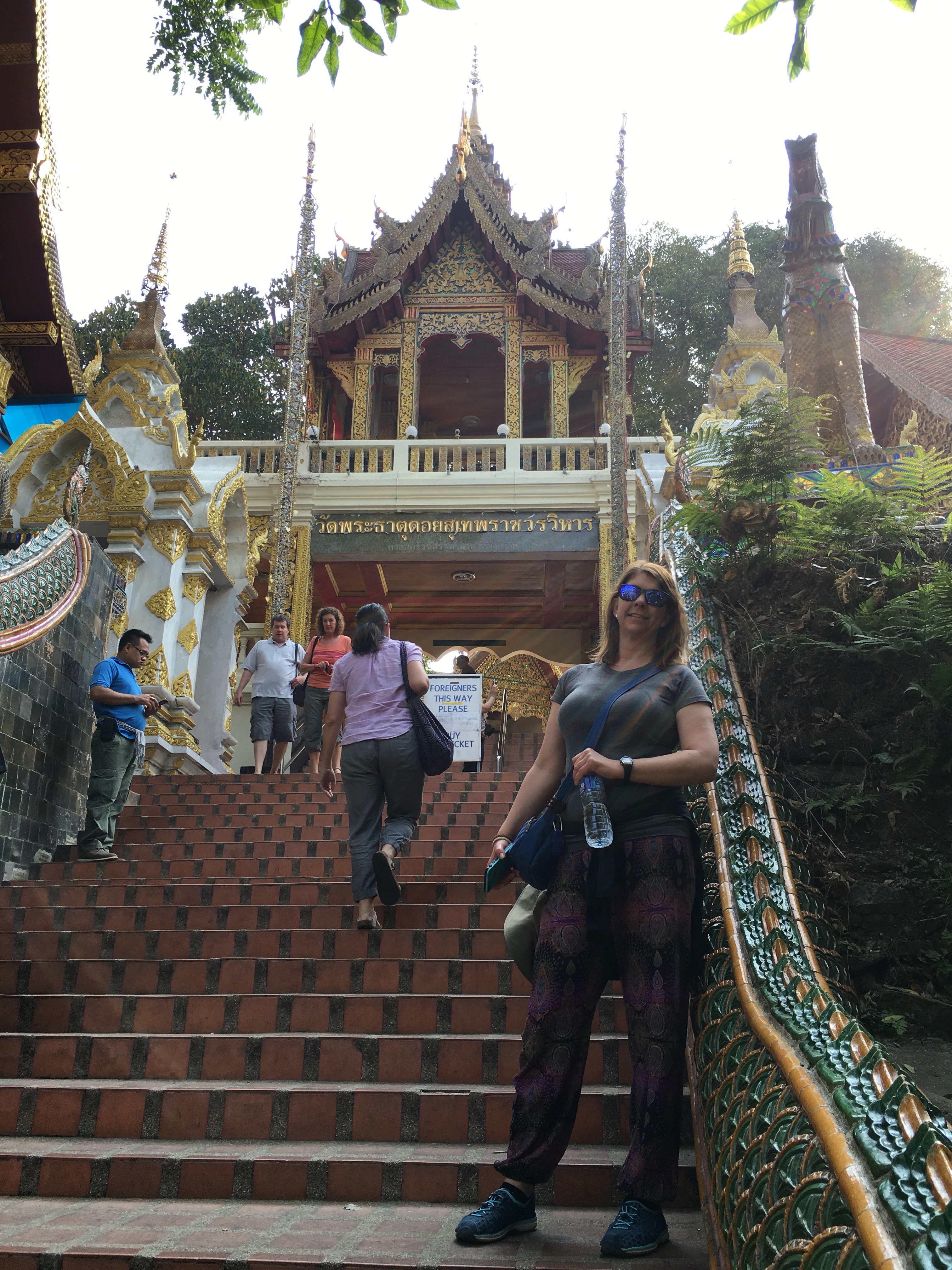
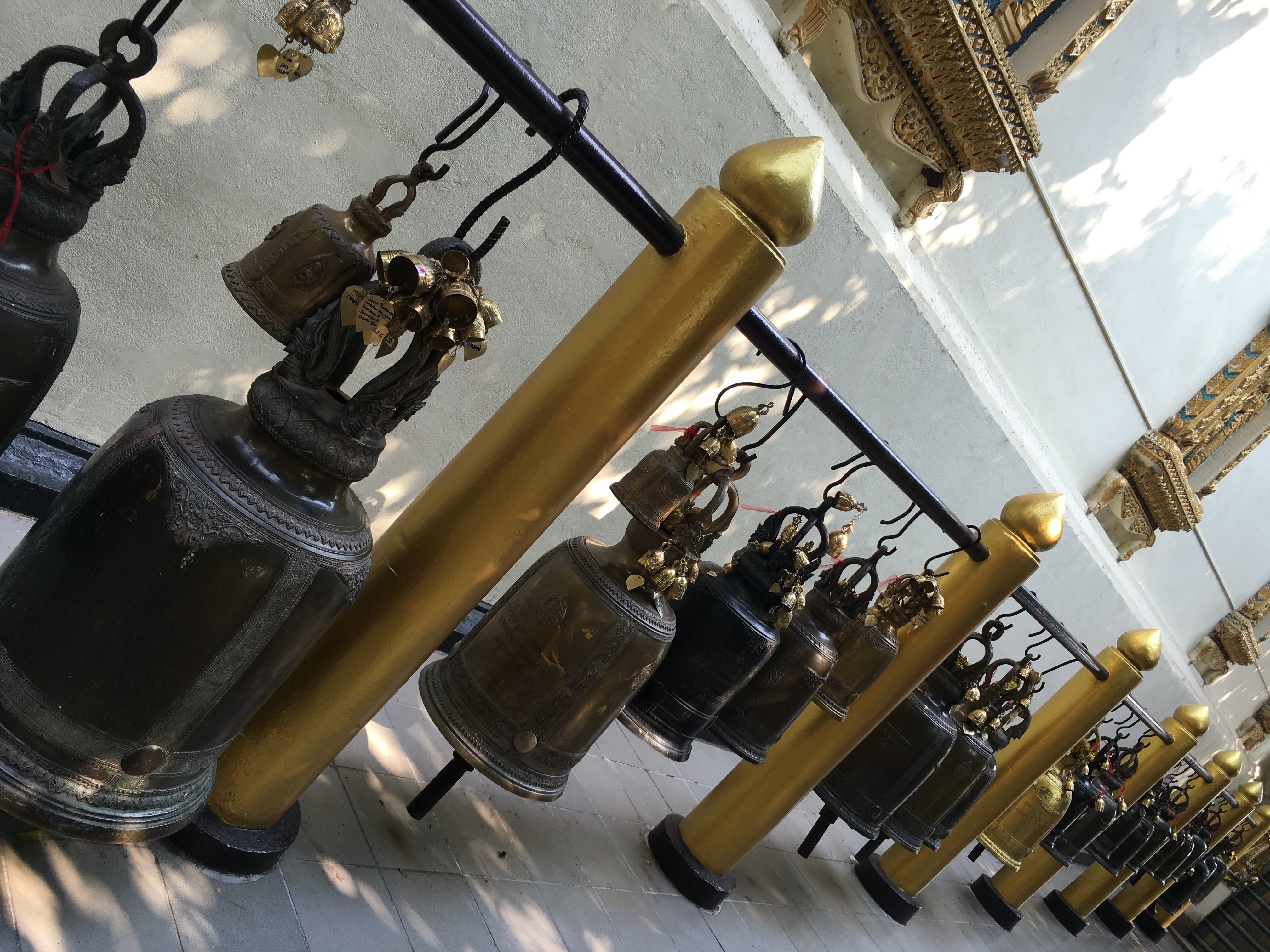
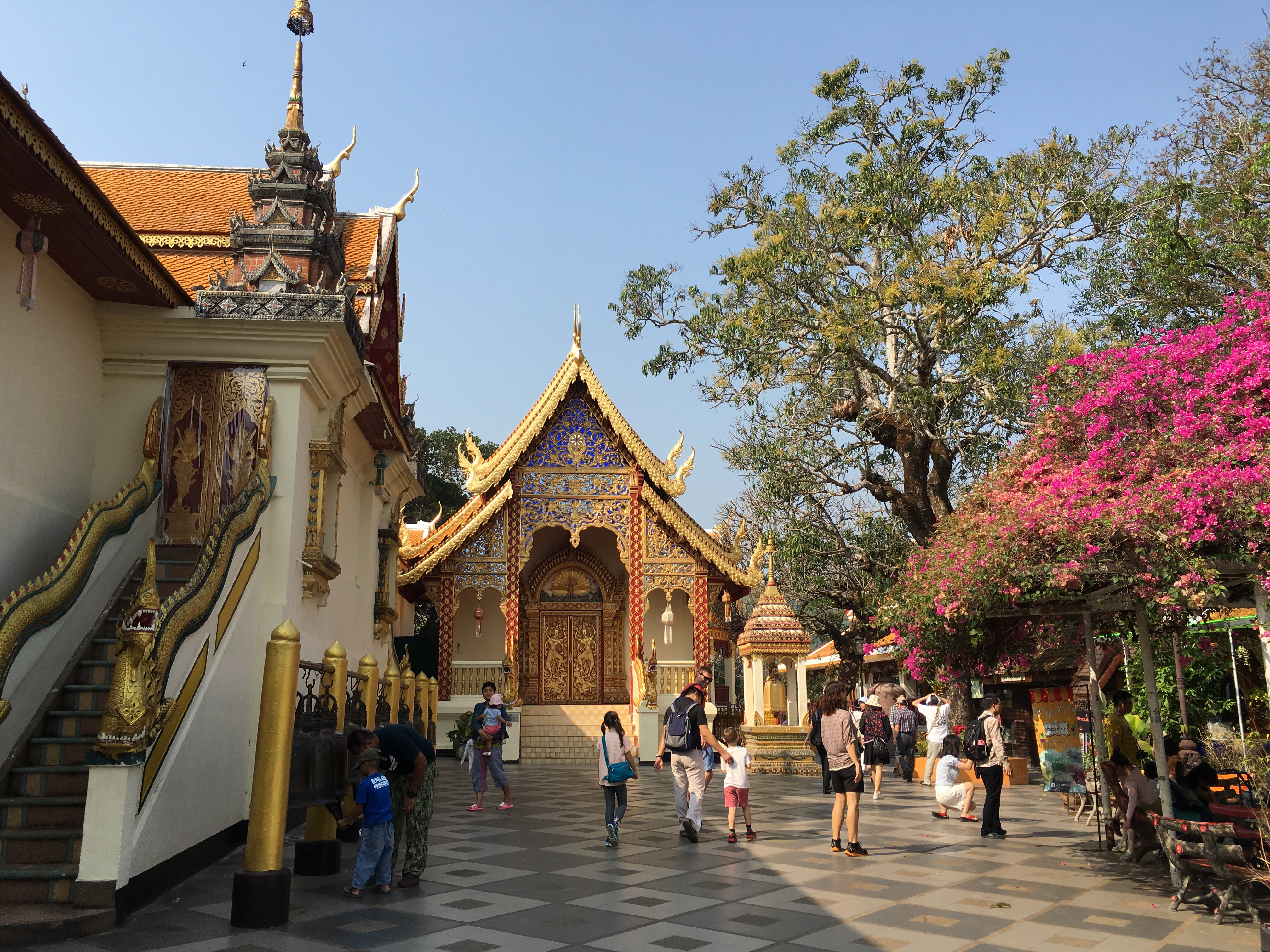
So Wat = Buddhist temple in Thailand, Laos & Cambodia and they are as ubiquitous as cathedrals in Europe or Walgreens in America. We use the word now as a verb on our trip as in “lets go watting today” or “I am so watted out”. When we arrived in Chiang Mai, I admit I was a bit Wat-shy after viewing the Bangkok Wats, due to all of the production involved (lines for tickets, lines for audio guides, lines for dress code review, lines to borrow a cheesy starched white button down shirt bc they won’t allow wraps to cover your shoulders despite the fact they’re fully accepted in all mosques throughout the Middle East, lines to return awful button down shirt, massive crowds and massive time commitment). I powered through and thankfully so bc since, Watting has been much more accessible and enjoyable… You simply buy a ticket at the entrance, flip your shoes off and head in to visit for as long (or as little) as you like and crowds are minimal. Some of them are simply breathtaking they are so ornate. So onward we Wat.


 amusemusings